
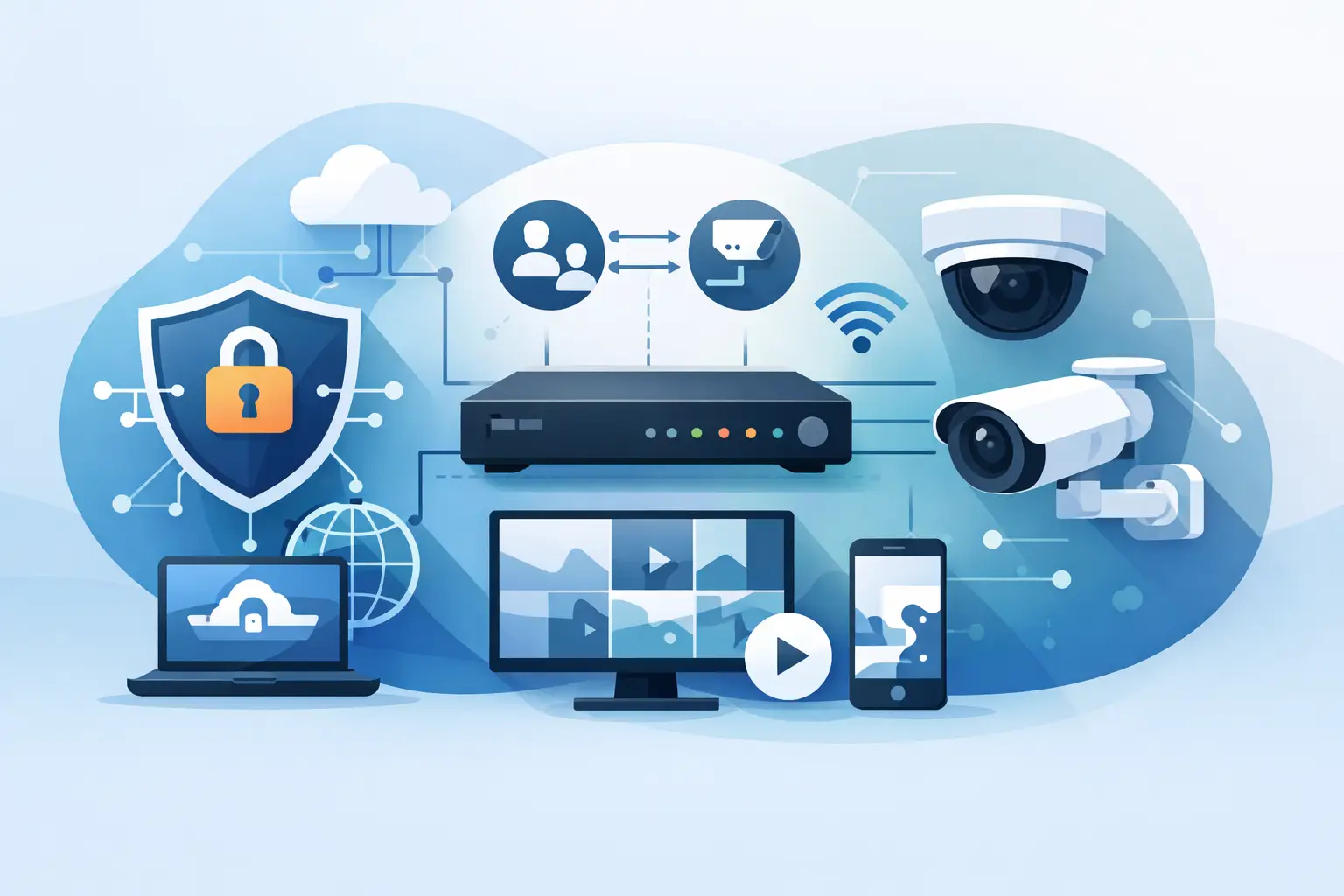
Remote video access should not slow down operations or add recurring costs. Revlight NVR is able to replace VPN by using P2P. No cloud subscription needed. For industrial sites, vessels, refineries, and critical infrastructure, that matters because every extra layer of networking support increases cost, setup time, and the chance of access problems when operators need video fast.
A conventional VPN setup can work well, but it is not always the best fit for surveillance estates spread across offshore assets, remote compounds, engine rooms, process areas, and temporary project locations. VPNs demand network configuration, maintenance, IT oversight, and in many cases ongoing troubleshooting. That is acceptable for some enterprise environments, but many buyers want a more direct route to live view, playback, and system management.
Why P2P can replace VPN for NVR remote access
P2P, or peer-to-peer connection, gives the NVR a practical way to establish remote access without asking the user to build and manage a traditional VPN tunnel. For operations managers and marine engineers, that means less dependency on complex firewall changes, static IP arrangements, or specialist networking support at every site.
The commercial advantage is clear. A P2P-enabled NVR reduces installation friction and cuts support overhead. If your team is responsible for multiple vessels or industrial locations, that translates into faster deployment and fewer delays when a system needs to be viewed from shore, from a control office, or during an incident review.
This does not mean VPN is obsolete in every case. Some organizations have strict internal cybersecurity frameworks that require VPN-based remote access for all systems. In those environments, VPN may still remain part of the policy. But for many surveillance applications, especially where speed of deployment and ease of use are priorities, P2P is a strong and efficient alternative.
VPN, P2P, RTSP in one surveillance workflow
The reason this matters is not just remote login. It is about how the whole surveillance workflow performs under real operating conditions. VPN handles secure network tunneling. P2P simplifies remote access. RTSP, or Real Time Streaming Protocol, supports video stream delivery for monitoring and integration.
Together, these terms often appear in the same buyer discussion because they shape how video is viewed, managed, and distributed. In practical terms, RTSP support gives flexibility for stream handling and compatibility across many video environments. P2P reduces the access burden. The NVR then becomes easier to deploy without locking users into expensive cloud platforms.
That last point is important for procurement teams. Cloud subscriptions may look small at the start, but recurring fees across multiple channels, sites, or years can become significant. For industrial operators managing capital budgets carefully, an NVR platform that avoids mandatory cloud subscription costs offers a stronger long-term value position.
No cloud subscription needed means lower operating cost
A surveillance system should protect the site, not create a monthly billing problem. When an NVR offers P2P access directly, users can reach their system remotely without being pushed into a paid cloud model just to see live video or recorded footage.
For oil and gas, marine, power, and heavy industry, that is a practical benefit rather than a marketing line. These sectors already carry enough recurring costs in communications, maintenance, safety systems, and compliance. Removing unnecessary subscription layers helps control the total cost of ownership.
It also gives buyers more control over how video infrastructure is managed. Some operators want local recording with remote access and no dependency on third-party cloud retention. Others need to keep architecture simple because bandwidth is limited or network conditions are inconsistent. In both cases, a P2P-capable NVR is a commercially smart option.
Where RTSP fits for industrial users
RTSP matters when video has to do more than sit inside a closed recorder environment. Many industrial buyers need flexibility for monitoring stations, network video workflows, or integration with broader surveillance architecture. RTSP support helps maintain that flexibility.
This is especially useful in technical environments where surveillance is part of a larger operational picture. A refinery control room, a vessel bridge support network, or a power facility security station may require dependable stream access without overcomplicating the system design. RTSP gives a recognized transport method for video, while the NVR continues to handle recording and playback.
There is a trade-off, of course. Compatibility depends on the wider network environment and the devices involved. Buyers should always confirm stream requirements, bandwidth expectations, and cybersecurity policy before standardizing deployment. Strong surveillance infrastructure is not about one feature alone. It is about choosing the right combination of access, recording, and operational simplicity.
Why this approach fits serious surveillance buyers
Professional buyers do not just compare camera counts and storage bays. They look at access reliability, installation time, lifecycle cost, and support burden. An NVR that uses P2P to replace VPN for many use cases, supports RTSP, and avoids mandatory cloud subscription fees answers all four points with a more efficient system model.
That is why this approach is attractive across offshore operations, marine fleets, industrial plants, and remote assets. It gives decision-makers a direct path to remote visibility without unnecessary network complexity or recurring platform charges. For buyers who want dependable surveillance and tighter cost control, Revlight Security positions this as the kind of practical, engineering-backed advantage that makes procurement easier and operations more secure.
If your surveillance requirement is built around fast remote access, local recording, and better long-term cost control, P2P-enabled NVR architecture is worth serious attention before you sign off on another VPN-heavy or cloud-dependent rollout.
🛡️ Secure Your Home or Business Today
Protect your home, office, shop, or business with reliable CCTV security cameras. Explore our range of CCTV cameras and find the right security solution for your needs.
Explore CCTV Cameras ✉️ Email Us



 Singapore :
+65-6708-9302
Singapore :
+65-6708-9302