
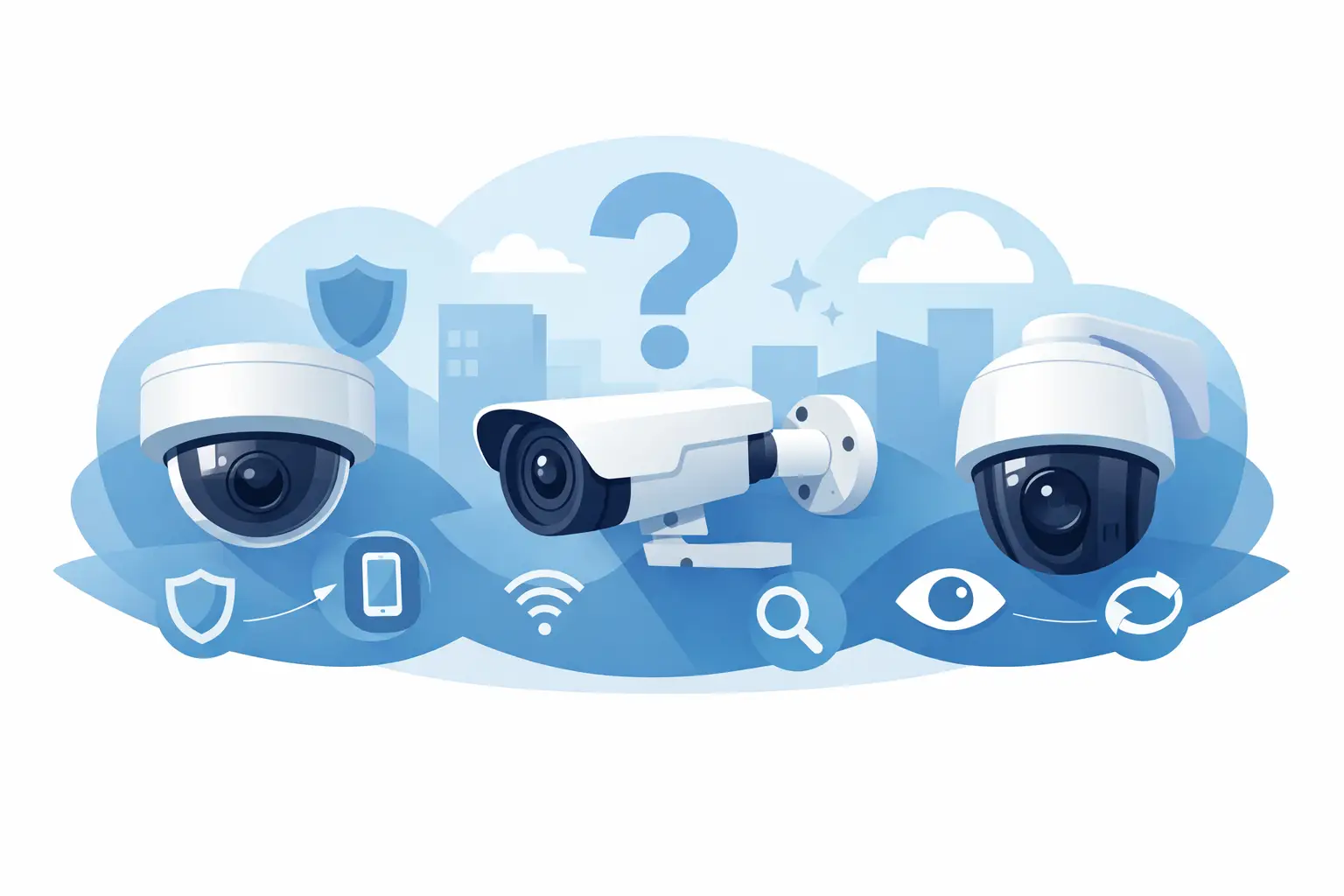
A refinery perimeter, an engine room corridor, and an offshore loading area should not be protected with the same camera. If you are asking which type of CCTV camera is best, the honest answer is this: the best camera is the one matched to the threat, the environment, and the operational demand of the site.
That matters more in industrial security than in any standard commercial installation. Oil and gas terminals, marine vessels, chemical plants, power stations, and remote energy assets deal with harsh weather, corrosion, vibration, low visibility, long perimeters, and strict uptime requirements. In these environments, choosing by price alone usually creates blind spots, maintenance issues, and replacement costs that wipe out any early savings.
Which type of CCTV camera is best for industrial sites?
For most industrial buyers, IP cameras are the strongest starting point because they offer better image quality, remote access, flexible integration, and easier scaling across complex facilities. But that does not mean one single camera format wins every job. Dome cameras suit controlled indoor areas, bullet cameras work well on perimeters, PTZ cameras cover large zones, and thermal or specialty detection cameras are often the right answer where standard visual imaging starts to fail.
The better question is not simply which type of CCTV camera is best. It is which camera type performs best in your specific operating conditions while reducing risk and supporting faster response.
Start with the site, not the camera brochure
Industrial procurement teams often compare camera categories as if they are interchangeable. They are not. A camera installed on a warehouse soffit has very different demands from one mounted near salt spray, hydrocarbon vapors, or process heat.
A useful buying approach starts with five realities: what you need to detect, how far away the target will be, what the environment does to electronics, how operators will use the footage, and what level of continuity the system needs during incidents. Once those are clear, camera selection becomes a technical and commercial decision instead of guesswork.
If your main requirement is general video evidence at entry points, a fixed IP dome may be enough. If you need long-range observation across fence lines or berths, a bullet or PTZ camera becomes more effective. If smoke, darkness, glare, fog, or gas risk reduces visibility, thermal and detection-based systems move from optional to essential.
Fixed dome cameras for indoor control
Dome cameras are a strong choice for indoor industrial spaces such as control rooms, corridors, workshops, reception points, and enclosed loading areas. Their compact housing makes them less intrusive, and their design gives some resistance against casual tampering.
They are especially useful where you need steady coverage rather than long-range identification. In a plant building or vessel interior, a dome camera can monitor personnel movement, verify process-area access, and support incident review without taking up much space.
The trade-off is reach. Dome cameras are not usually the best fit for long open perimeters or distant target capture. They are also only as durable as their housing rating, so indoor suitability should not be confused with true heavy-duty outdoor performance.
Bullet cameras for perimeter visibility
Bullet cameras remain a practical option for external security because they are easy to aim and effective for watching linear areas such as fences, gates, dock edges, parking zones, and access roads. Their form factor supports longer lenses and more obvious visual deterrence, which can help in high-risk facilities.
For industrial operators, bullet cameras are often the first line of fixed perimeter surveillance. They perform well when you need a known field of view and consistent capture of vehicles, intrusions, or movement along a boundary.
Their limitation is that they watch one direction. If the threat can shift rapidly or if the monitored area is wide and dynamic, multiple fixed cameras may be required. That can still be the right design, but it must be planned properly.
PTZ cameras for wide-area monitoring
PTZ cameras – pan, tilt, zoom – are valuable in large sites where operators need to track movement across broad spaces. Tank farms, offshore decks, marine terminals, substations, and open storage yards all benefit from the flexibility of active positioning and optical zoom.
When deployed well, PTZ cameras can reduce the number of units needed to observe a large area. They are also useful for live incident response because security teams can follow a target, inspect equipment conditions, or verify alarms in real time.
The trade-off is straightforward. A PTZ only looks where it is pointed. If nobody is controlling it, or if it is focused on one event, another area may go unobserved. That is why serious industrial systems often combine PTZ coverage with fixed cameras rather than treating PTZ as a complete replacement.
Thermal cameras when standard video is not enough
In many industrial settings, thermal cameras are the best answer even though buyers often consider them later than they should. They detect heat signatures rather than relying on visible light, which makes them highly effective in darkness, haze, smoke, glare, and difficult weather.
This is particularly relevant for perimeter protection in remote energy sites, marine operations at night, and critical infrastructure where early intrusion detection matters more than decorative image quality. Thermal imaging can identify a person, vessel, or vehicle long before a standard camera provides useful detail.
Thermal also has strong value in high-risk environments where operators need dependable detection rather than just recorded footage. It is not always the cheapest option upfront, but in exposed or low-visibility conditions it often delivers better security outcomes and lower operational risk.
Specialized cameras for hazardous and marine environments
Some facilities need more than conventional CCTV. Offshore platforms, refineries, chemical plants, and marine fleets may require explosion-proof housings, corrosion-resistant construction, anti-vibration performance, pressurized enclosures, or highly specialized imaging systems.
This is where many standard commercial products fail. A camera may look competitive on paper, yet struggle with saltwater exposure, washdown conditions, extreme temperatures, or hazardous-area compliance. Buyers in these sectors should prioritize certified durability, environmental suitability, and long-term reliability over headline price.
For example, an offshore operator may need underwater inspection cameras for subsea observation, while a refinery may need methane or gas leak detection imaging in addition to visual surveillance. In these cases, the best camera type is the one built for the hazard itself, not just for general scene recording.
IP vs analog – which is the better investment?
For most new industrial projects, IP CCTV is the better investment. It supports higher resolutions, advanced analytics, network-based management, remote access, and easier expansion across multiple buildings, vessels, or sites. It also fits better with modern command centers where recording, playback, alarms, and integrations need to work together.
Analog still has a place in some legacy upgrades or budget-controlled deployments, especially where infrastructure already exists. But for serious industrial surveillance, analog usually loses ground on image detail, system flexibility, and future readiness.
If you are building for the next five to ten years rather than patching the next twelve months, IP is usually the stronger commercial decision.
So which type of CCTV camera is best?
The best overall answer for most industrial buyers is a networked IP system built around multiple camera types. Fixed dome cameras handle indoor zones, bullet cameras secure boundaries, PTZ cameras oversee large operational areas, and thermal or specialty cameras protect the environments where ordinary imaging breaks down.
That blended approach gives better coverage, fewer compromises, and stronger value over time. It also matches how real industrial sites operate. One camera type rarely protects an entire refinery, vessel, terminal, or power facility properly.
Buyers who get the best result usually avoid a one-size-fits-all purchase. They specify cameras by risk zone, operating condition, and response objective. That is how serious surveillance infrastructure is built, and it is why top-tier suppliers focus on site-specific performance rather than generic bundles.
If you are evaluating a new system, the smartest next step is to define what failure would look like on your site. Once that is clear, the right camera type usually becomes obvious, and the investment starts working harder from day one.
🛡️ Secure Your Home or Business Today
Protect your home, office, shop, or business with reliable CCTV security cameras. Explore our range of CCTV cameras and find the right security solution for your needs.
Explore CCTV Cameras ✉️ Email Us


 Singapore :
+65-6708-9302
Singapore :
+65-6708-9302