
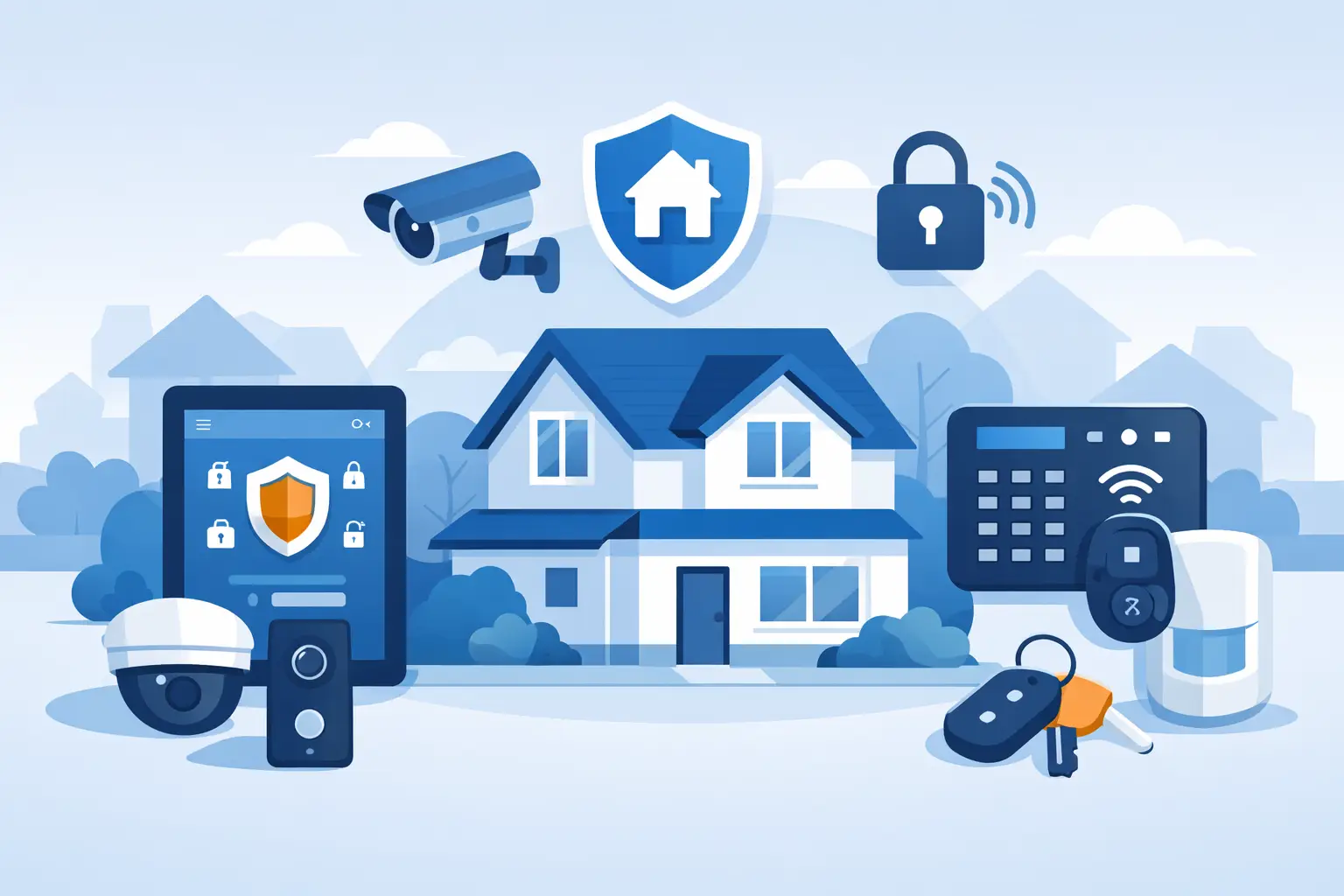
A security package looks efficient on paper until it meets a real site. A refinery with hazardous zones, a marine vessel with limited bandwidth, or a power facility with multiple access points will expose weak package design fast. That is why a home security package selection guide is not just about picking cameras and an alarm panel. It is about choosing a package that matches risk, site conditions, operational priorities, and the cost of failure.
For professional buyers, the problem is rarely lack of options. It is too many bundles with unclear trade-offs. Some packages are priced to move but leave critical blind spots in storage, detection range, environmental protection, or remote access. Others are loaded with features you will never use. The right package is the one that protects the asset, supports the operator, and stays reliable under the exact conditions where it will be deployed.
What a home security package selection guide should actually help you decide
The best package decision starts with one question: what are you trying to prevent, verify, or record? If your priority is intrusion deterrence at a residence or staff accommodation block, your package should center on visible coverage, fast alerts, and simple playback. If the objective is monitoring perimeter movement around a remote industrial property, then detection accuracy, low-light imaging, and resilient network transmission matter more than consumer-style convenience features.
Package selection is strongest when it is tied to operational outcomes. Buyers should look beyond camera count and ask how quickly an incident can be identified, how clearly footage can be reviewed, and whether the system will keep operating during weather exposure, vibration, dust, salt, or unstable connectivity. A package that saves money upfront but fails under pressure is not a value offer. It is a replacement cycle waiting to happen.
Core components in a home security package selection guide
Most packages are built around the same categories, but the quality and fit of each category can vary sharply. Cameras are the obvious starting point, yet resolution alone is not enough. Lens angle, night performance, placement flexibility, and environmental rating will shape real-world results. A four-camera package with strong positioning and dependable low-light performance can outperform an eight-camera package with poor coverage planning.
Recording hardware is just as important. Buyers often underestimate how much storage retention matters until an incident review is needed outside the available archive window. If your package stores only a few days of footage under normal recording conditions, you may miss the evidence you bought the system to capture. Compression efficiency, frame rate, and retention settings should all be checked before a package is approved.
Detection and alerting features deserve equal attention. Motion detection sounds simple, but false alarms can overwhelm operators and train teams to ignore alerts. Better packages allow zone configuration, sensitivity control, and event filtering. In more demanding environments, integration with sensors, access points, or specialized detection devices can produce a stronger security result than video alone.
Remote access is another package differentiator. For procurement teams and operations managers, the ability to review live and recorded footage from a control room, a vessel bridge, or a remote office is often essential. But remote viewing depends on network stability, interface quality, and user permissions. If multiple stakeholders need access, the package should support secure role-based control rather than a single shared login.
Matching package size to site risk
One of the most common buying mistakes is selecting a package by property size alone. Square footage matters, but risk concentration matters more. A smaller site with three vulnerable entry points, exposed storage, and irregular occupancy may need a more advanced package than a larger but simpler layout.
Start with critical zones. Entrances, gates, loading points, blind perimeter sections, parking areas, utility access, and storage areas usually deserve priority. From there, decide whether your package should emphasize observation, deterrence, or forensic review. Observation means broad coverage. Deterrence means visible presence and active alerts. Forensic review means image quality and retention that can support investigation after the fact.
This is where package sizing becomes practical. Two to four cameras may suit a compact property with limited access points. Six to eight cameras often fit larger homes, compounds, or mixed-use facilities. More complex sites may need a custom package rather than a prebuilt bundle. If your environment includes detached buildings, waterfront edges, remote tanks, or low-visibility perimeter areas, standard package assumptions break down quickly.
How to compare package quality, not just package price
Price attracts attention, but operating value closes the deal. A lower-cost package can become expensive if it requires frequent maintenance, misses incidents, or cannot scale when the site changes. Strong package evaluation should include hardware durability, image performance, support for expansion, and the practical cost of installation and upkeep.
Environmental durability is a major quality signal. Outdoor housings should be rated for dust and water exposure. Marine and coastal deployments should account for salt exposure and corrosion. Industrial settings may require stronger resistance to vibration, heat, or chemical exposure. If a package is marketed for general use but your site is harsh, that gap will show up in service calls and downtime.
Scalability is another commercial factor. A package that can add channels, sensors, or network devices later protects your investment better than a closed system that forces a full replacement. This matters for operators who expect site expansion, phased upgrades, or a future move toward integrated surveillance and detection.
Support should be treated as part of the package, not an extra. Technical guidance on layout, storage configuration, network setup, and after-sales troubleshooting can determine whether a system performs to spec. Serious buyers should ask what happens after purchase, because strong equipment without strong support does not deliver the ultimate in security surveillance systems.
A practical home security package selection guide for buyers
A reliable home security package selection guide should lead to a short list built on use case, not marketing language. Start by identifying the top three security objectives for the site. That could be deterring intrusion, verifying alarms, protecting staff residences, or monitoring remote access routes. Once those are clear, match each objective to a package requirement.
Next, assess site conditions. Check lighting levels, likely mounting positions, cabling constraints, and network availability. If the location has poor connectivity, your package may need stronger local recording and efficient remote access settings. If the site is exposed to weather or washdown, hardware protection ratings move higher on the buying checklist.
Then compare package architecture. Wired systems often provide stronger reliability and image consistency, especially for permanent installations. Wireless options can reduce installation complexity in some settings, but performance depends heavily on signal quality and site layout. There is no universal winner. It depends on whether speed of deployment or long-term reliability is the bigger priority.
After that, review the package with the end user in mind. A system that is technically capable but difficult to operate will underperform. Playback should be simple. Search functions should be usable. Alerts should reach the right people without creating noise. The best service provider will help shape the package around both engineering performance and daily operation.
Finally, test the package against failure scenarios. What happens if power drops? What happens if one camera loses connection? How long is footage retained after a high-activity period? Can authorized users still access evidence quickly? Buyers who ask these questions early tend to avoid expensive corrections later.
When standard packages are enough and when they are not
Standard packages work well when the site is straightforward, the risk profile is moderate, and the buyer needs fast deployment with predictable cost. A clean residential layout, a small office compound, or a limited-access accommodation block can often be protected effectively with a well-specified off-the-shelf package.
Custom or semi-custom packages make more sense when the site includes special hazards, difficult terrain, marine conditions, remote operations, or integration requirements. Industrial buyers often need more than conventional surveillance. They may need network resilience, specialized detection, extended coverage, or hardware built for harsh conditions. In these cases, buying the cheapest standard bundle usually delays the real solution rather than delivering it.
For buyers balancing security performance with capital discipline, the strongest approach is simple. Specify the risks, map the site, compare package limits, and buy for the operating environment you actually have. That is where confident package selection turns into measurable protection, lower lifecycle cost, and fewer surprises once the system goes live.
A good package should not just look complete in a catalog. It should give your team clear visibility, dependable evidence, and confidence that the system will hold its ground when the site is under pressure.
🛡️ Secure Your Home or Business Today
Protect your home, office, shop, or business with reliable CCTV security cameras. Explore our range of CCTV cameras and find the right security solution for your needs.
Explore CCTV Cameras ✉️ Email Us


 Singapore :
+65-6708-9302
Singapore :
+65-6708-9302