
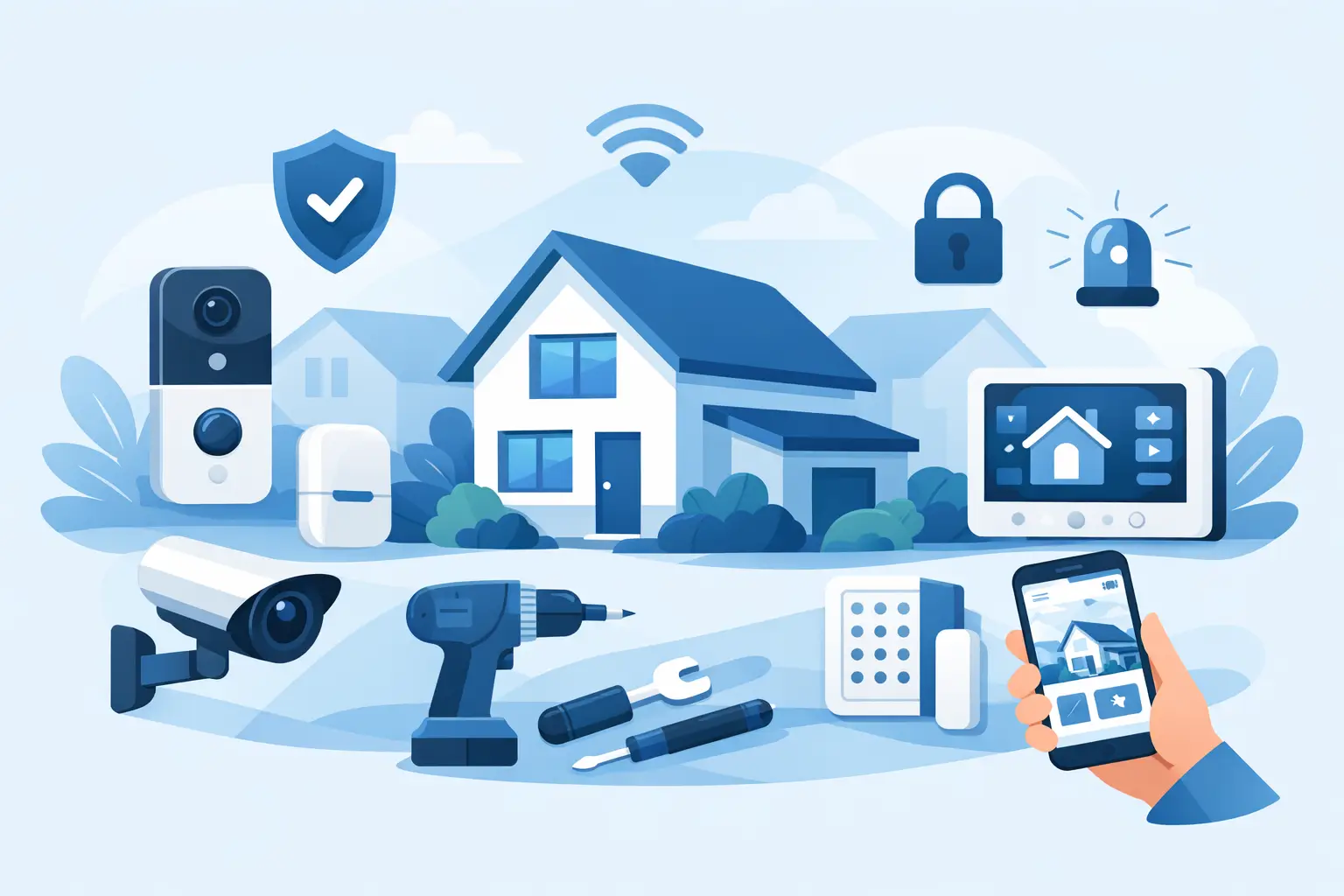
A monthly monitoring contract can turn a simple security upgrade into a long-term operating expense. That is exactly why diy home security systems no monthly fee keep gaining ground with homeowners, small site operators, and buyers who want control over hardware, storage, and alerts without paying indefinitely for basic functionality.
The real appeal is not just cost savings. It is ownership. When you choose a self-managed system, you decide how footage is stored, which zones matter most, how alerts are routed, and whether your setup is built around deterrence, evidence collection, or both. That flexibility matters because not every property has the same risk profile, and not every buyer wants a consumer-grade package with features locked behind a subscription.
What diy home security systems no monthly fee actually include
At the practical level, these systems usually combine cameras, motion detection, local video storage, mobile access, and app-based alerts. Some also include door and window sensors, sirens, floodlights, and smart locks. The key distinction is that core security functions work without an ongoing service fee.
That point deserves scrutiny. Some brands advertise no monthly fee, but reserve cloud recording, advanced detection, emergency dispatch, or extended video history for paid plans. Others let you record continuously to a network video recorder, microSD card, or local hub without charging anything after purchase. If your objective is real long-term savings, the second model is far more attractive.
For buyers used to industrial surveillance procurement, the principle is familiar. Hardware value matters more when performance is not artificially restricted after deployment. A capable camera with dependable local recording often delivers better commercial value than a cheaper device that depends on subscription features to remain useful.
Where no-fee systems perform well
A strong DIY platform can cover front doors, driveways, garages, workshops, vacation homes, and small business perimeters. It is especially effective where there is stable power, consistent Wi-Fi or wired network access, and a user willing to handle basic configuration.
In these settings, self-managed systems can provide excellent visibility, fast playback, and responsive alerts. Many modern units support motion zones, two-way audio, night vision, and app control right out of the box. If the main requirement is to see events quickly, verify activity, and retain footage locally, a no-fee system can be the right fit.
The trade-off is operational responsibility. If an internet connection drops, a battery dies, or a storage device fills up, there is no central monitoring team stepping in automatically. You or your staff are the monitoring layer. For some buyers, that is acceptable. For others, particularly those overseeing multiple sites or critical assets, it may not be enough.
DIY home security systems no monthly fee vs monitored systems
The comparison should be based on risk tolerance, not just price. A monitored service adds another response path, but it also adds recurring cost and often limits system flexibility. DIY no-fee systems reduce ongoing spend and give you direct control, but they place more responsibility on the owner.
A residential user with a single-family home may be perfectly satisfied with app alerts and local recording. A marine operator managing dockside access points, storage areas, or support buildings may prefer a more structured surveillance layer with better network resilience and wider camera coverage. The right choice depends on what happens if an alert is missed.
This is where serious buyers separate marketing from capability. Ask a simple question: if the property loses internet access, does the system still record locally? If the answer is no, it is not a dependable security platform. It is a convenience product.
The features that matter most
Camera count is usually the first buying decision, but storage architecture should rank just as high. A four-camera package may look attractive until you realize it stores only short event clips unless you pay monthly. By contrast, a system with a local recorder can preserve longer timelines, support continuous recording, and simplify incident review.
Resolution matters, but only in context. Sharp 2K or 4K images are valuable when they help identify faces, license plates, or activity patterns. They also consume more bandwidth and storage. If your network is weak or your recorder capacity is small, higher resolution can create more problems than it solves.
Power design is another divider. Battery cameras are easy to install, but they are not ideal for high-traffic areas where constant motion drains charge and creates recording gaps. Wired power is stronger for continuous surveillance and more stable performance. Buyers with an engineering mindset generally favor predictable uptime over convenience, and that instinct is usually correct.
Detection quality also varies widely. Basic motion sensing is often enough for low-risk areas, but better systems distinguish between people, vehicles, and general activity. That reduces false alerts and saves time. If users start ignoring notifications because the system constantly flags shadows, rain, or passing animals, the setup has failed in operational terms.
Choosing between wireless and wired setups
Wireless systems dominate the consumer market because they are easier to install. For renters, smaller homes, and quick upgrades, they make sense. Installation is faster, drilling is minimal, and app onboarding is usually straightforward.
But wired systems remain the stronger option for long-term reliability. Power over Ethernet cameras, paired with a network video recorder, deliver more stable connectivity, uninterrupted recording, and cleaner scaling when additional cameras are added. They also avoid the maintenance cycle of charging batteries or replacing them in difficult locations.
For detached garages, workshops, gatehouses, or larger properties, wired infrastructure often pays off quickly. The upfront work is higher, but the result is a more serious surveillance platform. That matters if your goal is not just to watch the front porch, but to secure access routes, assets, and blind spots with commercial discipline.
Storage is where savings are won or lost
If you want diy home security systems no monthly fee to actually stay no-fee, focus on local storage. That can mean an NVR, DVR, onboard card storage, or a dedicated hub. Each has strengths.
Recorder-based systems are best for multi-camera coverage and continuous recording. Onboard card storage is simpler and lower cost, but can be less practical when managing several cameras or reviewing longer incidents. Hub-based systems can work well for smaller properties where centralization is useful but full recorder infrastructure feels excessive.
The most cost-effective approach is usually local recording with remote viewing. You keep ownership of the footage path, avoid cloud dependency for core functions, and still get mobile visibility. From a commercial perspective, that is a far better value proposition than paying annually just to access recordings generated by your own hardware.
Installation mistakes that weaken the system
A no-fee setup still needs disciplined deployment. The most common failure is poor camera placement. Buyers often mount cameras too high, too wide, or directly into glare from sunlight and vehicle headlights. The result is footage that exists but does not help.
Coverage should prioritize decision points: entries, driveways, side paths, loading points, and areas where a person must slow down or change direction. That gives you better identification and more useful event review. Overlapping views also improve evidence quality if one camera is obstructed.
Another common issue is weak network planning. If you rely on Wi-Fi, test signal quality where the cameras will actually be installed, not just where your phone works indoors. Intermittent connectivity turns even premium equipment into a liability. Security infrastructure is only as strong as the network supporting it.
Who should buy a no-monthly-fee system
These systems are a smart choice for buyers who want predictable ownership costs, basic to advanced visibility, and direct control over their surveillance environment. They work well for homes, outbuildings, small offices, equipment storage areas, and secondary properties where self-monitoring is realistic.
They are less suitable where compliance, high-value asset protection, or guaranteed response procedures are required. In those environments, surveillance must be designed as part of a broader security operation. That may still include self-managed recording, but it usually demands higher-end networking, environmental durability, and a more structured response model. Providers such as Revlight Security operate in that performance-driven space, where buyers expect surveillance equipment to deliver dependable results under demanding site conditions.
The best buying decision is rarely the cheapest box on the shelf. It is the system that records reliably, alerts intelligently, stores footage locally, and remains useful without asking for another monthly payment six months after installation. Buy for uptime, storage control, and image quality first. The savings follow naturally when the system keeps doing its job year after year.
🛡️ Secure Your Home or Business Today
Protect your home, office, shop, or business with reliable CCTV security cameras. Explore our range of CCTV cameras and find the right security solution for your needs.
Explore CCTV Cameras ✉️ Email Us


 Singapore :
+65-6708-9302
Singapore :
+65-6708-9302