
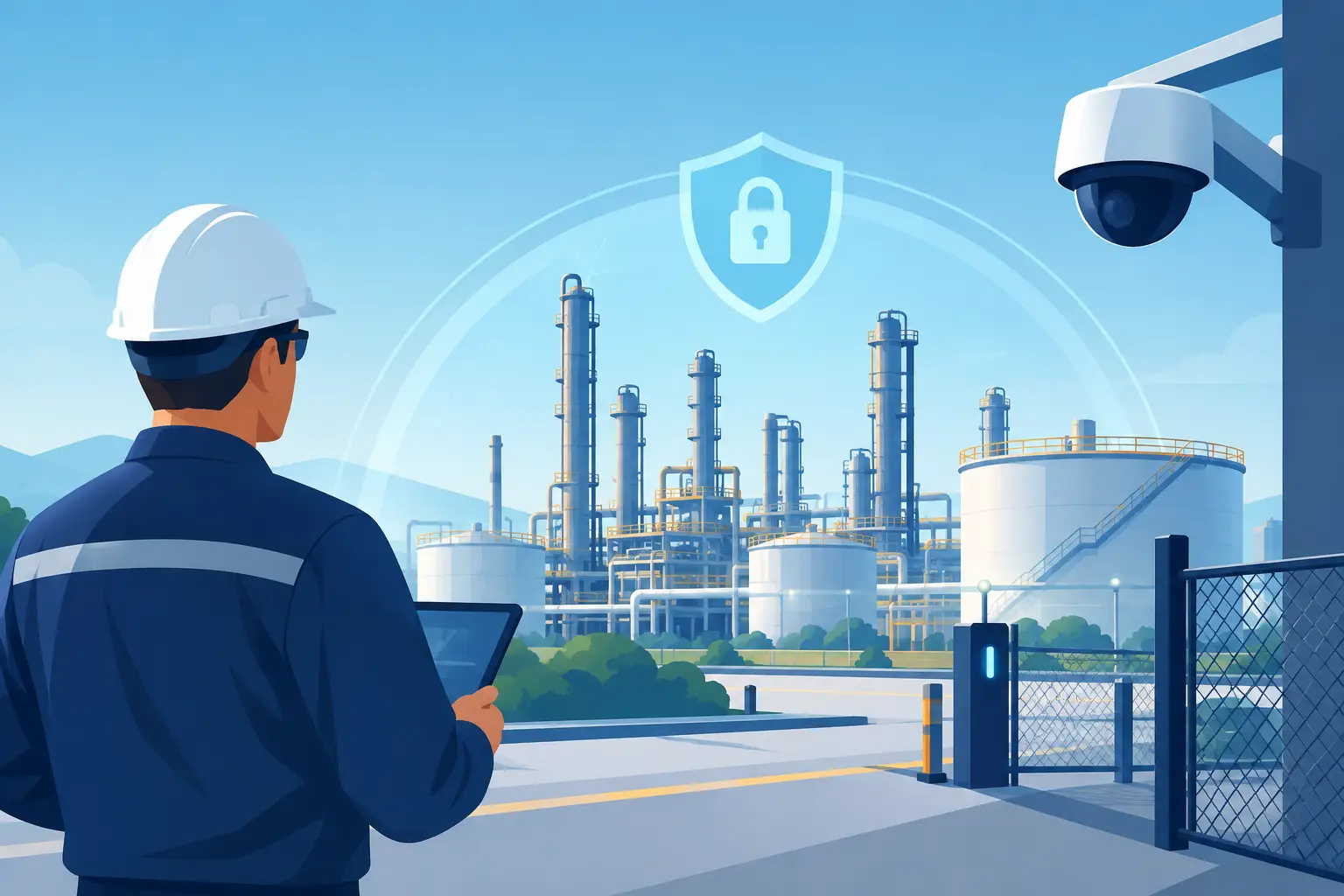
A refinery does not have the luxury of treating security as a separate function from operations. A missed gas release, blind perimeter zone, failed network connection, or delayed alarm can rapidly become a safety event, an environmental exposure, a production loss, or all three. Refinery security modernization is the practical work of replacing isolated, aging security tools with an integrated detection, surveillance, recording, and communications architecture built for industrial risk.
For operations directors and procurement teams, the objective is not simply to install more devices. It is to gain earlier warning, clearer verification, dependable evidence, and faster command decisions across a complex operating environment.
Why Refineries Need Security Modernization
Many refinery sites still operate with a mix of legacy analog video, aging fixed cameras, limited alarm integration, and networks that were not designed for high-bandwidth surveillance or remote access. Those systems may still function, but functioning is not the same as providing operational coverage.
A conventional camera can show that something happened after the fact. A modern refinery surveillance system should help personnel understand what is happening while there is still time to act. That difference matters around tank farms, loading racks, flare systems, process units, pipeline corridors, marine terminals, and restricted access points.
The strongest modernization programs connect physical security with process safety. Video surveillance verifies alarms. Gas detection identifies a threat that may not be visible to personnel. Thermal imaging can reveal abnormal heat patterns. Reliable industrial networking delivers the footage and alarm data to control rooms, security centers, and authorized remote users without creating a weak point in the site infrastructure.
This approach also reduces the operational burden on security staff. When operators can pull up the correct view, review recorded evidence, and confirm an event from a centralized platform, they spend less time dispatching people to investigate routine alarms. That can improve response speed while keeping personnel away from potentially hazardous areas.
Start With Risk, Not a Camera Count
A camera count is a procurement detail, not a security strategy. Before selecting equipment, refinery teams should identify where loss of visibility or delayed detection carries the highest consequence.
The assessment should consider process hazards, unauthorized access, theft exposure, environmental risk, evacuation routes, inspection requirements, and the practical conditions surrounding each location. A camera positioned for perimeter intrusion may need low-light performance and long-range coverage. A unit near volatile hydrocarbons may require equipment rated for the applicable hazardous area. A location overlooking a marine berth may need corrosion-resistant housings, stable networking, and coverage that holds up in glare, fog, salt spray, and vibration.
Critical zones commonly include:
- Tank farms, transfer lines, and pump stations
- Loading racks, gates, and vehicle screening points
- Process units, control room approaches, and restricted maintenance areas
- Pipeline boundaries, remote utility areas, and perimeter corridors
- Jetties, berths, and marine transfer operations
Each zone should have a defined security and safety purpose. Is the system meant to detect a release, verify access, document a transfer, observe equipment condition, deter intrusion, or support emergency response? One device may support several functions, but only when its placement, resolution, analytics, recording capacity, and communications path are specified correctly.
Build Detection and Verification Together
A common failure in refinery security is treating detection and visual verification as unrelated purchases. A gas alarm without immediate visual context can trigger costly uncertainty. Video without environmental sensing can leave operators unaware of a developing hazard outside the camera’s field of view.
Modernized systems bring these capabilities together. Methane and gas leak detection cameras can help identify emissions and provide visual confirmation in areas where conventional monitoring alone may not provide sufficient context. The right deployment depends on the gas type, expected release behavior, viewing distance, prevailing wind, background conditions, and the physical geometry of the asset.
Thermal surveillance adds another layer where heat is a meaningful indicator. It can support monitoring of equipment, storage areas, fence lines, and low-visibility zones. Thermal imaging is not a substitute for process instrumentation, and it should not be sold as one. Its value is in giving operations and security teams another dependable source of situational awareness, particularly at night or during poor visibility.
The best result comes from defining alarm workflows before commissioning. When a detector, access event, or perimeter alert occurs, the system should present the associated live views, preserve relevant recorded footage, notify the right team, and establish escalation rules. A fast alarm is only useful if it reaches someone who can assess it and act.
Network Design Determines System Performance
Refinery security modernization often succeeds or fails at the network layer. High-resolution video, remote viewing, detection alerts, recording servers, and site-to-site connectivity all place demands on bandwidth, switching, storage, and cybersecurity controls.
Industrial facilities should avoid deploying surveillance equipment as an unmanaged collection of endpoints. Segmentation is essential. Security devices should be separated from critical control networks, with tightly managed connections, access rights, and monitoring. Remote access should be role-based and protected, allowing authorized managers and technical teams to view the information they need without exposing the entire system.
Resilience also requires planning for power loss and link failure. Redundant paths may be justified at high-consequence locations. Storage requirements should reflect retention policies, camera settings, alarm-event recording, and regulatory or investigative needs. A system that captures excellent footage but overwrites it before an incident is reviewed does not deliver its full value.
For large sites or remote assets, wireless and marine network solutions can extend coverage where trenching cable is difficult or cost-prohibitive. However, wireless should be engineered around line of sight, interference, weather exposure, encryption, and failover requirements. It is not a shortcut for poor network planning.
Choose Equipment for the Real Environment
Refinery conditions are hard on equipment. Heat, dust, humidity, vibration, salt air, chemical exposure, electromagnetic interference, and hazardous-area restrictions can quickly expose weak specifications. Buying on headline resolution alone is a costly mistake.
Every surveillance and detection component should be reviewed for its installation environment. That includes enclosure ratings, operating temperature range, corrosion resistance, hazardous-location certification where required, mounting arrangement, cleaning access, and maintenance intervals. A system located 100 feet above a unit or over water may be technically capable but commercially impractical if routine service requires excessive access time or shutdown coordination.
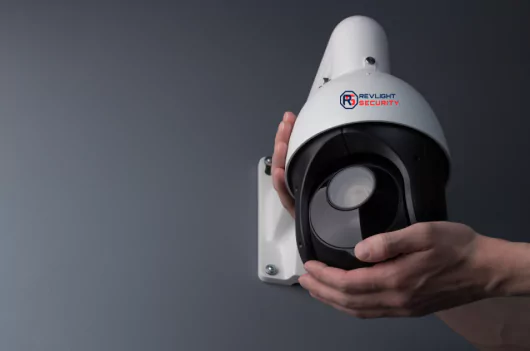
This is where specialist supply matters. Revlight Security supports industrial buyers with surveillance, gas detection, underwater inspection, and network equipment selected for demanding oil and gas, marine, and energy applications. The goal is not a generic security package. It is a system format matched to the site’s actual visibility, detection, recording, and communications requirements.
Modernization Should Be Phased, Not Disruptive
A full replacement program can be justified when existing infrastructure is at end of life. In many cases, a phased plan delivers better commercial control. High-risk zones can be addressed first, followed by network upgrades, recording consolidation, and broader coverage expansion.
Start with areas where an incident would carry the highest operational or safety consequence. Establish technical standards for new devices so future purchases remain compatible. Then retire obsolete equipment as coverage is transferred to the new platform. This reduces capital pressure and avoids creating a patchwork of incompatible systems.
Procurement teams should evaluate total cost of ownership, not only unit price. The lowest-priced device can become the most expensive option if it fails early, requires specialized replacement work, lacks technical support, or cannot integrate with the site’s recording and network environment. Better equipment specification can reduce repeat site visits, false alarms, unplanned replacements, and investigation time.
Measure the Outcome, Not the Installation
A modernization project is complete when the refinery can demonstrate stronger operational awareness, not when the last device is mounted. Security leaders should measure alarm-to-verification time, camera availability, network uptime, false alarm rates, incident review time, and maintenance demand. These metrics reveal whether the system is producing meaningful improvement.
Training is equally important. Control room teams, security personnel, maintenance crews, and incident commanders need clear ownership of the system. They should know which views apply to which assets, how alarms are prioritized, where footage is retained, and what to do when communications fail. Technology performs best when the response process is just as disciplined as the installation.
The right next step is to identify one high-consequence blind spot and define what earlier detection and faster verification would change there. That focused decision often becomes the strongest business case for a refinery-wide security upgrade.
🛡️ Secure Your Home or Business Today
Protect your home, office, shop, or business with reliable CCTV security cameras. Explore our range of CCTV cameras and find the right security solution for your needs.
Explore CCTV Cameras ✉️ Email Us


 Singapore :
+65-6708-9302