
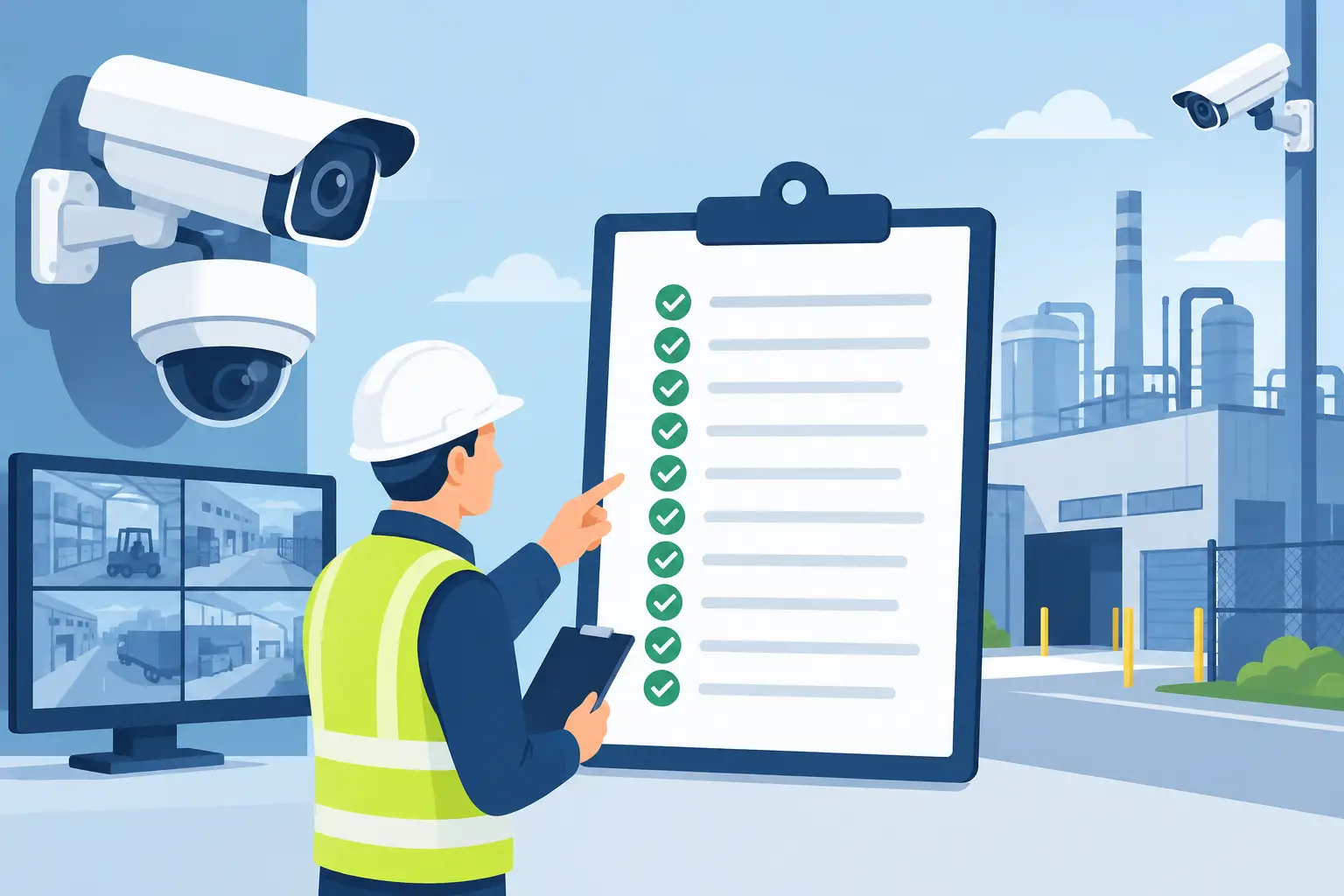
A refinery camera that produces a clear image at the loading rack but fails after six months of heat, vibration, or corrosive exposure is not a low-cost purchase. It is an operational liability. This industrial CCTV procurement checklist is built for buyers who need surveillance infrastructure that performs under industrial conditions, supports investigations, and protects capital over its full service life.
The right specification starts with the operating risk, not a generic camera count. Oil and gas sites, marine vessels, power stations, chemical plants, and offshore assets each present different visibility, connectivity, certification, and maintenance demands. A serious procurement process turns those demands into measurable acceptance criteria before quotations are compared.
Industrial CCTV Procurement Checklist: Start With Risk
Define what the system must help your team see, verify, and respond to. “Site security” is too broad to produce a dependable design. Separate the use cases: perimeter intrusion, restricted-area access, personnel safety, process observation, berth monitoring, vessel approach, leak visualization, or evidence capture after an incident.
For each use case, identify the required detection distance, recognition distance, and identification distance. A camera may detect movement hundreds of feet away but still be unable to identify a face, read a container number, or confirm whether a valve is open. These are different performance requirements and must be specified accordingly.
Also establish what happens after an alarm. If the control room needs to verify an intrusion within seconds, the system needs usable live video, reliable network capacity, and correctly positioned coverage. If footage is primarily for post-incident review, retention period, image detail, export controls, and accurate time synchronization become the priority.
1. Match Camera Hardware to the Environment
Environmental suitability is not an optional upgrade. It is the baseline for industrial CCTV procurement. Request operating temperature ranges, ingress protection ratings, corrosion resistance, shock and vibration data, and enclosure materials for every camera, illuminator, junction box, and network component.
Marine and offshore installations require particular attention to salt spray, humidity, vessel movement, and cable exposure. A housing that is adequate for a sheltered yard may not survive an exposed deck. For refineries and chemical facilities, confirm whether the viewing location is within a classified hazardous area. If it is, the complete installed assembly must meet the required certification standard, not just one component within the system.
Ask suppliers to state exactly where each device can be installed and what supporting hardware is required. This avoids a common budget failure: selecting an attractively priced camera, then discovering that certified enclosures, glands, barriers, and mounting arrangements significantly alter the final installed cost.
2. Specify Image Performance for Real Conditions
Resolution alone does not guarantee useful video. A high-resolution stream can still fail when a target is backlit, fogged, moving quickly, or positioned at the edge of a wide scene. Require evidence of low-light performance, wide dynamic range, frame rate, lens options, and scene-specific image quality.
Fixed cameras are often the most cost-effective choice for entrances, gates, corridors, and defined process areas because they provide consistent coverage with fewer moving parts. Pan-tilt-zoom units are valuable for wide perimeters, tank farms, marine approaches, and operator-led inspection, but they should not replace fixed coverage where continuous evidence is required. A PTZ can look in only one direction at a time.
Thermal imaging should be evaluated where darkness, glare, smoke, or difficult weather conditions reduce visible-light performance. It is a strong detection tool, but it has different identification capabilities than visible imaging. For certain critical locations, a paired thermal and visible camera design provides the best operational result.
3. Confirm Detection Technology Fits the Hazard
Industrial surveillance can extend beyond standard visual monitoring. Methane and gas leak detection cameras, for example, need to be selected around the gas type, expected leak behavior, background conditions, viewing distance, and intended response workflow. The purchase decision should be based on whether the system provides actionable detection in the actual process area, not on a generic product claim.
Ask how alarms are generated, what the operator sees, how alarm events are recorded, and whether the output can be passed to the site’s security or control environment. Detection equipment should complement, not casually replace, fixed gas detection and established safety systems. Its value is faster visual confirmation, broader situational awareness, and improved investigation capability when properly deployed.
Underwater surveillance needs the same discipline. Depth rating, water clarity, lighting, mounting method, cable length, connector protection, and surface recording hardware all affect usable performance. A camera suited to a protected intake channel may not meet the pressure, fouling, or deployment demands of an offshore structure.
4. Audit Network Capacity and Cybersecurity
A surveillance system is only as dependable as the network carrying its video. Procurement teams should request a bandwidth calculation based on camera quantity, resolution, frame rate, compression method, scene activity, recording mode, and remote-viewing demand. Do not accept a design that treats every stream as identical. A busy gate produces different bandwidth and storage requirements than a static equipment room.
Where fiber is available, it is usually the preferred backbone for long industrial runs and electrically noisy environments. On vessels and remote sites, managed switches, wireless bridges, marine WiFi systems, or point-to-point links may be appropriate, but the design must account for interference, obstructions, vessel movement, and failover.
Cybersecurity requirements should be included in the purchase specification. Require unique credentials, role-based access, encrypted communications where supported, firmware management, audit logs, network segmentation, and a defined process for remote access. A camera system connected to an operational network without clear access controls creates a problem that no amount of image quality can solve.
5. Calculate Recording and Retention Correctly
Recording capacity is where under-specified systems become expensive after commissioning. Set the required retention period based on site policy, regulatory obligations, insurance requirements, and the time it may take to identify an incident. Then calculate storage using the proposed camera settings, not a simplified per-camera estimate.
Continuous recording delivers the clearest evidentiary record for critical areas, but it consumes more storage. Motion-based recording can reduce capacity needs in low-activity scenes, although it must be carefully tuned to avoid missed events from rain, steam, shadows, or slow movement. Event-triggered recording can be highly effective when integrated with access control, detection devices, or perimeter alarms.
Confirm how footage is searched, exported, watermarked, and protected from unauthorized deletion. Operators need playback that is fast enough to support real decisions. A recorder with large nominal capacity has limited value if its search tools slow down investigations or its storage configuration has no resilience.
6. Demand a Clear Installation Scope
Quotations should separate equipment supply, engineering, installation, testing, commissioning, training, and ongoing support. This is essential when comparing suppliers. A low equipment price can conceal major exclusions for cable routes, civil works, marine mounting, hazardous-area accessories, network switches, configuration, or travel to remote locations.
Request a camera schedule and coverage drawing that identifies every device, field of view, mounting height, cable path, power source, network connection, and environmental classification. The design should show blind spots openly. No system covers every angle, but unknown gaps become expensive after an event.
For critical assets, include factory acceptance testing where applicable and site acceptance testing after installation. Acceptance should verify image quality in day and night conditions, recorder operation, alarm functions, remote access, camera naming, time synchronization, and evidence export. These are operational checks, not paperwork exercises.
7. Compare Lifecycle Cost, Not Unit Price
The best commercial decision is the system that delivers reliable coverage with predictable maintenance, not simply the lowest quote. Compare warranty terms, expected service intervals, spare availability, software licensing, firmware support, replacement lead times, and the availability of technical assistance in your operating region.
A lower-priced unit that requires frequent replacement in a corrosive environment can cost substantially more than industrial-grade equipment over several years. Conversely, not every location needs the highest specification. Use premium, certified, or specialized equipment where the environment and risk demand it, while avoiding unnecessary overspecification in protected low-risk areas.
Before issuing a purchase order, require these procurement deliverables:
- A site-specific camera schedule, coverage plan, and bill of materials.
- Environmental and hazardous-area certification documents for applicable equipment.
- Bandwidth, storage, and retention calculations based on final settings.
- Network architecture and cybersecurity responsibilities.
- Installation, commissioning, testing, training, warranty, and support scope.
- A list of exclusions, assumptions, and customer-supplied items.
8. Choose a Supplier That Can Defend the Design
Industrial buyers need more than a product catalog. They need a supplier that understands why a camera position, lens, enclosure, network path, or detection technology was selected. Ask direct questions: What will fail first in this environment? What maintenance access is required? What image can operators realistically expect at night? What is the fallback if a network segment goes down?
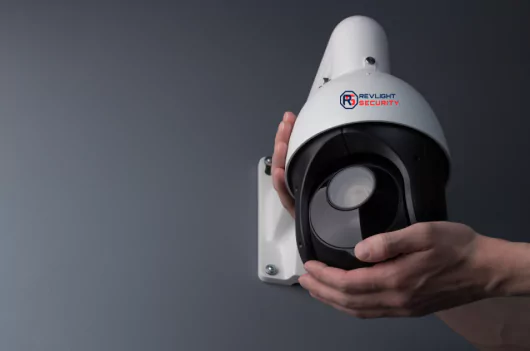
A capable supplier will answer with engineering detail and clear commercial terms. They will also challenge weak assumptions before equipment reaches the site. Revlight Security supports industrial operators with specialized surveillance and detection equipment designed around demanding offshore, marine, energy, and process environments.
The strongest procurement decision is the one that leaves your operations team with verified coverage, usable recordings, and a support path they can rely on when conditions are at their worst.
🛡️ Secure Your Home or Business Today
Protect your home, office, shop, or business with reliable CCTV security cameras. Explore our range of CCTV cameras and find the right security solution for your needs.
Explore CCTV Cameras ✉️ Email Us


 Singapore :
+65-6708-9302