
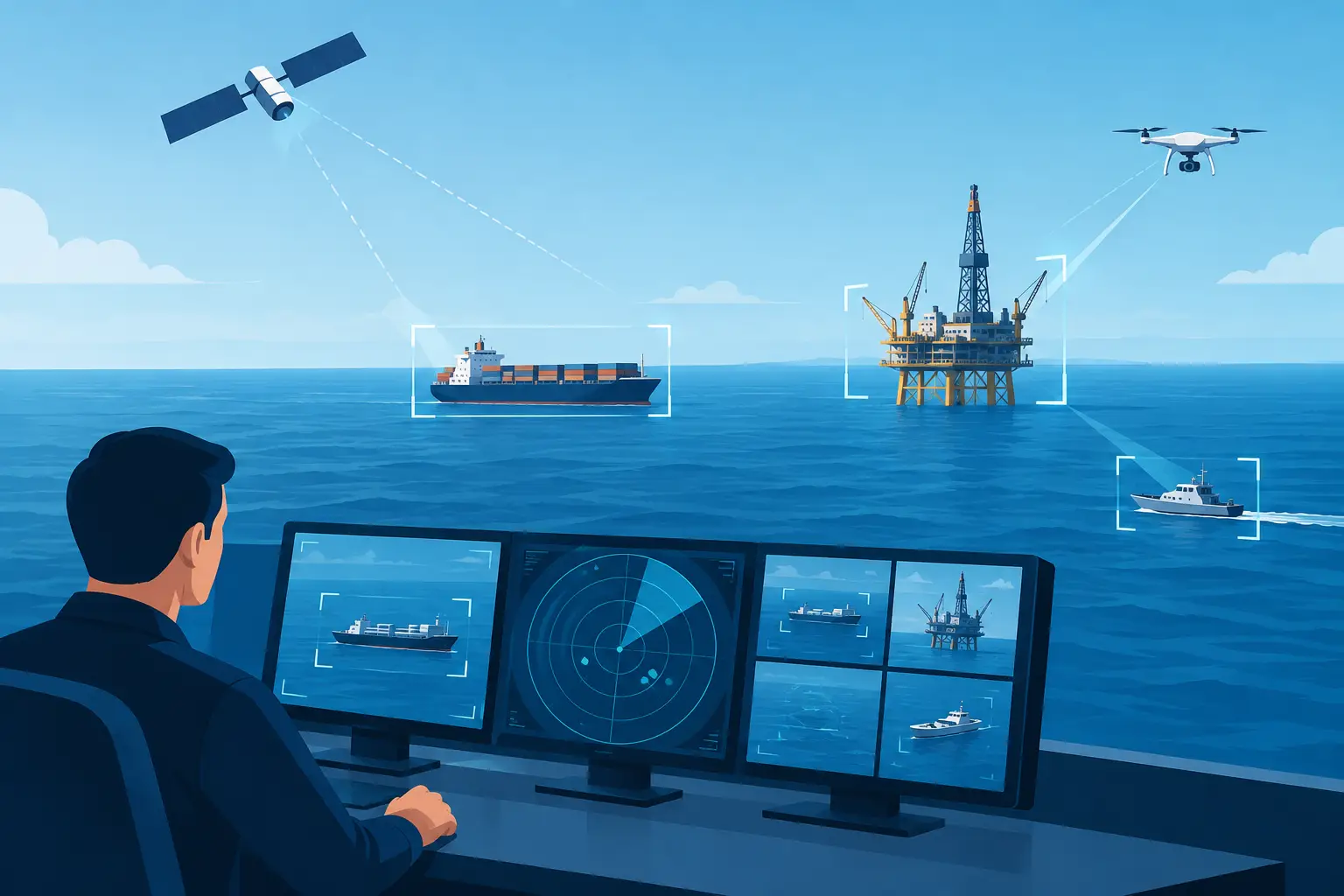
A dropped object below a platform, an early methane plume, or an unsecured access point can become a costly operational event long before it becomes a visible emergency. The future of offshore surveillance is therefore not about adding more cameras to a control room wall. It is about building a connected detection architecture that gives offshore teams earlier warning, dependable evidence, and clear visibility across assets that are difficult, expensive, and sometimes dangerous to inspect.
For operators, superintendents, and procurement teams, the commercial case is straightforward. Better surveillance can reduce unplanned inspection work, improve incident response, support regulatory documentation, and protect people and production. The right system must also survive salt spray, vibration, low light, hazardous zones, distance, and unreliable communications. Offshore equipment is judged by performance under pressure, not by its specification sheet alone.
The Future of Offshore Surveillance Is Layered
A platform, vessel, terminal, or offshore energy installation has multiple risk zones, and each demands a different surveillance method. Surface security, process monitoring, subsea inspection, perimeter control, crew safety, and communications cannot be treated as separate purchases with separate operating logic. The strongest deployments bring these functions into one managed security and monitoring strategy.
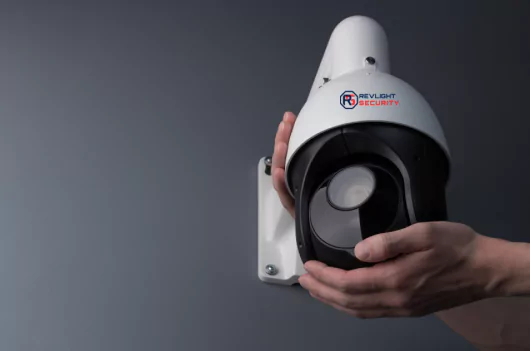
Above water, fixed surveillance systems provide continuous visibility around helidecks, access points, loading areas, deck operations, and critical machinery. Low-light and thermal imaging extend coverage when weather and darkness limit standard visual monitoring. In hazardous or corrosive areas, the camera housing, mounting hardware, cable protection, and certification requirements are as important as the image sensor itself.
Below water, underwater cameras give operators sight where routine visual checks are otherwise slow and costly. They can support inspection of hulls, risers, moorings, intake structures, subsea infrastructure, and areas where marine growth or debris may affect operations. Image quality matters, but so do pressure tolerance, lighting, cable length, connector reliability, and how footage is delivered back to the operator.
Gas detection adds another essential layer. Optical methane and gas leak detection cameras can identify emissions that may not be obvious to personnel during routine rounds. When correctly positioned and supported by operating procedures, these systems help teams investigate potential leaks sooner, prioritize maintenance, and maintain a stronger record of environmental and safety oversight.
The goal is not to force every feed into a single screen. The goal is to make sure the right person can see the right evidence at the right time, whether they are in an offshore control room, onboard a vessel, or supporting operations from shore.
Detection Must Lead to Action
Surveillance footage has limited value if an operator must watch every screen continuously. The next generation of offshore systems uses event-based monitoring to direct attention to changes that require review. This may include perimeter intrusion, vessel approach, abnormal heat patterns, movement in restricted zones, or signs of a gas release.
Intelligent analytics can reduce operator workload, but they are not a substitute for sound engineering or trained judgment. Offshore conditions create false triggers: sea spray, shifting shadows, birds, wave action, fog, and equipment vibration can all affect detection performance. The best results come from carefully setting detection zones, testing the system in real site conditions, and establishing a practical escalation process.
A useful question for buyers is not simply, “Does the system have analytics?” It is, “What operational decision will this alert improve?” If a notification cannot be verified and acted on, it may only add noise to the control room.
Network Reliability Will Define Offshore Surveillance
High-resolution video, thermal imagery, underwater feeds, detection data, recording, and remote viewing all depend on the network. This is where many surveillance projects either deliver lasting value or create ongoing frustration. A high-performance camera connected to an unstable network is still an unstable surveillance solution.
Marine WiFi systems, industrial switches, point-to-point links, fiber connections, and managed network equipment must be selected around the site’s actual operating environment. That includes coverage requirements, obstructions, vessel movement, bandwidth demand, power availability, electromagnetic interference, and the distance between offshore assets and shore-based operations.
Remote access is becoming a standard expectation, especially for multi-site operators and ship management companies. It enables technical teams to review footage, support incident investigations, and verify equipment status without unnecessary travel. However, remote access must be controlled. Segmented networks, strong authentication, encrypted communications, user permissions, and secure recording policies are operational requirements, not optional IT features.
There is also a trade-off between image quality and available bandwidth. Not every camera requires the highest possible resolution at all times. A well-designed system can use recording profiles, event-triggered high-quality capture, and smart bandwidth management to protect network capacity while preserving critical evidence. Procurement decisions should account for storage and network costs over the full service life, not only the purchase price of the camera.
Recording and Playback Become Operational Tools
Offshore surveillance is moving beyond live viewing. Recorded video and sensor data are increasingly used to review near misses, verify contractor activity, investigate equipment damage, support maintenance planning, and document compliance activities.
That requires reliable recording architecture. Local recording can protect footage during a communications outage, while centralized recording simplifies access and retention management. Many sites benefit from a hybrid approach: record essential streams locally, replicate priority events to a central platform, and define retention periods based on risk, regulation, and storage capacity.
Playback must be fast and usable. If locating an event takes an hour, the system will not support real-time operations. Time synchronization across cameras, detectors, access systems, and vessel tracking data makes investigations more accurate and reduces ambiguity when an incident is being reviewed.
Equipment Selection Will Shift Toward Lifecycle Value
The lowest-cost unit is rarely the lowest-cost offshore solution. Equipment that fails early, corrodes rapidly, requires frequent intervention, or creates excessive false alarms can consume the savings made at purchase. The future of offshore surveillance will favor systems chosen around lifecycle performance: durability, serviceability, compatibility, warranty support, and replacement availability.
For exposed marine locations, buyers should examine ingress protection, corrosion-resistant materials, operating temperature range, vibration tolerance, power requirements, and mounting options. Hazardous-area applications also require careful attention to applicable certifications and installation practices. A system that is technically capable but incorrectly specified for its zone can create compliance and safety problems.
Standardization is another major advantage. Operating fleets or multiple facilities with a consistent camera platform, network design, and recording environment reduces training demands and simplifies spare-part planning. Standardization should not mean using the same device everywhere. It means using a controlled product range with clear rules for which equipment belongs in each environment.
Revlight Security supports this approach with specialist surveillance, detection, underwater visibility, and marine network solutions designed for demanding industrial applications. The best service provider does more than supply equipment. It helps buyers match system capability to the risks, conditions, and commercial priorities of the site.
Human Oversight Still Determines Results
Automation will continue to improve, yet offshore surveillance will remain a human-led discipline. A detector may flag a possible release. A thermal system may show an abnormal temperature. A camera may capture an unauthorized approach. Trained personnel still need to assess the evidence, understand the operating context, and initiate the right response.
This is why system design should include more than devices and installation drawings. It should account for operator training, alarm ownership, maintenance routines, test schedules, incident procedures, and clear responsibility for reviewing recorded events. A security system that is ignored after commissioning is not a security system. It is installed hardware with unrealized value.
The highest-performing offshore programs will treat surveillance as part of operational assurance. Security, maintenance, HSE, marine operations, and IT teams all have legitimate requirements, and the system must support them without becoming difficult to manage.
When planning the next upgrade, begin with the failure points that cost the most: blind areas, delayed leak identification, poor offshore communications, difficult subsea inspection, and incomplete incident evidence. Then specify the equipment, recording, network capacity, and response process needed to remove those gaps. That is where offshore surveillance becomes a measurable investment in safer, more efficient operations.
🛡️ Secure Your Home or Business Today
Protect your home, office, shop, or business with reliable CCTV security cameras. Explore our range of CCTV cameras and find the right security solution for your needs.
Explore CCTV Cameras ✉️ Email Us

 Singapore :
+65-6708-9302
Singapore :
+65-6708-9302