
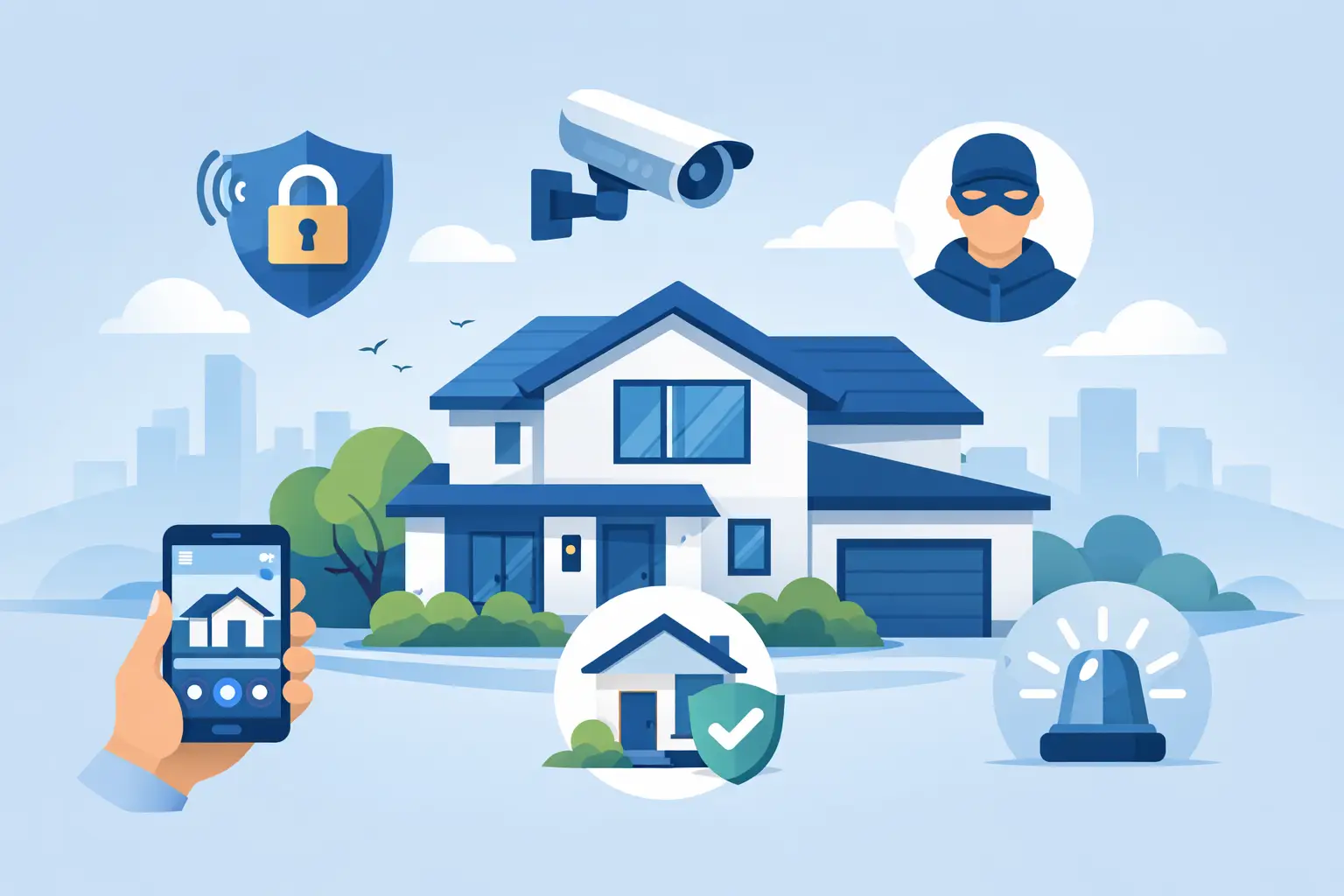
A residence can be a soft target even when the surrounding operation is tightly controlled. Executive homes, remote estates, crew accommodations, and family properties often sit outside the perimeter protections used at a refinery, terminal, or marine facility. The benefits of home security systems are therefore not limited to burglary prevention. A properly specified system creates visibility, supports a faster response, protects valuable assets, and gives responsible personnel reliable evidence when an incident must be reviewed.
For industrial decision-makers, the right approach is familiar: assess the site, identify exposure points, select equipment rated for the environment, and build a system that can be managed without unnecessary complexity. Home security deserves the same disciplined thinking.
Benefits of Home Security Systems for Real-World Risk
The strongest security systems do more than record an event after it has happened. They help identify suspicious activity early, verify what is taking place, and enable an informed response. That distinction matters. A loud alarm without context can create false callouts, while a camera image without a timely alert may be discovered too late.
A well-designed residential system combines detection, video surveillance, recording, communications, and controlled access where appropriate. Each component has a role. Door and window contacts identify unauthorized opening. Motion detection covers internal spaces and approach routes. Cameras provide visual confirmation. Recording preserves evidence. Remote access gives authorized users oversight when they are off-site.
The result is a security position that is active rather than passive. Owners, facility managers, and security teams can make decisions based on what they can see, not assumptions.
Earlier Detection at the Property Edge
Most residential incidents begin at predictable points: driveways, gates, exterior doors, ground-floor windows, garages, side passages, and rear boundaries. Security equipment placed only inside the home may confirm entry, but it does little to reveal the approach.
Perimeter-focused design changes that. Exterior cameras with clear coverage of access routes, paired with properly positioned lighting and intrusion detection, can identify activity before an individual reaches the structure. For larger homes and isolated properties, this is often the most valuable part of the system.
Early warning also gives residents and monitoring personnel more options. They can check live footage, contact a neighbor or security provider, activate site procedures, or request emergency assistance when a genuine threat is visible. It is a more controlled response than reacting after a break-in alarm has already been triggered.
Coverage must be planned carefully. A camera pointed toward a driveway may identify a vehicle but miss the pedestrian route around the side of the building. A detector may cover a patio door but generate nuisance alerts if it faces moving foliage or an exposed heat source. Good security performance comes from placement, field of view, lighting conditions, and configuration – not simply from adding more devices.
Video Verification Reduces Guesswork
False alarms waste time, damage confidence in a system, and can lead users to ignore alerts. Video verification is one of the clearest benefits of a professional home security installation because it gives users immediate context.
When an alert occurs, authorized users can review the relevant camera view and determine whether the cause is a delivery, a family member, weather movement, an animal, or an actual intrusion concern. This is especially useful for properties that are frequently vacant, homes managed from another city, and residences used by rotating personnel.
Recorded footage also matters after an event. High-quality recording can help establish timelines, document vehicle movements, support insurance claims, and assist investigations. The system should retain footage for a period that matches the property’s risk profile and operational needs. A residence left vacant for weeks requires more thoughtful retention planning than an occupied urban home where incidents can be reviewed immediately.
Image quality should be treated as a procurement requirement, not a marketing phrase. Useful footage depends on camera resolution, low-light performance, lens selection, scene contrast, mounting height, and available bandwidth. A poor nighttime image at a gate is not dependable evidence, no matter how advanced the system sounds on paper.
Remote Access Protects Vacant and High-Value Homes
Remote access allows authorized users to view live video, review recorded events, receive alerts, and check the status of selected devices from a secure interface. For ship captains, superintendents, operations managers, and executives who travel extensively, this feature is a practical advantage rather than a convenience.
It can answer routine but important questions: Has a contractor arrived? Was a gate left open? Did a delivery reach the correct entrance? Is an unoccupied property showing unusual activity? Remote visibility reduces dependence on informal check-ins and gives owners a clearer operating picture.
However, remote access must be secured correctly. Weak passwords, shared accounts, outdated network hardware, and unrestricted user permissions can turn a security system into an exposure point. Residential surveillance should use unique credentials, role-based access where available, encrypted connections, current firmware, and a network design that separates security equipment from general household devices when possible.
This is where technical system design separates dependable protection from a collection of consumer devices. The camera, recorder, wireless connection, router, power supply, and user access controls must operate as one managed solution.
Better Protection for People, Assets, and Daily Operations
The value of a home security system is not limited to the building itself. It protects the people who use the property and the routines that keep it operating. Staff arriving early, domestic workers, maintenance contractors, visiting family members, and drivers all benefit from clear access procedures and monitored exterior areas.
For high-value residences, visible security infrastructure can also discourage opportunistic activity. Cameras, controlled gates, and well-managed lighting communicate that the property is monitored and that entry attempts are likely to be detected. Deterrence is not guaranteed, but it can shift risk away from an easier target.
Security systems may also integrate safety-focused functions such as smoke, carbon monoxide, water-leak, and temperature alerts. These features can be highly useful for vacant houses, seasonal properties, and residences containing valuable equipment or critical records. A water leak discovered quickly can prevent far more damage than an intrusion alarm ever will.
The trade-off is complexity. Every added device needs power, connectivity, maintenance, and a clear response process. Buyers should prioritize the risks that can cause the greatest harm rather than purchasing features that will never be actively managed.
A System That Can Scale With the Property
A basic home may only need protected entry points, a few carefully located cameras, local recording, and mobile alerts. A large estate may require gate intercoms, multiple buildings, external detection zones, long-range network connections, backup power, and centralized viewing. Both can be effective when the design fits the property.
Scalability matters because security needs change. Renovations create new access points. A detached garage becomes an office. A second residence is added to the portfolio. New staff, tenants, or family members require controlled access. Choosing a system with sufficient recording capacity, network headroom, and expansion options prevents an expensive replacement later.
For remote or harsh locations, equipment durability is equally important. Outdoor devices must be selected for heat, cold, rain, dust, salt exposure, and unstable power conditions where relevant. The same engineering discipline used for industrial and marine surveillance applies here: environmental conditions determine whether equipment performs when it is needed.
Selecting the Right Level of Security
Start with a site survey, even for a modest home. Identify entry points, blind areas, valuable assets, routine occupancy, lighting conditions, network availability, and the likely response to an alert. This prevents common failures such as cameras installed too high for identification, recorders with insufficient storage, or alerts sent to people who have no defined responsibility.
Then decide what evidence and response speed the property actually requires. A primary residence in a populated neighborhood may benefit most from reliable entry detection and clear front-door coverage. An isolated executive residence may need stronger perimeter visibility, backup communications, and professional monitoring. A crew house or managed accommodation may require access oversight and footage retention that supports operational accountability.
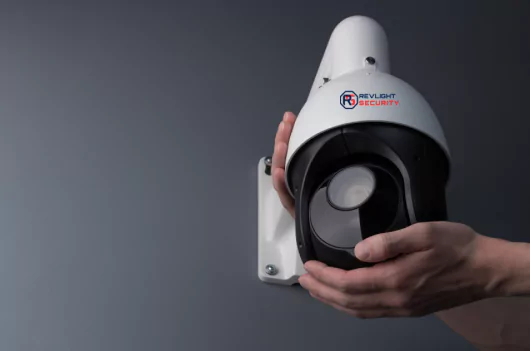
The best service provider will ask these questions before recommending equipment. Revlight Security approaches surveillance as infrastructure: specified for the environment, configured for the risk, and designed to deliver usable information when an incident occurs.
A home security system earns its value on the quiet days, not only during an emergency. When alerts are credible, footage is clear, access is controlled, and responsible users can check the property from wherever work takes them, security becomes a dependable part of property management rather than another source of uncertainty.
🛡️ Secure Your Home or Business Today
Protect your home, office, shop, or business with reliable CCTV security cameras. Explore our range of CCTV cameras and find the right security solution for your needs.
Explore CCTV Cameras ✉️ Email Us



 Singapore :
+65-6708-9302
Singapore :
+65-6708-9302