
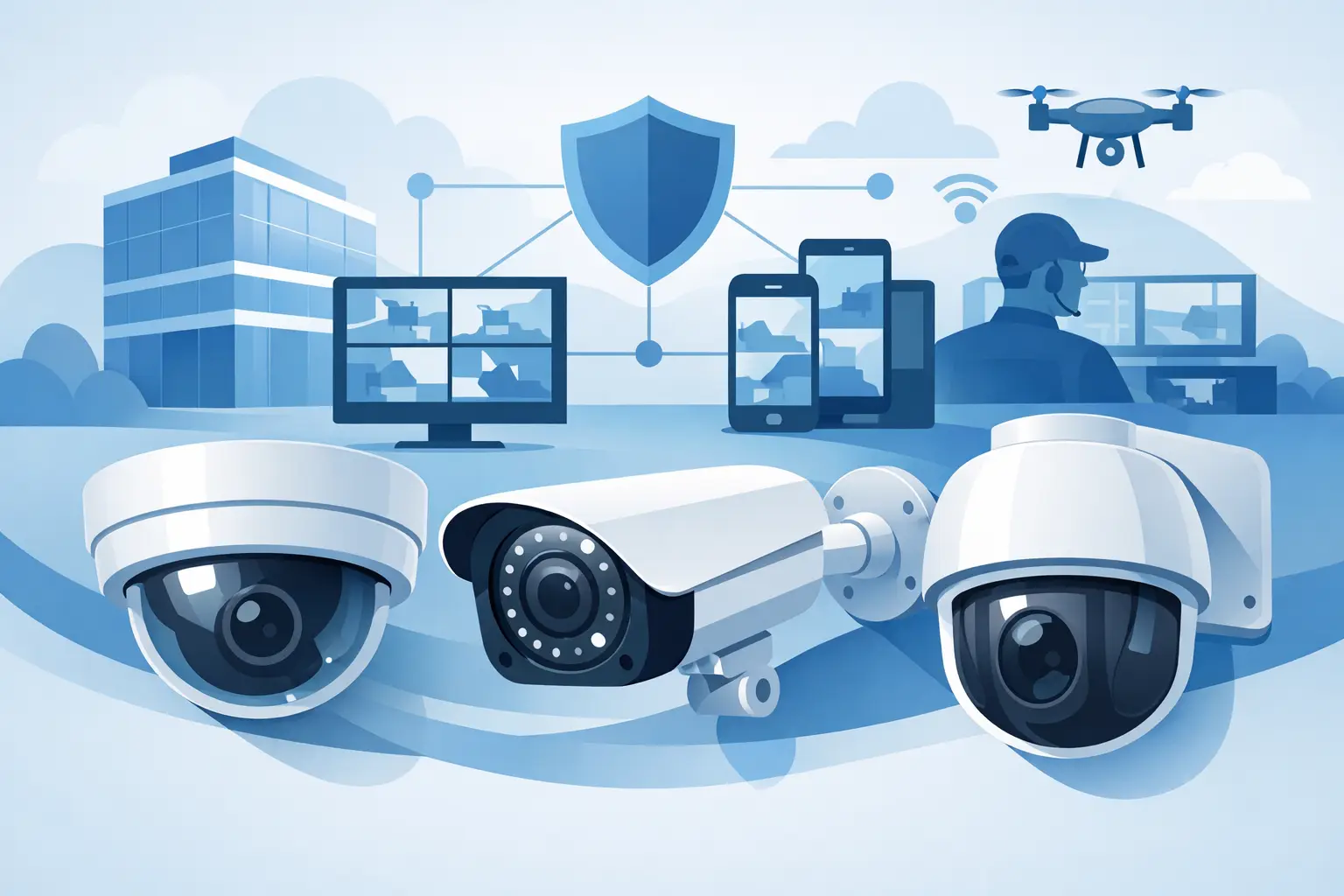
A failed camera at a refinery gate or onboard a vessel is not a minor inconvenience. It can delay incident reviews, weaken perimeter control, and leave operations teams blind when they need evidence most. That is why buyers looking for the best commercial security camera systems are not shopping for consumer-grade features. They are investing in uptime, image clarity, environmental durability, and a system architecture that can hold up under real industrial pressure.
For procurement managers, superintendents, and operations leaders, the right decision usually comes down to one question: which system keeps working in your environment, with the fewest compromises? In oil and gas, marine, energy, chemical, and heavy industrial settings, the answer depends less on brand hype and more on matching camera technology to the site, the threat profile, and the operating conditions.
What the best commercial security camera systems actually deliver
The best commercial security camera systems do more than record video. They create a dependable chain of visibility across entrances, tank farms, loading zones, engine rooms, offshore decks, substations, and remote assets. That means clear footage in low light, stable network performance, flexible storage, and playback that helps teams find incidents quickly instead of wasting time scrubbing through hours of video.
A serious commercial system should also support remote access without turning the network into a weak point. Many industrial buyers now expect centralized viewing across multiple facilities or vessels, plus permission controls for security teams, site managers, and executive stakeholders. If your system cannot scale cleanly, it stops being an asset and starts becoming another operational burden.
There is also the issue of durability. Indoor office cameras and true industrial cameras are not in the same class. Salt spray, vibration, explosive atmospheres, washdowns, corrosive chemicals, extreme heat, and unstable weather all place different demands on housings, connectors, and mounting methods. A lower upfront price often disappears once replacements, maintenance calls, and downtime are added back in.
Choosing by environment, not just by resolution
Resolution gets attention because it is easy to compare, but it is only one part of system performance. A 4MP or 8MP camera sounds impressive on paper, yet poor lens quality, weak low-light performance, or a badly planned field of view can still leave you with footage that is hard to use. In commercial settings, usable detail matters more than headline specs.
For perimeter protection at large industrial facilities, fixed bullet or turret cameras often provide strong coverage at a practical cost. They work well for fence lines, access roads, loading areas, and parking zones where you need consistent monitoring and clear identification. Dome cameras make sense in interior spaces, corridors, control rooms, and areas where a lower-profile installation is preferred.
PTZ cameras earn their place when operators need active monitoring across broad outdoor areas. They can track activity over long distances and reduce the number of individual units required in some layouts. The trade-off is straightforward: if nobody is controlling the PTZ, you are only recording where the camera is pointed at that moment. That is why many sites pair PTZ units with fixed cameras rather than relying on them alone.
Thermal cameras become especially valuable in dark, smoky, foggy, or perimeter-heavy environments where standard imaging struggles. They are not always the best choice for facial or plate-level detail, but they can detect intrusions, heat anomalies, and activity across difficult conditions that would defeat ordinary cameras. For energy infrastructure, marine operations, and remote industrial assets, thermal coverage can be one of the smartest upgrades in the system.
Best commercial security camera systems for industrial sites
Industrial sites need a system that matches risk, not a generic package. In a refinery or chemical plant, hazardous-area requirements may determine the camera type before any discussion about analytics or storage begins. Explosion-proof housings, certified enclosures, corrosion-resistant materials, and stable network integration are not optional extras in these settings. They are part of the minimum viable specification.
In power stations and substations, operators usually need long-range perimeter monitoring, reliable night visibility, and strong recording retention for compliance and investigation. Here, the best setup often combines fixed network cameras, thermal detection on key boundaries, and a recording platform that supports fast retrieval by time, event, or camera group.
For marine applications, vibration resistance, compact mounting options, and protection against saltwater exposure become central. Ships, offshore platforms, and port assets also benefit from strong remote viewing capability because decision-makers may be offsite while the incident is unfolding. A system built for marine deployment should account for bandwidth limitations and network stability, not just camera image quality.
This is where specialist suppliers stand apart from broad consumer-style sellers. A provider serving sectors such as offshore energy, marine fleets, and heavy industry understands that camera performance is tied directly to environment-specific engineering. That matters when the goal is not just surveillance, but dependable surveillance under pressure.
Core features worth paying for
A commercial buyer should pay close attention to recording and playback performance. High camera counts are common in industrial deployments, and weak recorders can quickly become a bottleneck. Network video recorders and server-based platforms should be evaluated for throughput, storage scalability, redundancy, and search speed. If it takes too long to retrieve evidence, the system is underperforming regardless of image quality.
Remote access is another feature that deserves scrutiny. The best systems allow authorized users to view live and recorded footage securely across facilities, vessels, and mobile devices, while keeping user permissions tightly controlled. This is especially useful for operation directors and regional managers overseeing multiple locations.
Analytics can add value, but only when they fit the site. Line crossing, intrusion detection, object left behind, and people or vehicle classification can reduce false alarms and improve response times. Still, analytics are not magic. Busy industrial backgrounds, steam, weather, and changing light can affect accuracy. Buyers should treat analytics as an enhancement to good camera placement, not a substitute for it.
Audio, two-way communication, and integrated alerts can also make sense in select deployments, particularly at gates, restricted zones, and unmanned assets. The best return usually comes from choosing features that improve incident response or reduce labor costs, rather than adding software functions that look impressive during a demo but deliver little in daily operation.
System design mistakes that cost more later
One of the most common mistakes is underestimating infrastructure. Buyers may focus on cameras and forget the switching, power, storage, wireless bridges, and network resilience required to keep the system stable. A camera system is only as strong as the network carrying it.
Another frequent error is overspecifying some areas and neglecting others. Sites sometimes invest heavily in a few high-end units while leaving blind spots at service entrances, transfer points, or secondary perimeters. A balanced design usually produces better security outcomes than chasing the highest possible spec on a limited number of cameras.
There is also the problem of choosing indoor-rated or lightly protected equipment for harsh conditions. That decision often looks economical at purchase, then expensive after corrosion, moisture ingress, or vibration damage starts causing failures. Commercial buyers should think in terms of total operating cost, not invoice price alone.
How to compare suppliers of the best commercial security camera systems
A credible supplier should be able to discuss camera counts, recording periods, environmental ratings, remote access, and installation constraints in practical terms. If the conversation stays vague, the support after purchase may be just as vague. Serious providers talk about deployment scenarios, not just box specs.
Ask how the system performs in your exact operating conditions. Ask what happens when bandwidth drops, when storage fills, or when a camera loses connection. Ask whether the system can expand across multiple facilities or vessels without forcing a complete redesign. These are commercial questions, not technical trivia, and they directly affect long-term value.
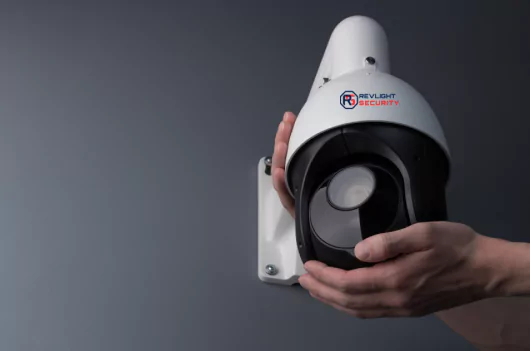
For industrial and marine operators, specialist support often beats mass-market volume. A supplier with experience in surveillance, detection, and network systems for harsh environments can usually specify a cleaner, more dependable solution from the start. That is one reason buyers evaluating top-of-the-line offers often prefer engineering-backed providers such as Revlight Security for demanding applications.
Price still matters, of course. But the cheapest quote rarely delivers the best service life, the fastest evidence retrieval, or the lowest maintenance exposure. Strong buyers compare performance, support, durability, and operating fit before they compare final totals.
The right camera system should reduce uncertainty, strengthen accountability, and give your team clear visibility where it counts most. If a system cannot do that in the real conditions of your site, it is not one of the best commercial security camera systems, no matter how good it looked on a product sheet.


 Singapore :
+65-6708-9302
Singapore :
+65-6708-9302