
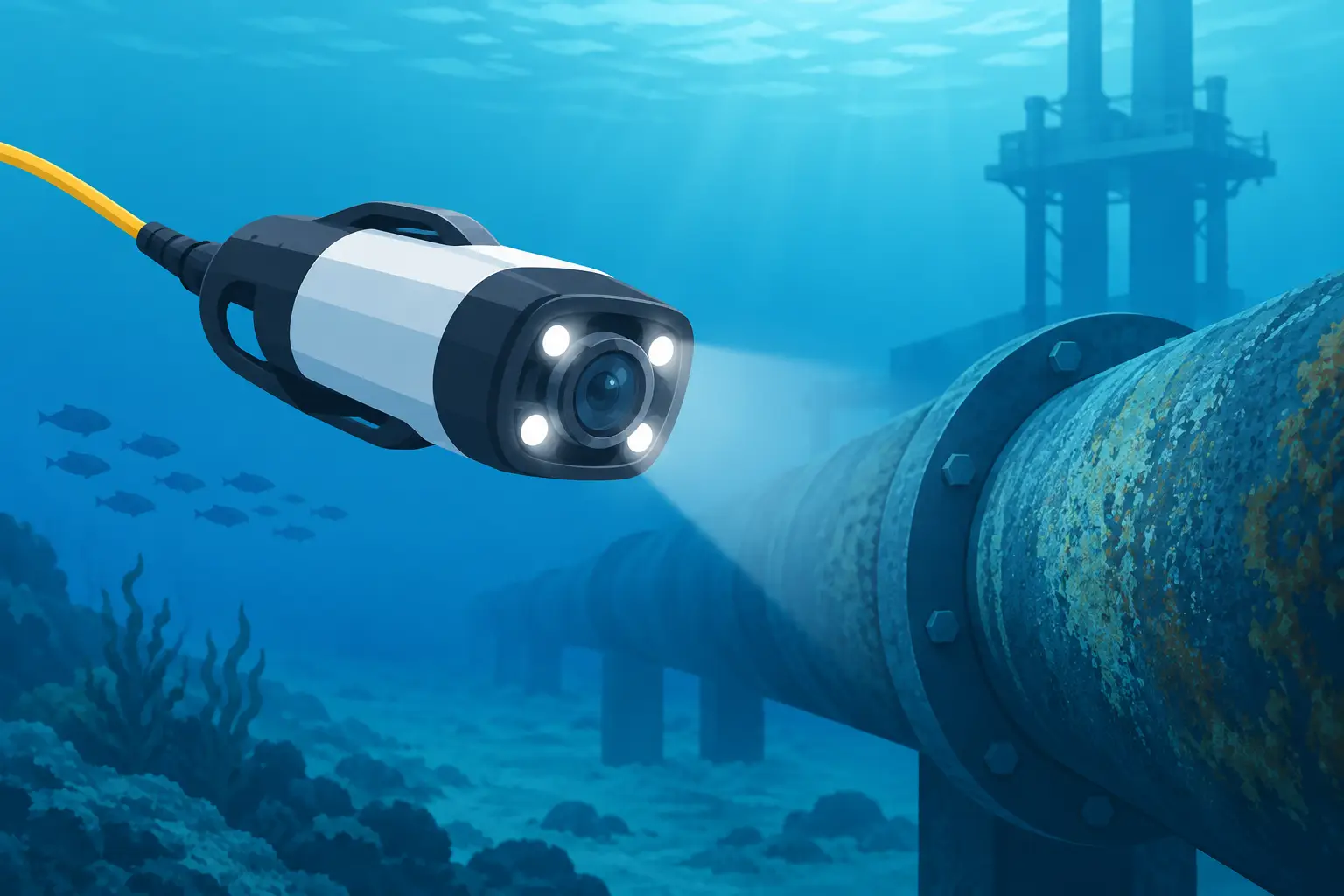
A subsea visibility gap can turn a routine inspection into an expensive operational decision. The future of underwater inspection cameras is therefore not about adding more pixels for their own sake. It is about giving offshore, marine, energy, and industrial teams dependable visual evidence before they commit divers, shut down equipment, schedule a dry-dock, or authorize repairs.
For procurement managers and operations leaders, that shift matters. Camera systems are becoming part of a larger inspection and security infrastructure: connected to vessel networks, control rooms, recording platforms, and maintenance planning. The best systems will reduce uncertainty around submerged assets while standing up to the pressure, corrosion, low light, and deployment demands of real industrial work.
Why the Future of Underwater Inspection Cameras Is Operational
Underwater inspection has historically been constrained by access. A hull, riser, intake, quay wall, mooring chain, pipeline section, or subsea structure may be difficult to reach, costly to isolate, and impossible to assess properly from the surface. When visibility is poor, teams often receive incomplete footage, make conservative assumptions, or escalate to a more expensive inspection method.
Next-generation camera systems are changing the quality and speed of that decision cycle. Higher-resolution sensors, stronger low-light performance, controlled illumination, and more reliable transmission allow operators to see condition details that would previously have been missed or disputed. That includes marine growth, corrosion patterns, coating damage, loose fittings, impact marks, and obstruction risks.
The commercial value is not simply better video. It is a clearer basis for deciding whether an issue requires immediate intervention, planned maintenance, continued monitoring, or no action at all. In high-value operations, avoiding one unnecessary mobilization or reducing an inspection window can justify the system investment quickly.
Image Quality Will Become More Useful, Not Just Higher
Resolution remains important, particularly when engineers need to inspect welds, fasteners, surface condition, or fine damage at a distance. Yet image quality underwater depends on more than sensor specifications. Turbidity, backscatter, water color, uneven lighting, lens contamination, and motion all affect whether footage is fit for inspection.
The strongest camera solutions will combine high-resolution imaging with purpose-built lighting and optics. Wide-angle viewing can help crews understand the overall location and geometry of an asset. Narrower fields of view can then support close examination of a suspected defect. Adjustable lighting is equally important because excessive illumination can create glare and suspended-particle reflection, while insufficient illumination removes the detail that matters.
Color correction and image enhancement will continue to improve, but they should be evaluated carefully. Enhancement can make footage easier to interpret, yet operations teams still need access to the original recording when maintenance or compliance decisions are being reviewed. Procurement specifications should address both the live view and the quality of stored footage, including timestamp accuracy and retention requirements.
AI Will Assist Inspectors, Not Replace Engineering Judgment
Artificial intelligence will have a growing role in subsea inspection, especially where operators must review hours of repetitive footage across multiple assets. Software can flag visual anomalies, compare current footage with previous inspections, identify changes in known areas of concern, and organize recordings by location or event.
This has real potential for vessel operators, offshore facilities, and industrial sites with recurring inspection programs. Instead of reviewing every minute of video manually, teams can prioritize the frames that show a possible crack, coating loss, fouling buildup, foreign object, or structural change. Faster review supports faster maintenance decisions and more consistent reporting.
However, AI should be treated as a decision-support layer, not an automatic authority. Water conditions vary widely, and false positives are inevitable when lighting, marine growth, sediment, or movement changes between inspections. A system that identifies potential concerns is valuable. A system that claims to replace an experienced engineer’s assessment is not a realistic procurement standard.
The most practical approach is to specify cameras and recording platforms that create clean, traceable visual data first. AI analysis becomes more accurate when footage is stable, properly illuminated, and tied to known asset locations.
Remote Access Will Change How Teams Manage Risk
A major direction for underwater inspection is the move from isolated video feeds to networked inspection systems. Operations personnel, technical managers, vessel superintendents, and approved shore-side experts increasingly need access to the same live view or recorded evidence without being physically beside the monitor.
This is particularly valuable when specialist knowledge is distributed across different locations. A ship engineer can show hull or sea-chest footage to a fleet technical team. An offshore supervisor can share a live view with an integrity engineer. A maintenance manager can review inspection records before approving work orders. The result is faster escalation, fewer communication errors, and better accountability.
Reliable connectivity is the limiting factor. Marine and offshore environments require carefully designed network infrastructure, bandwidth planning, protected enclosures, and secure access controls. A high-performance camera cannot deliver its full value if the video stream drops, recordings are inaccessible, or unauthorized users can reach the system.
For this reason, buyers should assess underwater imaging as part of the complete surveillance architecture. Camera selection, power delivery, cabling, network integration, recording capacity, playback functions, remote permissions, and cybersecurity all need to work together. Revlight Security supports this type of integrated approach for operators that need dependable surveillance capability rather than a standalone viewing device.
Durability Will Remain the First Procurement Test
Advanced features are valuable only when the camera housing, connectors, cable system, and mounting arrangement can survive the environment. Saltwater exposure, pressure, vibration, impact, temperature variation, chemical exposure, and continuous duty can quickly expose weak equipment design.
A camera intended for a protected freshwater application may be unsuitable for offshore, harbor, refinery intake, or heavy marine use. Buyers should confirm depth rating, housing material, corrosion resistance, ingress protection, connector quality, operating temperature range, and serviceability. Where a system will be deployed for extended periods, anti-fouling considerations and lens-cleaning options may also influence performance over time.
There is always a trade-off between the most advanced specification and the most appropriate specification. A deep-rated camera may be unnecessary for shallow berth inspection. A fixed installation can provide constant coverage of a critical intake or submerged access point, while a cable-deployed system may be better for scheduled inspections across changing locations. The correct choice depends on asset type, deployment frequency, available crew, and the cost of inspection failure.
From Inspection Footage to Defensible Records
The future is also about what happens after the inspection. Video that cannot be located, verified, compared, or shared has limited long-term value. Industrial operators need recordings that support maintenance history, incident investigation, contractor oversight, and, where relevant, regulatory documentation.
This makes recording and playback capabilities central to system design. Teams should be able to retain footage at a usable quality, search it efficiently, export approved clips, and associate observations with a specific asset, date, and inspection activity. When recurring inspections are planned, repeatable camera positions and consistent lighting settings make comparisons far more meaningful.
A well-designed system also helps commercial teams control costs. It reduces repeat inspections caused by poor footage, gives managers stronger evidence during repair planning, and supports more accurate conversations with contractors, insurers, and asset owners. These are practical savings, not theoretical technology benefits.
What Buyers Should Prioritize Now
The market will continue to introduce smarter sensors, automation features, and more connected platforms. But industrial buyers should not wait for a perfect future system. The immediate priority is to select equipment that captures clear evidence in the actual operating environment and can grow with the site’s security and network requirements.
Start with the inspection objective: what must be seen, at what depth, under what water conditions, and by whom? Then define the deployment method, required recording period, remote-viewing needs, and integration points. Finally, assess the supplier’s ability to support the complete solution, including system configuration and long-term reliability.
The strongest underwater inspection program is built before the first camera enters the water. When imaging, connectivity, recording, and operational response are specified together, teams gain a clearer view of their assets and a more confident path to the next decision.
🛡️ Secure Your Home or Business Today
Protect your home, office, shop, or business with reliable CCTV security cameras. Explore our range of CCTV cameras and find the right security solution for your needs.
Explore CCTV Cameras ✉️ Email Us

 Singapore :
+65-6708-9302