
A refinery incident rarely begins as a clear, obvious event. It may start as an unauthorized vehicle near a perimeter fence, a person entering a restricted process area, a developing hot spot on equipment, or a hydrocarbon plume that is invisible to the human eye. Refinery security cameras give operations teams the visual intelligence to identify those conditions early, verify what is happening, and respond with confidence.
For procurement managers and operations leaders, the objective is not simply adding more video coverage. The right system must perform in heat, dust, vibration, poor visibility, corrosive atmospheres, and around critical assets where downtime has a direct financial cost. It must also deliver useful footage to the control room, security desk, and approved remote users without creating a network burden or an unmanageable maintenance schedule.
What Refinery Security Cameras Must Deliver
A refinery is not a standard commercial site. Tank farms, loading racks, flare areas, process units, substations, pipeline corridors, and marine terminals all present different surveillance conditions. A camera selected for a gatehouse may be ineffective at a cracker unit. A camera that produces a clear daytime image may have limited value when a night shift needs to assess movement through smoke, vapor, or complete darkness.
High-performance refinery surveillance is built around detection, verification, and evidence. Detection means noticing a person, vehicle, heat anomaly, or gas release across a wide operating area. Verification means giving an operator enough detail to determine whether the alert is credible. Evidence means recording usable video with accurate time synchronization, secure retention, and fast playback when an investigation, safety review, or insurance claim requires it.
This is why lowest-cost equipment frequently becomes the most expensive choice. Poor low-light performance, weak environmental sealing, unreliable network connections, and limited integration can leave critical blind spots precisely when the facility needs answers. Industrial buyers should specify performance requirements first, then select equipment that meets them.
Match Camera Technology to the Hazard
Visible-light fixed cameras remain the foundation of most refinery systems. Positioned at gates, access roads, building entrances, loading bays, and key process approaches, they provide continuous scene awareness and recorded evidence. Models with strong low-light sensors, infrared illumination where appropriate, and weather-resistant housings can provide dependable coverage across day and night operations.
Pan-tilt-zoom units are valuable where one operator must inspect a large area or follow activity across a tank farm, jetty, or perimeter corridor. Their optical zoom capability can help verify vehicle markings, personnel movement, and activity at a distance. They should complement fixed coverage rather than replace it. A PTZ can look in only one direction at a time, while fixed units maintain the full record of the wider scene.
Thermal imaging serves a different operational purpose. It detects heat contrast rather than relying on visible light, making it highly effective in darkness and useful in challenging weather conditions. Thermal cameras can support early identification of overheating equipment, unauthorized movement near protected boundaries, and process conditions that need closer inspection. Their value is especially strong where traditional illumination is impractical or where bright lights would interfere with operations.
For hydrocarbon and methane risk, optical gas imaging technology is a serious operational asset. Gas detection cameras can visualize certain emissions that cannot be confirmed by standard video surveillance. Used alongside fixed gas sensors and site procedures, they can help teams locate the source of a suspected leak, prioritize field response, and document findings. The technology is not a replacement for every sensor network, but it provides a major advantage when visual confirmation and directional awareness are needed.
Design Coverage Around Operations, Not Just Boundaries
Perimeter protection is necessary, but it is only one layer of refinery security. A well-designed system considers the routes people and vehicles take, the areas where contractors work, the assets most vulnerable to interruption, and the locations where an operator needs immediate visibility.
Start with operational questions. Can security verify every vehicle approaching a controlled gate? Can the control room view access points to critical units? Can the site investigate a suspected intrusion without sending personnel into an uncertain area? Can a supervisor review loading activity, tank farm movement, or jetty operations after an incident? These questions reveal coverage gaps more effectively than a simple count of cameras.
Camera placement also needs to account for obstructions that change over time. Pipework, temporary scaffolding, parked tankers, steam, vegetation, and maintenance activity can all affect a view. Elevated mounting improves line of sight in many locations, but excessive height can reduce facial or vehicle detail. The best design balances overview coverage with targeted views at decision points.
Hazardous-Area Requirements Cannot Be an Afterthought
Equipment installed near classified locations must be selected for the applicable hazardous-area requirements and site standards. That includes the camera, housing, connectors, power equipment, and associated installation method. Installing a capable camera in an unsuitable enclosure is not a workable compromise.
Buyers should also consider temperature range, ingress protection, corrosion resistance, wind loading, vibration tolerance, and service access. Offshore-adjacent or coastal refinery environments often require extra attention to salt exposure and long-term material performance. A system that is difficult to maintain will eventually lose coverage, regardless of its original specification.
Make Video Useful to the People Responding
A refinery camera system succeeds when it shortens the time between an alert and an informed decision. Video management software should allow authorized users to view live footage, review recordings, search by time or event, export evidence, and manage permissions without unnecessary complexity. Control room operators need a clear interface that supports rapid verification, not a screen wall filled with unmanaged feeds.
Analytics can improve efficiency when applied carefully. Intrusion detection, line crossing, loitering alerts, object classification, and vehicle detection can focus attention on meaningful activity. However, analytics must be tuned for the site. Steam plumes, flare light, moving shadows, rain, insects, and process activity can produce nuisance alarms if the configuration is rushed.
The strongest approach is to define alarm rules by zone and operational context. A person in a public parking area may be normal. A person entering a restricted pipe rack at night may require immediate review. Alarm workflows should specify who receives the alert, how it is verified, and when it escalates to site security, operations, or emergency response.
Network Resilience Is Part of Security
Video is only useful when it reaches the people who need it. Refineries often have large footprints, segmented networks, remote assets, and strict cybersecurity requirements. Network architecture must support sufficient bandwidth, protected transmission, secure user access, and reliable recording even when a link is interrupted.
Edge recording can preserve footage at the camera during temporary communication outages. Local network video recording can protect critical operations if a central system is unavailable. Redundant paths, managed switches, fiber connections, and appropriately designed wireless links can strengthen availability across difficult areas of the facility. The right design depends on distance, terrain, existing infrastructure, and the criticality of each camera location.
Cybersecurity should be addressed at procurement stage, not added after deployment. Require controlled user roles, strong credential management, encryption where supported, firmware support, auditability, and compatibility with the facility’s network policies. An insecure surveillance endpoint can create risk beyond the security department.
Buy for Lifecycle Value, Not the Initial Quote
The purchase price is only one part of the cost equation. Installation complexity, mounting hardware, hazardous-area approvals, network expansion, storage retention, maintenance access, replacement lead times, and technical support all affect the real lifecycle cost. A lower-priced unit that fails early or requires frequent site visits can quickly erase any initial savings.
Specify expected retention periods, image quality targets, environmental requirements, integration needs, and acceptance testing before requesting quotations. Ask suppliers to demonstrate how the proposed system performs at night, at distance, and under the environmental conditions that matter at your site. Generic product sheets are not enough for critical infrastructure.
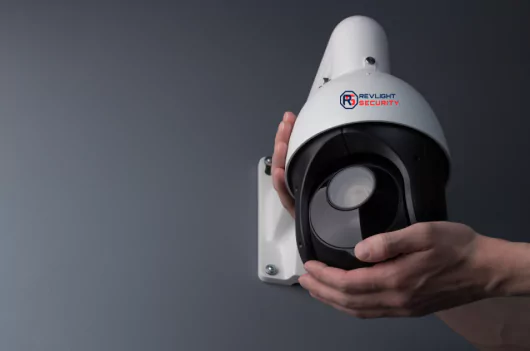
Revlight Security supplies specialist surveillance and detection equipment for industrial operations where standard security products do not deliver enough protection. The right refinery solution can combine visual surveillance, thermal imaging, gas detection, resilient networking, and remote access into a system built around the facility’s actual risks.
The most valuable camera view is the one that gives your team a clear answer before a small concern becomes a shutdown, safety event, or security breach. Build that capability where it matters most, test it under real operating conditions, and keep it ready for the moment your site cannot afford uncertainty.
🛡️ Secure Your Home or Business Today
Protect your home, office, shop, or business with reliable CCTV security cameras. Explore our range of CCTV cameras and find the right security solution for your needs.
Explore CCTV Cameras ✉️ Email Us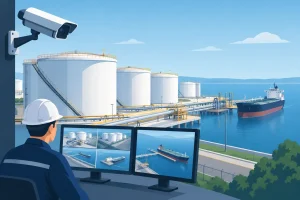



 Singapore :
+65-6708-9302