
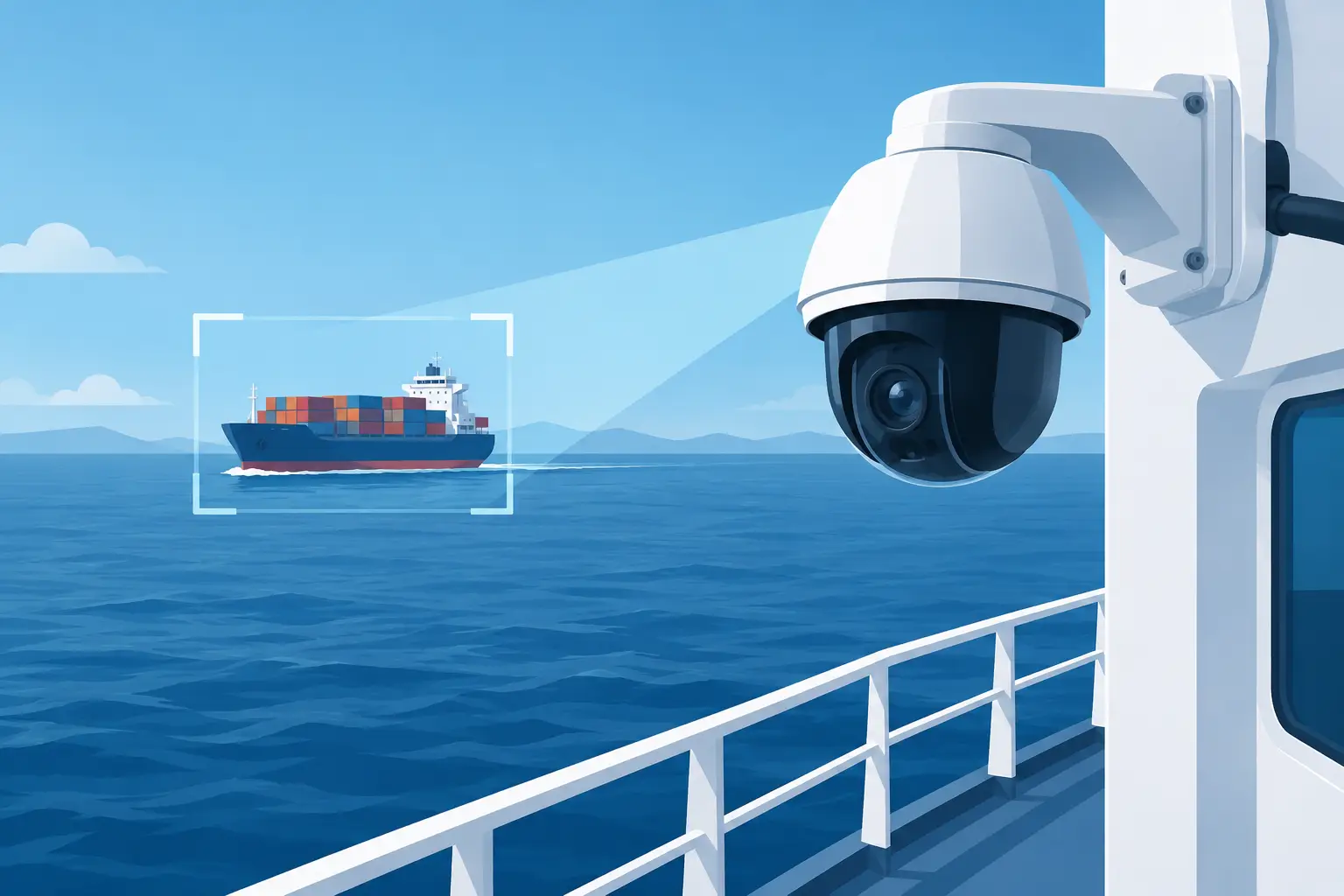
A request for a DNV camera usually appears when a vessel, offshore platform, terminal, or industrial facility is working from a strict equipment specification. But what is a DNV camera, exactly? It is not a separate camera technology or a universal product class. In most cases, it means a surveillance camera or camera system that has been assessed, approved, or documented to meet relevant DNV requirements for a defined marine or offshore application.
That distinction matters to procurement teams. A camera may produce excellent images in a warehouse test and still be unsuitable for installation on a ship, near a process area, or on an offshore structure. Approval status, environmental limits, mounting arrangement, power supply, network design, and supporting documentation can all determine whether the system is accepted.
What Does DNV Mean for a Camera System?
DNV is a classification society and assurance organization widely used across the maritime, offshore, and energy sectors. Its rules, approval processes, and verification services help owners, operators, yards, and insurers establish that equipment is suitable for demanding service conditions.
When buyers refer to a DNV camera, they may mean one of several things. They may need a camera with DNV type approval, a camera that is acceptable within a DNV-classed vessel project, or a complete CCTV installation designed to satisfy a project specification referencing DNV rules. These are related requirements, but they are not interchangeable.
A type-approved item has been evaluated against a defined standard or rule set for its intended use. A camera installed aboard a classed vessel may also need project-specific review of its location, cabling, network equipment, power arrangement, and integration with alarm or recording systems. The correct answer is always found in the vessel specification, class notation, flag-state requirements, and customer acceptance criteria.
Why Standard Surveillance Equipment May Not Qualify
Marine and offshore sites punish weak equipment. Salt spray attacks housings and connectors. Constant vibration can affect mounts, internal components, and cable terminations. Heat, cold, humidity, electromagnetic interference, and unstable power can reduce reliability long before image quality becomes the issue.
A suitable camera solution is therefore evaluated as part of an operating system, not simply as a lens and sensor. Buyers should expect the technical review to cover environmental protection, vibration and shock tolerance, electrical characteristics, electromagnetic compatibility, material selection, ingress protection, and the suitability of associated enclosures.
For a camera mounted on an exposed deck, a corrosion-resistant marine-grade enclosure may be just as critical as the camera core. For an engine room or machinery space, vibration performance and low-light coverage may carry more weight. For a hazardous process area, DNV status alone does not replace hazardous-area certification. Where flammable gas, vapor, or dust is present, the required ATEX, IECEx, UL, or other local approval must match the area classification.
That is why a generic statement such as “marine approved” should never end the purchasing conversation. Ask which approval applies, to what product configuration, for what environmental category, and whether the certificate remains current.
What Buyers Should Verify Before Specifying a DNV Camera
The most effective procurement process starts with the operating location and performance objective. Is the system intended for navigation support, perimeter monitoring, cargo observation, machinery-space oversight, helideck coverage, process visibility, or remote inspection? Each application creates different requirements for image detail, coverage, recording, redundancy, and control.
Then verify the evidence behind the approval claim. A supplier should be able to identify the exact manufacturer, model, housing, power option, and approval documentation. A certificate for one configuration does not automatically cover another configuration with a different enclosure, connector, heater, power supply, or network interface.
Documentation should be reviewed alongside the product data sheet. Look for the approval number, issue date, validity period, applicable standard, environmental category, and stated limitations. Confirm whether the approval applies to the camera itself, the housing assembly, or another component in the proposed system. This prevents a common and expensive error: assuming that a compliant camera remains compliant after it is installed inside an unapproved enclosure or paired with unsuitable auxiliary equipment.
System architecture deserves equal attention. An IP camera network may depend on PoE switches, fiber media converters, wireless bridges, network video recorders, monitors, uninterruptible power supplies, and surge protection. A project can fail acceptance if those supporting components are not fit for the environment or if cable routes, penetrations, and installation practices do not satisfy the applicable rules.
For high-value operations, define failure behavior early. Determine whether cameras must continue recording during network interruptions, whether recording must be retained for a specified period, how operators access footage, and whether remote users require encrypted access. Cybersecurity is now part of surveillance procurement, especially where vessel networks connect to shore offices or third-party service providers.
DNV Approval Is Not the Same as Hazardous-Area Approval
This point is particularly relevant to refineries, chemical plants, offshore production units, and gas handling facilities. A DNV-approved or DNV-accepted camera may be suitable for marine service, but it is not automatically certified for installation in a Zone 1, Zone 2, Class I Division 1, or Class I Division 2 location.
Hazardous-area camera selection must start with the site classification drawing. The camera, housing, glands, junction boxes, power supplies, and installation method must all be compatible with that classification. Thermal performance also matters. An enclosure heater or illuminator can affect the temperature code and therefore the permitted use in certain environments.
A well-designed surveillance package can combine these requirements. For example, an offshore operator may need an explosion-protected camera assembly for a classified deck area, marine-grade construction for saltwater exposure, and documentation acceptable to the vessel or unit’s classification process. The right package is engineered around the installation, not selected from a generic product list.
Performance Requirements Still Matter
Certification and approval establish confidence in suitability, but they do not guarantee that the camera will deliver the operational result you need. A compliant unit with the wrong lens can leave a gate unreadable. A low-light camera installed without proper lighting may provide only silhouettes. A wide-angle view can cover an entire deck while failing to capture usable identification detail at distance.
Specify performance in practical terms. State the area to be viewed, mounting height, target distance, minimum lighting conditions, required identification level, recording duration, and operator viewing location. If pan-tilt-zoom control is required, define preset positions, control priority, and response expectations. If a system must support incident investigation, define frame rate, resolution, timestamp accuracy, export controls, and storage integrity.
Bandwidth and storage calculations should be based on real scene activity. Ocean movement, weather, machinery, steam, and low-light noise can all increase video data rates. Aggressive compression reduces storage consumption but may remove the detail needed after an incident. The best design balances network capacity, retention requirements, image quality, and cost rather than maximizing one at the expense of the others.
A Practical Procurement Approach
For a DNV-related camera requirement, start by issuing the project documents to the surveillance supplier before requesting a final quotation. Include the class requirement, environmental conditions, hazardous-area classification if applicable, preferred power and network architecture, drawing references, and intended camera positions.
Ask for a compliance matrix rather than relying on broad marketing claims. The matrix should show each requirement, the proposed equipment, the supporting document, and any exclusions or assumptions. This format gives engineers, superintendents, and procurement teams a clear basis for comparison.
It is also wise to confirm serviceability. Offshore and marine operators should know how lenses will be cleaned, how housings will be accessed, whether spares are available, and how firmware updates are controlled. A lower initial price can become a poor commercial decision if one failed component requires extensive access work or vessel downtime.
Revlight Security supports industrial buyers with surveillance packages built around the actual operating environment, from marine network infrastructure to specialized detection and monitoring applications. The priority is not simply supplying cameras. It is supplying a configuration that can be installed, operated, maintained, and documented with confidence.
The best next step is to treat “DNV camera” as the start of a technical conversation, not the final specification. When the approval scope, installation environment, and performance target are aligned before purchase, the resulting system is far more likely to protect operations without creating acceptance delays or costly rework.
🛡️ Secure Your Home or Business Today
Protect your home, office, shop, or business with reliable CCTV security cameras. Explore our range of CCTV cameras and find the right security solution for your needs.
Explore CCTV Cameras ✉️ Email Us


 Singapore :
+65-6708-9302
Singapore :
+65-6708-9302