
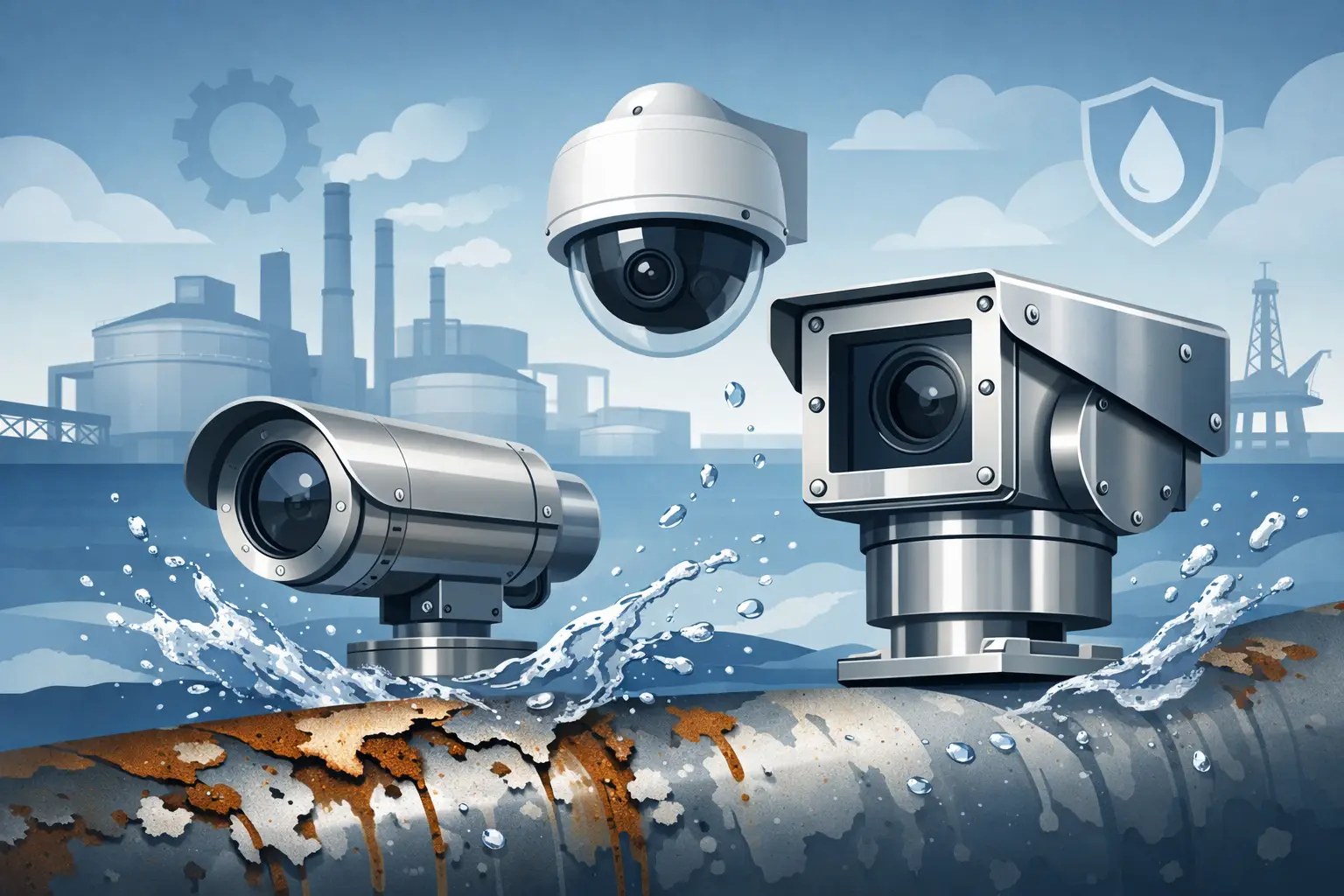
Salt mist does not need a dramatic failure to compromise surveillance. It begins at cable entries, fasteners, window seals, and coating edges, then turns a working inspection point into a recurring maintenance cost. The best anti corrosion camera housings protect the camera system where industrial exposure is hardest: offshore decks, refinery process areas, marine terminals, power stations, and chemical facilities.
For procurement and operations teams, the right housing is not simply an enclosure with a high IP rating. It is a materials, sealing, viewing-window, cable-gland, and maintenance decision that affects image availability, vessel uptime, safety monitoring, and replacement budgets. A lower initial price can become expensive quickly when corrosion forces unplanned access work or leaves a critical area without visual coverage.
What makes a camera housing corrosion-resistant?
Corrosion resistance starts with matching the enclosure material to the actual exposure. Marine and offshore environments combine chlorides, humidity, UV exposure, vibration, washdown, and temperature cycling. Refineries and chemical plants add process vapors, cleaning agents, corrosive gases, and airborne contaminants. No single material or finish is the right answer for every location.
Marine-grade stainless steel is a strong default for exposed coastal and offshore installations because it provides excellent resistance to salt-laden air and regular washdown. For higher chloride exposure, a higher-alloy stainless specification may be justified, particularly around splash zones, open decks, and seawater handling equipment. The material choice should extend beyond the main body to hinges, latches, mounting hardware, screws, and cable fittings. A corrosion-resistant enclosure with standard fasteners is a weak system.
Aluminum housings can perform well when they use an appropriate marine-grade coating system and are installed with careful attention to galvanic isolation. They offer lower weight, which matters on masts, railings, and structures with limited load capacity. However, coating damage, dissimilar-metal contact, and poor grounding practice can shorten service life. Aluminum is often a sound commercial choice, but it requires disciplined installation.
Engineered polymer housings have value in selected chemical or low-impact environments. They do not rust, are lightweight, and may tolerate certain chemicals well. Their trade-off is mechanical strength, UV aging, heat performance, and suitability for high-risk or hazardous locations. Specify them based on documented environmental compatibility, not on the assumption that nonmetallic means maintenance-free.
How the best anti corrosion camera housings prevent failures
A quality housing controls more than surface corrosion. It protects the complete surveillance assembly from moisture ingress, contamination, condensation, and mechanical degradation.
The first priority is ingress protection. IP66 or IP67 protection is commonly required where driving rain, washdown, or wind-blown salt are expected. The appropriate rating depends on exposure and maintenance practices. An IP66 housing may be suitable for powerful water jets, while installations exposed to temporary immersion or severe flooding need a specification that addresses that risk directly. The rating only delivers value when the installer uses approved cable glands, correct torque, and undamaged seals.
The viewing window deserves the same scrutiny as the enclosure body. A camera can sit inside a clean, dry housing and still fail operationally if the window hazes, scratches, pits, or collects salt deposits. Tempered glass, optical-grade windows, hydrophilic coatings, wipers, washers, and sunshields each have a place. On an offshore platform, a washer-wiper assembly may be worth the added cost if technicians otherwise need to access an elevated camera location frequently. In a sheltered plant corridor, a fixed window with a well-designed hood may be the more economical option.
Condensation control is another frequent gap in specifications. Temperature changes can pull moist air through imperfect seals, while internal heat from the camera and network components changes the enclosure’s dew point. Heater, blower, thermostat, or pressure-equalization solutions should be selected based on climate, mounting position, and power availability. A housing that keeps rain out but allows internal fogging does not provide dependable evidence or process visibility.
Select by environment, not by catalog category
A practical specification starts with the location and operating duty. Ask what contacts the housing, how often it is cleaned, and what happens if the image is lost. The answers should guide the enclosure selection more than a generic label such as outdoor or marine.
Offshore platforms and vessels
Open-deck surveillance requires serious resistance to salt spray, vibration, UV, and continuous wind exposure. Stainless construction, sealed glands, corrosion-resistant mounts, and a window-cleaning strategy should be considered baseline requirements. If the camera monitors landing areas, crane operations, perimeter approaches, or critical machinery, specify a housing that supports stable positioning and easy service without disturbing alignment.
For underwater inspection points, the requirement changes completely. Depth rating, pressure integrity, connector design, seawater compatibility, and optical clarity under water must be engineered as one package. An above-water marine housing is not a substitute for a purpose-built underwater enclosure.
Refineries, terminals, and chemical facilities
These sites demand a close review of atmospheric exposure and area classification. Acidic vapors, sulfur compounds, cleaning chemicals, and hydrocarbon residues can attack coatings and seals differently. Where a camera is installed in a classified area, the housing and complete assembly must meet the applicable hazardous-location requirements. Do not attempt to create a compliant system by placing ordinary equipment inside a sealed box.
Access also matters. A housing overlooking a flare area, tank farm, loading rack, or gas detection zone should support long inspection intervals and reliable remote operation. A small saving on enclosure grade is rarely justified where a maintenance visit requires permits, isolation procedures, lifting equipment, or confined-area planning.
Power generation and coastal infrastructure
Power stations, substations, ports, and water-adjacent industrial facilities often face a mix of salt air, airborne dust, rain, and thermal cycling. Choose materials that tolerate the local atmosphere, then verify mounting arrangements. Poorly designed brackets can trap water against the housing, create crevices, and undermine an otherwise high-quality installation.
Features that deserve procurement attention
When comparing offers, look beyond the headline enclosure rating. The best value normally comes from a complete, documented solution rather than an assembly of mismatched components. Review these four areas before issuing a purchase order:
- Material grade and finish, including all external fasteners, hinges, brackets, glands, and cable-management accessories.
- Environmental ratings, temperature range, UV resistance, vibration performance, and any applicable hazardous-area approvals.
- Window design, including glass type, replacement method, sunshield, washer-wiper options, and compatibility with infrared or low-light imaging where required.
- Service design, including access to the camera, cable termination space, spare-part availability, mounting adjustment, and expected maintenance intervals.
Documentation should identify the exact model, material specification, rating limitations, and approved accessories. Broad claims such as marine-ready are not enough for a project with defined corrosion exposure. Procurement teams should request evidence that the selected configuration, not just a similar product line, meets the site requirement.
Balance capital cost against access cost
The least expensive housing often looks attractive when a project involves dozens or hundreds of surveillance points. Yet the installed lifecycle cost is driven by labor, access restrictions, outage windows, replacement stock, and lost visibility, not only unit price.
Consider two locations. A warehouse perimeter camera may be reachable from a ladder and easy to replace. A camera above an offshore process module may require a planned maintenance campaign, work permits, weather clearance, and specialist access. These installations should not be specified to the same price point. Higher-grade materials, better sealing, and cleaning features are commercially sensible when every service visit is costly.
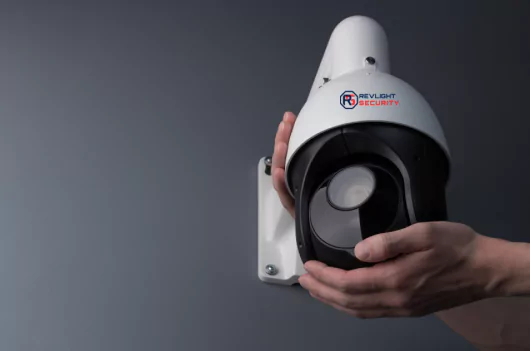
Revlight Security supports industrial buyers with surveillance solutions selected for demanding marine, energy, and process environments. The objective is clear: maintain usable visual coverage for longer, reduce avoidable field intervention, and protect the investment in the surveillance network behind the enclosure.
Before finalizing a housing specification, walk the proposed camera location with operations and maintenance personnel. The best choice is the one that survives the actual atmosphere, can be serviced safely, and continues delivering a clear image when that image is needed most.
🛡️ Secure Your Home or Business Today
Protect your home, office, shop, or business with reliable CCTV security cameras. Explore our range of CCTV cameras and find the right security solution for your needs.
Explore CCTV Cameras ✉️ Email Us

 Singapore :
+65-6708-9302
Singapore :
+65-6708-9302