

A control room gets expensive fast when operators are forced to watch everything, everywhere, all at once. That is exactly why AI video surveillance trends matter now for refineries, offshore assets, terminals, marine fleets, and power infrastructure. The shift is not about replacing security teams. It is about giving them systems that spot the right event sooner, reduce wasted response time, and perform reliably in harsh, high-risk environments.
For industrial buyers, the conversation has moved beyond basic motion alerts and general CCTV coverage. The real question is which AI capabilities deliver measurable value on live sites where poor visibility, weather, vibration, heat, corrosion, and compliance pressure all affect performance. Some trends are genuinely improving detection and operations. Others sound good in a brochure but fall short when the environment gets difficult.
The AI video surveillance trends changing industrial security
The strongest trend is the move from passive recording to active detection. Traditional systems collected footage for later review. AI-enabled systems are increasingly expected to identify abnormal behavior, classify objects, flag safety events, and support a faster operational decision. In industrial settings, that difference matters because a delayed response can mean downtime, loss, environmental exposure, or safety escalation.
A second shift is that video analytics are no longer treated as a standalone feature. Buyers are evaluating them as part of a wider detection stack that may include thermal imaging, gas detection cameras, radar, vessel monitoring, network infrastructure, and remote access. That is a more practical way to buy. Video alone does not solve every problem, especially on offshore platforms or processing sites where smoke, darkness, glare, or hazardous vapor can limit standard optical performance.
1. Edge AI is replacing analytics that depend on the cloud
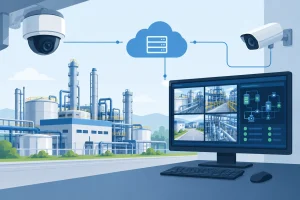
In oil and gas, marine, and energy operations, bandwidth is never a small issue. Offshore platforms, remote substations, moving vessels, and large industrial yards cannot always rely on low-latency, high-capacity connectivity for constant video transport. That is why edge AI is becoming the preferred model.
With edge processing, the camera or local device analyzes footage on site and sends metadata, alerts, or selected clips instead of every stream in full resolution. The commercial advantage is straightforward. It reduces network load, lowers storage waste, and shortens alert times. It also gives operators a better chance of maintaining performance during connectivity disruption.
That said, edge AI depends heavily on hardware quality and model optimization. A cheap device with underpowered processing will struggle when scenes become crowded or environmental conditions deteriorate. Buyers should ask not just whether analytics are onboard, but how consistently they perform under industrial load.
2. Thermal and multisensor systems are gaining priority
One of the most important AI video surveillance trends is the rise of analytics paired with thermal imaging and multisensor cameras. Standard visible-light cameras still have a place, especially for identification and general scene awareness. But industrial security rarely operates in ideal lighting. Sites deal with darkness, fog, steam, flares, shadowing, and weather that can limit conventional video.
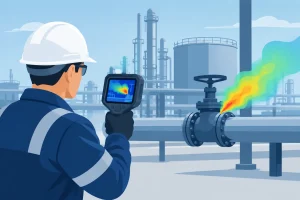
Thermal systems help maintain detection where standard imaging weakens. When AI is trained to analyze thermal feeds, operators can detect perimeter intrusions, equipment overheating, vessel approach, and unusual movement with greater consistency. For refineries, tank farms, substations, and marine assets, that can translate into earlier intervention and fewer blind spots.
The trade-off is cost and use case specificity. Thermal is not always the right answer for every area, and not every analytics engine handles thermal imagery equally well. The better procurement strategy is targeted deployment in high-risk zones rather than broad, unnecessary overcoverage.
3. Event filtering is becoming more valuable than raw detection
Industrial teams do not need more alarms. They need fewer false alarms and better event quality. That is why event filtering has become more valuable than simple detection rates.
Modern AI systems are increasingly designed to distinguish between a person, vehicle, vessel, animal, heat plume, or routine environmental movement. This matters at fence lines, quay walls, loading areas, and process zones where wind, shadows, surf, rain, and machinery create constant visual noise. An alert that arrives every two minutes trains staff to ignore the system. An alert that arrives only when behavior meets defined risk criteria supports action.
This is where rule design becomes commercially important. Line crossing, intrusion zones, loitering, wrong-way movement, stopped vehicle rules, and PPE-related triggers all have value, but only when matched to operational reality. Too many vendors oversell AI as plug-and-play. In practice, the best results come from proper scene setup, camera positioning, and tuning around the site’s actual risk profile.
4. Safety and operations monitoring are converging
Security buyers are no longer buying for security alone. They are increasingly expected to support safety, operations, and asset protection through the same infrastructure. That makes AI video systems more attractive when they can justify value across departments.
For example, analytics can help detect unauthorized access, worker presence in restricted zones, vehicle congestion, unsafe queueing near loading points, and unusual inactivity around critical equipment. In marine environments, AI can support deck monitoring, perimeter observation, and restricted access checks. In energy and processing facilities, it can strengthen both incident prevention and incident review.
This convergence is good for budgets because a system with multiple operational outcomes is easier to approve. But it also raises a design challenge. A surveillance setup built only for broad security coverage may not be positioned well for detailed safety workflows. Buyers should define the required outcomes first, then select cameras, sensors, and analytics accordingly.
5. AI is being judged by auditability, not just accuracy
Procurement teams and operations leaders are under pressure to justify every technology investment. That is changing how AI is evaluated. Accuracy still matters, but auditability is becoming just as important.
Decision-makers want to know why an alert was triggered, how footage is tagged, how events are searched, and whether the system can support investigations, compliance checks, and reporting. Searchable metadata, event timelines, and replay tools reduce the time required to review footage and document incidents. In practical terms, that means less labor spent digging through video and a clearer chain of evidence when something goes wrong.
There is also a governance angle. Some AI features are useful in one region or use case and more sensitive in another. Industrial buyers should be careful with applications that raise privacy concerns or create policy complexity without delivering strong operational benefit. The smartest investment is usually the one that improves detection and review efficiency without introducing unnecessary legal friction.
6. Harsh-environment performance is becoming a buying line item
Another major change is that AI is no longer judged only by software capability. It is being judged by whether the full camera system can survive the deployment environment. For offshore, marine, refinery, and chemical settings, that is non-negotiable.
An advanced analytics platform means very little if the camera housing fails under salt exposure, the optics degrade, vibration affects image quality, or temperature swings cause recurring faults. The market is moving toward integrated thinking – analytics, optics, enclosure rating, low-light performance, network resilience, and maintenance demands all have to work together.
This is where specialist suppliers have an advantage. General-purpose surveillance products can be fine for commercial buildings, but industrial sites need equipment selected for corrosion resistance, hazardous-area suitability where applicable, and long-term uptime. Buyers looking at AI video surveillance trends should pay close attention to deployment engineering, not just software demos.
7. Remote management and hybrid infrastructure are becoming standard
Large industrial operators want visibility across multiple sites, vessels, terminals, and facilities without building control rooms around every asset. That is pushing demand for remote management platforms and hybrid architectures that combine on-site recording, edge analytics, and centralized oversight.
This trend is especially relevant for organizations managing mixed environments. A marine operator may need vessel-side monitoring and shore-side review. An energy company may need local resilience at a substation while also feeding critical alerts to a central operations team. Hybrid design supports both.
The benefit is scale without total dependence on a single network model. The challenge is integration. Systems from different generations and vendors do not always communicate cleanly, and cybersecurity standards cannot be treated as an afterthought. The strongest projects are the ones that plan video, wireless backhaul, storage, and remote access as one security infrastructure decision.
What buyers should do with these trends
The market is full of AI claims, but industrial buyers should stay disciplined. Start with the risk that costs the site the most money, time, or exposure. That could be perimeter intrusion, poor visibility, delayed incident review, vessel approach monitoring, gas-related observation, or overloaded operators. Then ask which technology mix improves that outcome with the least operational friction.
This is also the right time to be selective about pilot projects. A useful pilot is not a generic demo. It is a live test in the lighting, weather, traffic, and network conditions the site actually faces. If the analytics cannot hold up there, the problem is not the brochure. The problem is fit.
At Revlight Security, that practical approach matters because industrial surveillance is rarely solved by a single camera type or software label. Buyers need dependable equipment, application-led design, and systems that earn their place through uptime, usable alerts, and lower response burden.
The next phase of surveillance will favor buyers who ask harder questions early, because the best AI system is not the one with the longest feature list. It is the one that still performs when the environment stops being easy.
🛡️ Secure Your Home or Business Today
Protect your home, office, shop, or business with reliable CCTV security cameras. Explore our range of CCTV cameras and find the right security solution for your needs.
Explore CCTV Cameras ✉️ Email Us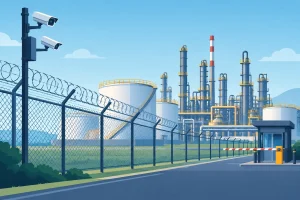

 Singapore :
+65-6708-9302
Singapore :
+65-6708-9302