

A failed camera on a loading berth, refinery perimeter, engine room, or offshore platform is not a minor inconvenience. It creates blind spots, slows response times, and exposes operations to avoidable risk. This commercial surveillance system buying guide is built for buyers who need systems that perform under pressure, not just look good on a spec sheet.
Industrial surveillance purchasing is rarely about picking cameras alone. You are buying coverage, evidence quality, network reliability, storage capacity, remote visibility, and long-term uptime. The right system reduces incidents, supports compliance, helps investigate events quickly, and protects assets in environments where failure is expensive.
What a commercial surveillance system buying guide should help you decide
A useful commercial surveillance system buying guide should narrow your decision around operational needs, site conditions, and total cost over time. That means asking what the system must actually do on day one and what it must still handle three to five years from now.
For a refinery, that may mean monitoring perimeters, flare areas, tank farms, and restricted access points while maintaining reliable remote viewing from a control room. For a vessel, it may mean combining deck coverage, engine room monitoring, gangway visibility, and stable data transmission in a salt-heavy environment. For power stations and chemical sites, it often means high camera counts, strict recording retention, and durable hardware that can tolerate vibration, heat, moisture, dust, or corrosive exposure.
If the requirement is not clearly defined, overspending and underperforming happen at the same time. Buyers end up paying for features they do not use while missing the ones that matter most.
Start with the site, not the catalog
The most effective buying process begins with a site-based assessment. Camera quantity is only one part of the decision. You also need to understand the physical and operational environment.
Lighting conditions are a major factor. A gate exposed to direct sun all day has different needs than an indoor process area, a low-light dock, or an offshore platform operating through fog and spray. Distance matters too. Identifying a face at a controlled entrance is a different task from monitoring activity across a wide storage yard.
Then there is the environment itself. Industrial buyers should pay close attention to enclosure rating, corrosion resistance, temperature tolerance, and mounting stability. A commercial-grade system that works in a retail setting may not last in marine air, near hydrocarbons, or in high-vibration machinery zones. This is where specialized surveillance infrastructure separates itself from general-purpose equipment.
Camera types and coverage strategy
The wrong mix of cameras usually creates either wasted budget or missed coverage. Fixed cameras work best where you need consistent views of entry points, corridors, gates, and production areas. They are efficient, straightforward to manage, and often the best value for evidence capture.
PTZ cameras bring flexibility for wide-area monitoring, active incident tracking, and remote operator control. They are useful for perimeter lines, storage yards, marine decks, and large industrial compounds, but they should not replace fixed coverage where continuous evidential recording is essential. A PTZ can look in only one direction at a time.
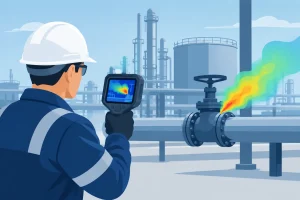
Thermal and specialty detection imaging can be critical in industrial and energy settings where standard visible-light surveillance does not tell the full story. If your operation involves low-visibility conditions, heat-related monitoring, or gas-leak detection requirements, it makes sense to evaluate systems designed for those exact conditions rather than forcing conventional security cameras into roles they were not built to handle.
A strong design usually combines camera types. Fixed units handle critical viewpoints, PTZ units provide situational control, and specialized detection devices address high-risk operational zones.
Recording quality, playback, and evidence value
Buyers often ask for high resolution first. That is understandable, but resolution alone does not guarantee useful footage. Frame rate, compression, lens selection, scene lighting, and recording stability all shape the quality of playback.
If your team needs footage for incident investigation, vehicle tracking, personnel verification, or process review, the system should be specified around those tasks. There is no value in storing weeks of video if playback is too poor to identify what happened. At the same time, going too high on every channel can drive up storage and bandwidth costs without delivering meaningful operational benefit.
This is where practical system design matters. Critical areas may justify higher detail and stronger retention policies, while lower-risk zones can be configured more efficiently. The best service provider will help buyers balance image quality with storage economics instead of selling maximum specs across the board.
Storage capacity and retention planning
Storage should never be an afterthought. Many commercial buyers underestimate how quickly recorded video consumes capacity, especially when systems include multiple high-resolution channels, continuous recording, or long retention requirements.
Start by deciding how long footage must be kept. Some facilities need short-cycle review, while others need weeks or months for internal policy, insurance, or regulatory reasons. Then consider how footage is recorded. Continuous recording gives the most complete record, but event-based recording can reduce storage loads in some applications.
Redundancy also matters. If recorded footage is mission-critical, the recorder and storage architecture should be selected with failure tolerance in mind. Losing access to evidence after an incident is a costly mistake. Industrial buyers should think beyond headline storage size and look at recorder reliability, drive configuration, backup planning, and recovery speed.
Network performance and remote access
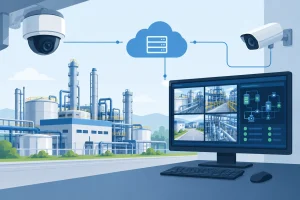
Modern surveillance is not just local. Operational leaders want remote access from control rooms, vessels, plant offices, and authorized mobile users. That convenience is valuable, but only when network design can support it.
A surveillance system can strain an existing network if bandwidth, switching, and segmentation are not planned properly. This is especially relevant across marine operations, offshore assets, and large industrial sites where communications infrastructure may already be under pressure.
Remote access should be secure, responsive, and easy to manage. Procurement teams should ask how many users need simultaneous access, what playback performance is expected off-site, and how the system behaves when connectivity drops or degrades. A good surveillance platform does not just provide viewing. It keeps recording locally, preserves system integrity, and restores access cleanly when the connection stabilizes.
The real cost is lifetime cost
Price matters, but initial price is not the full buying decision. Lower-cost systems often become expensive when they require early replacement, frequent maintenance, or network upgrades that were never scoped properly.
A stronger commercial buying decision weighs hardware quality, installation suitability, support availability, expected service life, and upgrade path. A top-of-the-line offer is not simply the highest price point. It is the system that delivers dependable performance with fewer interruptions, lower operational waste, and better evidence when it matters.
For industrial and marine buyers, durability is often where the return becomes obvious. Better housings, better materials, and better integration planning can save substantial replacement and service cost across the life of the system. That is especially true in corrosive, wet, explosive-risk, or remote environments where every maintenance visit has a cost attached.
Questions every industrial buyer should ask suppliers
A supplier should be able to explain where the system fits, not just quote part numbers. Ask how the equipment performs in your exact environment, what camera count and recorder setup are appropriate, and how remote access will work under real network conditions.
Ask about playback usability, retention assumptions, and system expansion. Ask what happens if you add a new berth, process line, warehouse zone, or vessel area in the future. Ask about environmental ratings and what hardware is recommended for salt exposure, heat, dust, vibration, or hazardous zones.
Most importantly, ask what trade-offs you are making. Every system decision has one. More detail often means more storage. Wider coverage can reduce close-up identification. Greater remote access can require stronger network planning. Serious suppliers discuss these trade-offs openly because that is how dependable systems are built.
Choosing a commercial surveillance system buying guide you can act on
The best buying guide is not one that pushes the biggest package. It is one that helps you buy the right surveillance architecture for your site, risk level, and operating conditions. For industrial facilities, refineries, vessels, offshore assets, and critical infrastructure, that means focusing on durability, recording quality, remote visibility, and long-term performance before comparing price tags.
At Revlight Security, that is the standard we believe serious buyers should expect from any surveillance partner. A camera system should not be treated as a commodity when it is protecting high-value operations and supporting real-time decisions.
If you are evaluating options now, start with the environments that punish equipment the hardest and the incidents that would cost you the most. Build from there, and you will buy a system that holds its value long after installation day.
🛡️ Secure Your Home or Business Today
Protect your home, office, shop, or business with reliable CCTV security cameras. Explore our range of CCTV cameras and find the right security solution for your needs.
Explore CCTV Cameras ✉️ Email Us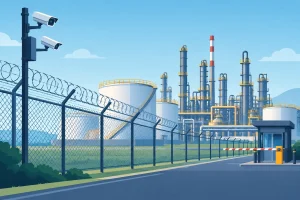

 Singapore :
+65-6708-9302
Singapore :
+65-6708-9302