
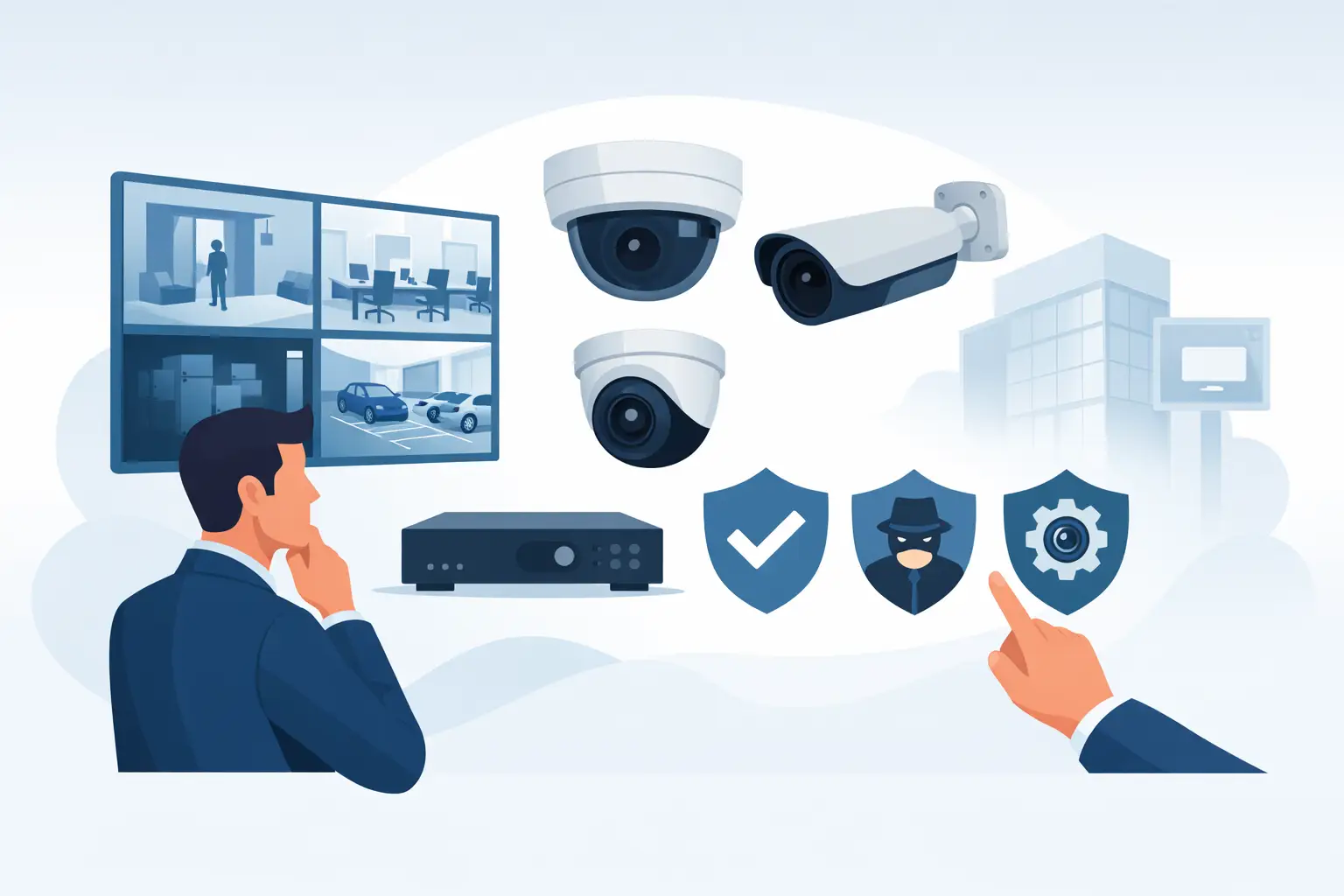
A camera that works well in a front office can fail fast on a loading jetty, offshore vessel, refinery perimeter, or turbine platform. That is the real challenge with business CCTV camera systems. For industrial buyers, the decision is not just about image quality. It is about uptime, environmental tolerance, remote visibility, evidence retention, and whether the system keeps operating when conditions turn harsh.
Procurement teams and operations managers usually face the same pressure from different angles. Security wants full coverage. Operations wants minimal downtime. Finance wants long service life and clear return on investment. The right system sits at the center of all three. It reduces blind spots, supports investigations, helps teams verify incidents faster, and gives sites a stronger operational record without adding unnecessary complexity.
What business CCTV camera systems need to do
In industrial settings, surveillance is not a cosmetic upgrade. It is part of site control. A proper system records activity around access points, process areas, tank farms, quaysides, engine spaces, substations, and remote assets. It also gives managers a live view of conditions without sending people into risk zones unless necessary.
That changes the buying criteria. A basic camera package might look cost-effective at first, but if the housings corrode, the network drops, or playback quality is too poor to identify an event, the lower price quickly becomes expensive. Business CCTV camera systems should be judged on total performance over time, not sticker price alone.
The strongest systems typically combine dependable cameras, stable recording, secure remote access, and infrastructure designed for the site itself. A marine operator has different priorities from a refinery. A power station has different lighting, compliance, and perimeter demands from a warehouse. That is why specification matters.
Start with the environment, not the catalog
Many buyers begin by comparing camera resolutions and channel counts. Those matter, but environment comes first. Heat, salt spray, vibration, explosive atmospheres, dust, fog, and low-light operation will shape the correct system faster than any product brochure.
For offshore and marine applications, corrosion resistance and enclosure quality are central. A camera installed on a vessel or platform must keep performing in wet, high-salt conditions where standard commercial hardware may degrade early. In refineries and chemical facilities, hazardous-area requirements can limit what equipment is suitable. In power generation and remote energy sites, long cable runs, network resilience, and night visibility often become the bigger issue.
This is where experienced specification saves money. Overbuying can waste budget, but underbuying creates repeat replacement costs, service calls, coverage gaps, and poor evidence. The better approach is to match the system to the physical risk and operating pattern of the site.
Indoor, outdoor, hazardous, and marine zones
A single facility may need several camera classes working together. Control rooms and internal corridors can often use standard fixed IP cameras. External yards, perimeters, and transfer points may need weather-rated units with infrared or white light. Marine decks and offshore structures may require stainless or specially protected housings. Hazardous zones may call for certified equipment built for explosive-risk environments.
That mix is normal. Trying to use one camera type across every area usually creates compromises somewhere important.
Recording, playback, and evidence quality
A live view is useful, but recorded video is what proves what happened. Storage design matters just as much as camera selection. Buyers should decide early how long footage must be retained, what resolution is needed for review, and how easily teams can search by time, event, or camera.
For many industrial sites, poor playback is where systems disappoint. The footage exists, but it is too compressed, too short, or too difficult to retrieve under pressure. That is not a camera problem alone. It is often a recorder, bandwidth, or storage planning problem.
A well-designed system balances frame rate, resolution, compression, and retention period so the footage remains usable. For a gatehouse or fuel transfer point, identification detail may be the priority. For wide-area yard monitoring, broader situational coverage may matter more than facial detail. It depends on the operational purpose of each view.
Local recording versus network-based architecture
There is no single winner here. Local recording can be practical where network reliability is inconsistent or where isolated assets need self-contained coverage. Network-based systems offer stronger centralization and easier remote access, especially across larger estates or fleets.
The right choice often depends on how the site is managed. A single industrial plant may prefer centralized recording and monitoring. A marine operator with multiple vessels may need a more distributed setup with selective remote review. The commercial point is simple: the best architecture is the one that supports daily operations without creating weak points.
Remote access is now a buying requirement
For modern industrial operations, remote visibility is no longer optional. Managers want to review alarms, verify incidents, and support crews without waiting to reach the control room. Business CCTV camera systems should make remote access straightforward, secure, and stable.
That does not mean every user needs unrestricted access. In fact, role-based permissions are usually the better route. Operations leads may need live views and playback. Security teams may need export rights. Contractors may need limited, temporary access. Good system design supports that structure rather than forcing one shared login across the organization.
Remote access also needs to reflect real connectivity conditions. Offshore assets, marine operations, and remote energy sites may have tighter bandwidth limits than city-based facilities. In those cases, stream management, network optimization, and practical viewing settings become central to performance.
Camera count is not the same as coverage quality
A larger number of cameras does not automatically produce a better system. Buyers sometimes focus on channel count because it feels measurable. The harder question is whether those cameras are positioned and specified to cover actual risk.
A smaller, better-planned deployment can outperform a larger low-grade installation. Entry points, perimeter lines, process bottlenecks, fuel handling zones, deck operations, cargo interfaces, and critical machinery areas usually deserve priority. Once those are secured, additional views can be added to improve oversight and redundancy.
This is also where lens selection and mounting height matter. A wide view can reduce blind spots, but it may not capture enough detail for identification. A narrow field can provide excellent detail, but only over a limited area. There is always a trade-off between scene coverage and evidential precision.
Reliability is where value is won or lost
Industrial buyers do not need surveillance that looks good on paper and underperforms after installation. They need hardware that keeps running. Reliability comes from the whole build – camera housings, power design, network stability, recorder quality, thermal performance, and protection against the local environment.
This is why the lowest-cost option often loses over time. Every failure adds labor, vessel time, access coordination, replacement cost, and operational exposure. In difficult environments, the true value of a system is measured by how rarely it needs intervention and how consistently it delivers usable footage.
For operators in oil and gas, marine, energy, and heavy industry, that long-life view is commercially sound. Better uptime means fewer gaps in security coverage and fewer disruptions to maintenance schedules. It also gives procurement teams a clearer lifecycle case when comparing suppliers.
What serious buyers should ask before purchase
Before selecting business CCTV camera systems, buyers should press for practical answers. What environmental rating is suitable for each zone? How many days of recording are realistically supported? What happens if the network drops? How is remote access secured? Can the system expand later without a full redesign? What level of image detail is expected at each key point?
Those questions shift the conversation from generic features to operational fit. They also expose whether a supplier understands industrial deployment or is simply selling standard commercial packages into specialized environments.
A credible provider will talk clearly about use case, service conditions, infrastructure, and trade-offs. Not every site needs the most expensive configuration. But every serious site needs a configuration that is honest about risk, location, and expected performance.
Why specialist supply makes a difference
Industrial surveillance is not a one-size-fits-all category. The strongest results come from suppliers that understand harsh environments, remote operations, network demands, and the commercial realities of uptime. That is especially true when surveillance sits alongside marine communications, offshore visibility, or specialist detection requirements.
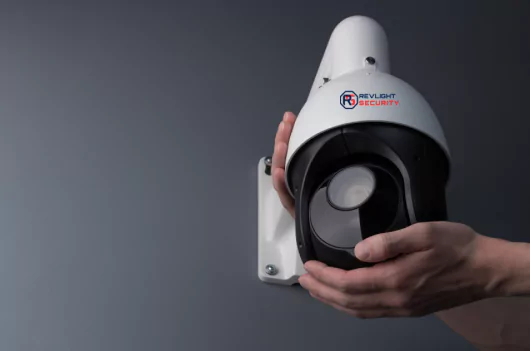
Revlight Security serves buyers who need that level of specification, with top-of-the-line offers tailored to demanding industrial and marine applications. For procurement teams comparing options, that specialist focus can shorten the buying cycle and improve long-term value because the system is built around the site rather than forced into it.
When you are choosing surveillance for a refinery, vessel, terminal, plant, or power asset, the smartest decision is usually the one that prevents the second purchase. Buy for the environment, buy for evidence quality, and buy for dependable operation when the site is under real pressure.
🛡️ Secure Your Home or Business Today
Protect your home, office, shop, or business with reliable CCTV security cameras. Explore our range of CCTV cameras and find the right security solution for your needs.
Explore CCTV Cameras ✉️ Email Us

 Singapore :
+65-6708-9302
Singapore :
+65-6708-9302