
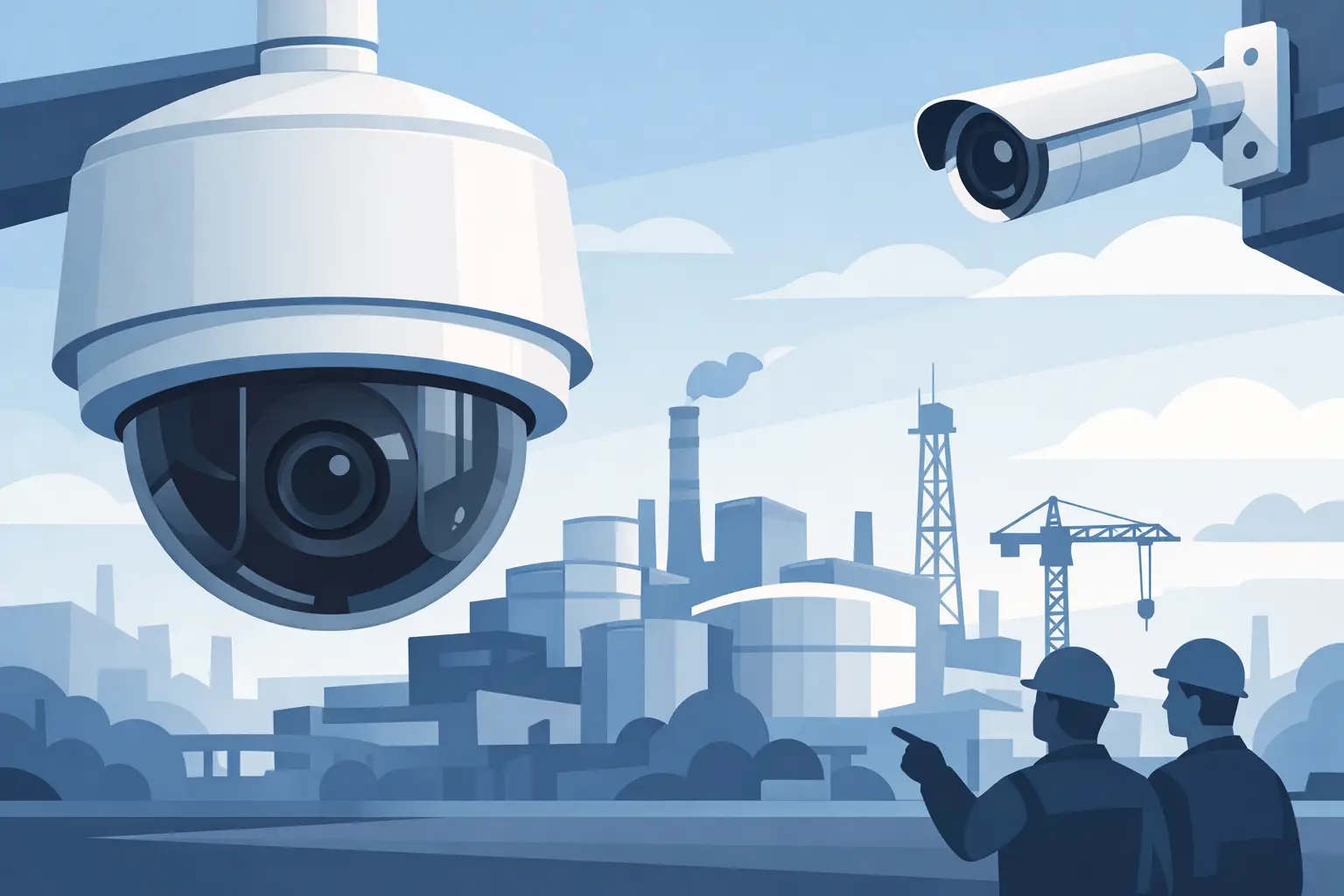
A failed camera in a refinery, tank farm, engine room, or loading berth is not a minor inconvenience. It can mean blind spots during a safety incident, missed evidence after equipment damage, or delayed response when operations need clear visual confirmation. That is why choosing the right cctv camera for industrial use is less about box specs and more about dependable performance in harsh, high-risk environments.
Industrial buyers are not looking for consumer-grade surveillance dressed up with technical labels. They need equipment that keeps recording through vibration, salt spray, heat, dust, moisture, and demanding network conditions. They also need systems that support day-to-day operations – not just security teams, but superintendents, operations managers, marine engineers, and facility leadership who rely on live video, playback, and remote access to make fast decisions.
What makes a CCTV camera for industrial use different
A standard commercial camera may work well in an office lobby or retail entrance. Industrial sites are different. Conditions are often aggressive, maintenance windows are tight, and the cost of failure is high. A true cctv camera for industrial use is selected around environment, uptime, and integration rather than appearance or headline resolution alone.
The first difference is build quality. In oil and gas, marine, energy, and chemical settings, housings matter as much as image quality. Cameras may need corrosion resistance for offshore exposure, sealed enclosures for washdown zones, or stable operation in high and low temperatures. Mechanical durability is equally important where vibration, wind loading, or moving machinery are constant factors.
The second difference is operational purpose. Industrial surveillance is rarely limited to perimeter monitoring. Buyers often need coverage for process areas, transfer points, deck operations, access control, machinery spaces, flare areas, loading zones, substations, and remote assets. That changes how cameras should be positioned, powered, and connected.
The third difference is system behavior over time. Industrial operators need reliable recording, straightforward playback, remote viewing, and scalable network performance. A camera that looks impressive in a demo but creates storage pressure, false alarms, or unstable remote access quickly becomes a cost center.
How to choose a CCTV camera for industrial use
The right choice starts with the site, not the catalog. Procurement teams should define what the camera must actually achieve. Is the goal to identify personnel, monitor process activity, verify events, protect a perimeter, or support remote supervision of isolated assets? Each objective changes the ideal lens, camera placement, frame rate, and recording strategy.
Environment should be the next filter. A camera near offshore equipment faces very different demands than one inside a control building. Marine installations need strong resistance to corrosion and moisture. Refineries and chemical sites may require specialized solutions for hazardous areas depending on the zone classification. Power stations often need dependable long-range monitoring across large open spaces, while enclosed industrial facilities may prioritize low-light performance and internal network integration.
Image quality still matters, but it should be judged practically. More megapixels can help with scene detail, yet higher resolution also increases bandwidth and storage demand. In many industrial applications, a well-positioned camera with the right lens and stable low-light performance will deliver more usable evidence than a higher-resolution unit installed without planning.
Remote access is another buying factor that deserves serious attention. Many operators now expect real-time viewing from central control rooms, vessels, operation centers, or mobile devices used by authorized staff. That means the camera system should support secure remote access without creating complexity for the people who need it most.
Fixed, PTZ, and thermal options
Most industrial sites benefit from a mix of camera types rather than a single format. Fixed cameras are often the backbone of the system because they provide constant coverage of critical points. For entrances, corridors, process skids, deck equipment, and loading zones, a fixed camera gives stable evidence and predictable recording.
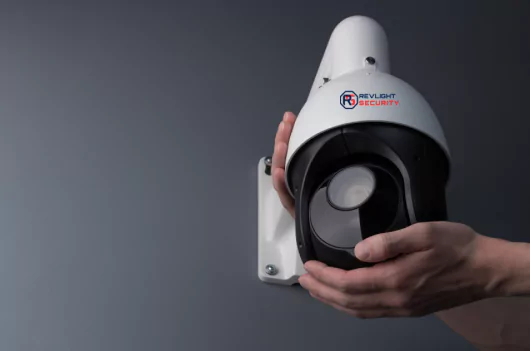
PTZ cameras add flexibility where operators need wider coverage or active tracking. They are useful for ports, tank farms, offshore platforms, substations, and expansive yards where one viewing position must cover multiple zones. The trade-off is that PTZ cameras only record the direction they are pointing at that moment, so they should not replace fixed coverage at critical locations.
Thermal cameras can be the right answer where visibility is poor, lighting is inconsistent, or long-range detection is needed. They are particularly valuable for perimeter protection, remote asset monitoring, and areas where smoke, darkness, or weather can reduce visual performance. They are not always the best tool for facial or fine-detail identification, so the strongest systems often pair thermal detection with visual verification.
Durability matters more than brochure claims
Industrial buyers should be skeptical of generic claims about toughness. The better question is whether the camera is engineered for the exact conditions on site. Salt-laden air, explosive atmospheres, heavy rain, vibration, dust, and chemical exposure all affect camera lifespan and reliability.
Housing materials, sealing standards, mounting design, heater or blower support, and cable protection all deserve attention. A weak bracket or poor cable entry can compromise a strong camera. Likewise, a camera with excellent optics can still underperform if condensation, glare, or unstable mounting is ignored.
For marine and offshore operations, corrosion resistance is often a deciding factor. For refinery or gas processing applications, environmental suitability and compliance requirements can shape the entire specification. Buyers who treat these factors as optional usually pay later in replacement cycles, maintenance labor, and interrupted coverage.
Recording, storage, and playback in real operations
A surveillance system is only as useful as its ability to retrieve the right footage fast. Industrial buyers should look beyond camera count and consider how recording and playback will work during an actual incident review.
Continuous recording may be necessary in high-risk zones, while motion-based recording can reduce storage load in lower-traffic areas. The right balance depends on operational risk, regulatory expectations, and how often video is used for investigations or process review. Storage sizing should account for resolution, frame rate, retention period, and the number of cameras expected in the final system – not just phase one.
Playback speed matters too. Security teams and operation managers do not want to spend hours searching fragmented archives after an event. A well-designed system should make it easy to search by time, camera, event trigger, or alarm. This is where better engineering saves time and money long after installation.
Network performance and remote sites
Industrial surveillance increasingly depends on network quality. Large facilities, offshore assets, ships, and remote energy infrastructure often operate across challenging communications environments. That makes bandwidth planning a commercial issue, not just an IT detail.
Cameras should be selected with compression efficiency, network stability, and remote accessibility in mind. A system that overloads available bandwidth will frustrate operators and degrade the user experience. On the other hand, cutting data rates too aggressively can reduce image value when evidence is needed most.
The best approach is a balanced design that matches camera settings to operational priorities. Critical cameras may justify higher bandwidth and storage allocation, while secondary views can be optimized for efficiency. This is especially relevant for marine operators and remote industrial facilities where connectivity may be limited or shared with other essential services.
Common buying mistakes
One of the most common mistakes is buying on resolution alone. Another is assuming one camera type can solve every requirement. Sites with process risk, perimeter exposure, and operational monitoring needs usually require a layered design.
Another costly error is underestimating installation environment. Cameras chosen without considering corrosion, hazardous conditions, vibration, or lighting often fail early or produce poor footage. There is also the issue of future expansion. Many systems are purchased for today’s layout, then struggle when additional coverage, analytics, or remote users are added later.
Commercially, the cheapest option is rarely the best value. Industrial buyers should focus on total ownership cost, including maintenance, replacement frequency, downtime risk, storage requirements, and operator usability. A stronger system often creates savings by reducing service calls, improving incident response, and extending equipment life.
Where value really comes from
The best cctv camera for industrial use is the one that performs reliably under your real site conditions and supports your operation every day. That value comes from matching the camera to the environment, the viewing task, the network, and the recording strategy.
For buyers in oil and gas, marine, power, chemical, and heavy industrial sectors, surveillance is infrastructure. It protects people, assets, and continuity of operations. Suppliers that understand those environments can specify systems with the durability, image performance, remote access, and recording capability serious facilities expect. That is where a specialist provider such as Revlight Security stands apart – not by selling more cameras, but by helping industrial operators secure the right coverage for the job.
When you evaluate your next system, think beyond the camera itself. The strongest results come from equipment that keeps working when conditions are at their worst, because that is exactly when your footage matters most.
🛡️ Secure Your Home or Business Today
Protect your home, office, shop, or business with reliable CCTV security cameras. Explore our range of CCTV cameras and find the right security solution for your needs.
Explore CCTV Cameras ✉️ Email Us

 Singapore :
+65-6708-9302
Singapore :
+65-6708-9302