
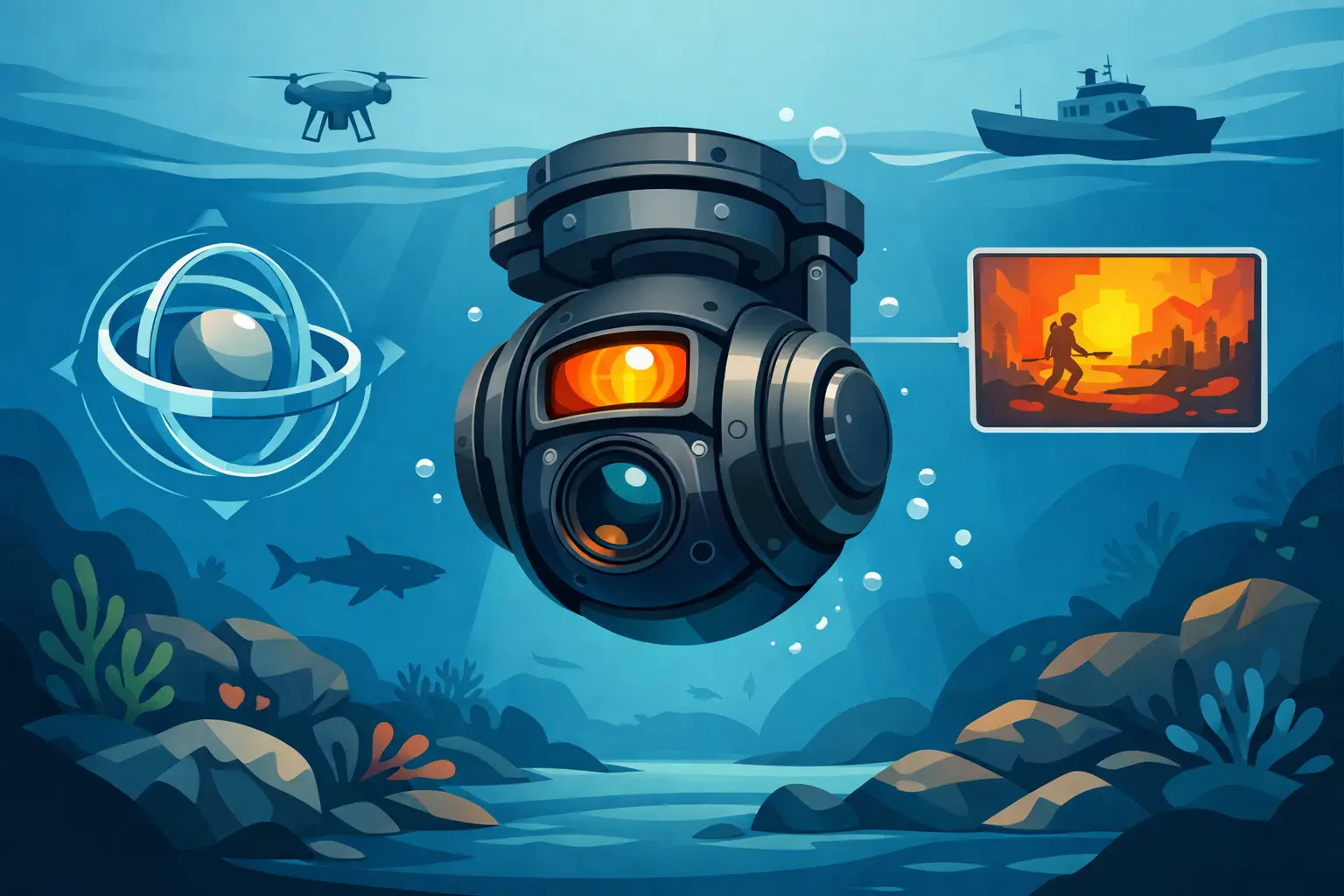
If subsea visibility drops, inspection quality drops with it. An Underwater Thermal PTZ camera gimbal gyroscope setup is built for exactly that problem – giving offshore operators a stabilized, steerable imaging platform that keeps tracking usable in current, vibration, and low-visibility water conditions.
For procurement teams and operations managers, this is not a niche specification. It directly affects whether a system can hold image stability on a moving vessel, inspect submerged assets accurately, and reduce repeat deployments. In offshore energy, marine operations, and heavy industry, poor stabilization is expensive. A capable gimbal and gyroscope assembly turns a camera from a basic viewing device into a working surveillance and inspection tool.
What an underwater thermal PTZ camera gimbal gyroscope system actually does
At a practical level, the system combines four functions. Thermal imaging detects temperature variation where conventional optical views struggle. PTZ control allows pan, tilt, and zoom for remote positioning. The gimbal keeps the camera aligned as the platform moves. The gyroscope supplies the orientation data that helps stabilize the image and correct unwanted motion.
That combination matters most in dynamic environments. Offshore platforms, support vessels, dock structures, and submerged industrial assets all introduce movement, vibration, and changing visibility. Without stabilization, even a high-spec imaging core can produce footage that is difficult to interpret. With proper gyroscopic correction, the camera remains controlled and target-focused instead of drifting with every wave or mechanical shock.
Why stabilization matters more than headline specs
Buyers often focus first on resolution, zoom ratio, or thermal sensitivity. Those numbers matter, but subsea performance is decided by the full mechanical and control package. A camera with strong imaging but weak stabilization can miss corrosion points, lose target lock, or force operators to slow inspections to compensate.
A well-engineered gimbal gyroscope system improves three outcomes at once: image usability, operator speed, and deployment confidence. Crews can track hull sections, risers, submerged supports, and security perimeters with less manual correction. That cuts fatigue in control rooms and reduces the likelihood of misreading a scene.
There is a trade-off, of course. More advanced stabilization systems usually mean higher acquisition cost and more demanding integration requirements. But in industrial settings, the cheaper option often becomes the costly one when downtime, second-pass inspections, or failed evidence capture are factored in.
Key buying factors for underwater thermal PTZ camera gimbal gyroscope units
Pressure rating should be one of the first checks. A unit designed for harbor or nearshore work may not be suitable for deeper offshore deployment. Housing material also matters. Marine-grade corrosion resistance is essential where salt exposure, chemical spray, and long service intervals are expected.
Control responsiveness is another major differentiator. PTZ movement should be precise, not jerky, especially when operators need to inspect valves, joints, anchors, or structural welds. Zoom performance needs to stay usable under low visibility, and thermal output needs to provide meaningful contrast rather than a vague heat map that looks impressive in a specification sheet but offers limited operational value.
Then there is stabilization accuracy. Not every gyroscope-enabled system delivers the same result. Some are adequate for basic monitoring, while others are built for active tracking and detailed inspection. Buyers should also confirm network compatibility, recording options, remote access support, and integration with wider surveillance infrastructure. For industrial operators, the best service provider is the one supplying a system that fits the control environment already in place, not just the one offering the lowest headline price.
Where these systems deliver the strongest return
The strongest use cases are easy to identify. Offshore platforms need persistent monitoring around submerged structures and restricted zones. Ship operators need stable underwater observation for hull checks, berth security, and maintenance planning. Refineries, power stations, and marine terminals can use these systems where water-adjacent infrastructure requires continuous watch and clear recorded evidence.
Thermal capability underwater does depend on the environment and the sensing method used, so expectations should be realistic. In some scenarios, thermal is highly valuable for identifying equipment anomalies or supporting low-visibility detection. In others, performance is shaped by water conditions, depth, and target characteristics. That is why system selection should always be based on the exact operating profile rather than a generic product label.
Choosing for reliability, not just purchase price
Industrial buyers are usually not looking for novelty. They are looking for dependable uptime, clear footage, manageable maintenance, and a supplier that understands harsh deployment conditions. That is where engineering support becomes commercial value.
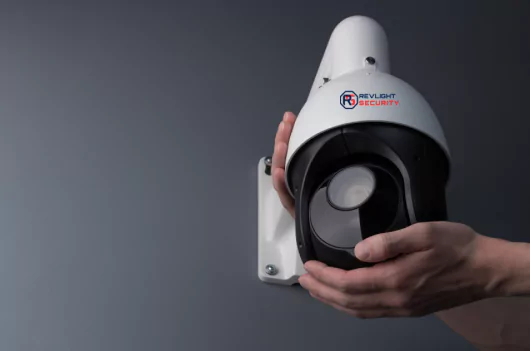
A top-of-the-line offer should include more than the camera head itself. It should reflect the housing, gimbal integrity, gyroscopic stability, control interface, and environmental suitability as one complete package. Revlight Security operates in exactly this part of the market, where surveillance performance has to stand up to real offshore and industrial pressure rather than just look good on paper.
When a system is chosen correctly, the payoff shows up fast – cleaner inspections, fewer repeat missions, better evidence capture, and stronger asset protection. For buyers responsible for uptime and security outcomes, that is the standard worth paying for.
🛡️ Secure Your Home or Business Today
Protect your home, office, shop, or business with reliable CCTV security cameras. Explore our range of CCTV cameras and find the right security solution for your needs.
Explore CCTV Cameras ✉️ Email Us


 Singapore :
+65-6708-9302
Singapore :
+65-6708-9302