
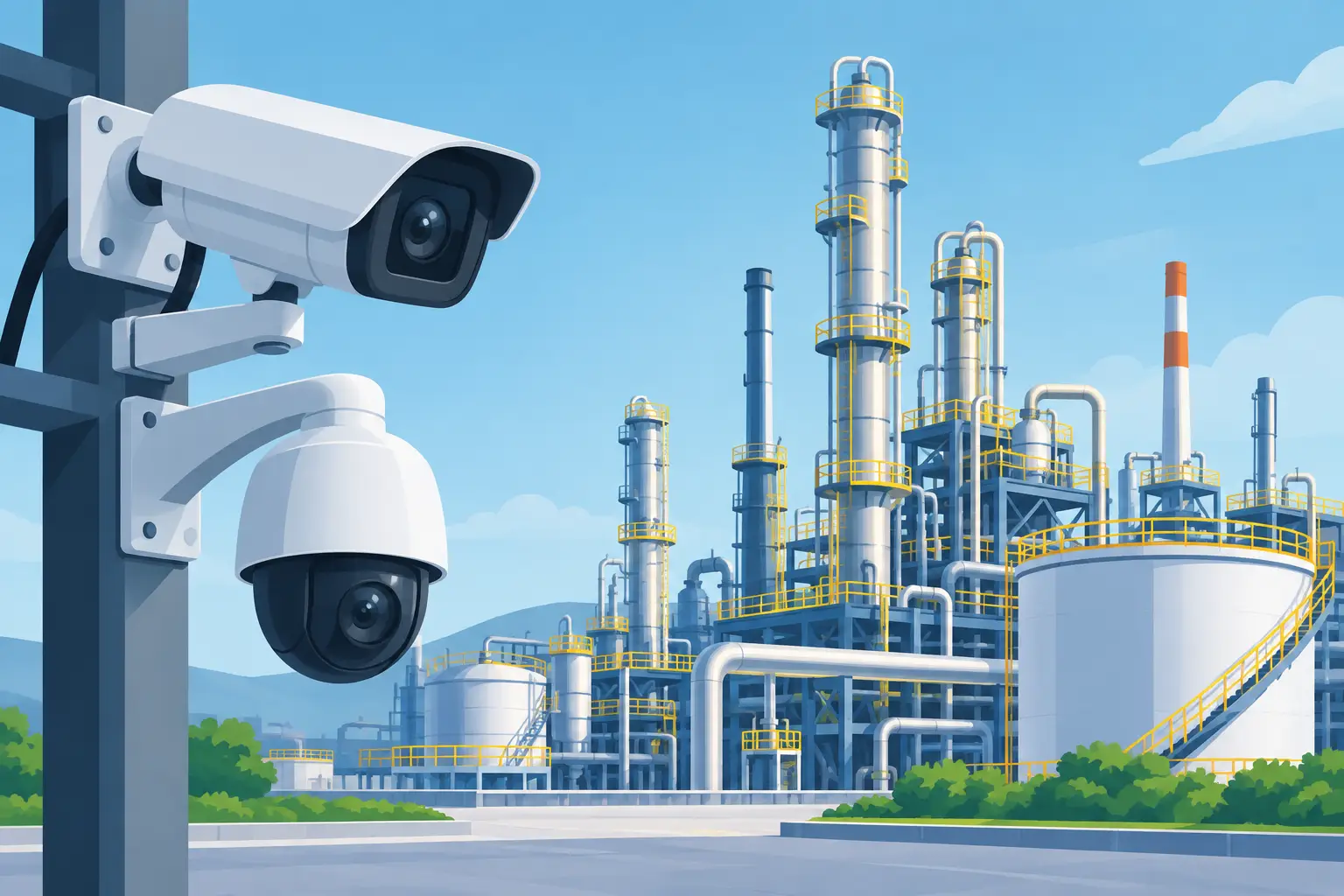
A camera mounted beside a solvent transfer rack, reactor vessel, or chlorine handling area has one job above all others: keep eyes on a high-consequence process without creating a new ignition risk. That is why the best cameras for chemical plants are not selected on image quality alone. They must match the classified area, detect the conditions that matter, withstand corrosive exposure, and deliver usable footage to the people responsible for operations and security.
For procurement teams, the right decision is a system decision. The camera housing, lens, network connection, recording platform, power method, certifications, and maintenance plan all affect whether surveillance performs when an incident, alarm, or investigation occurs.
What Makes a Camera Suitable for a Chemical Plant?
Chemical facilities present overlapping risks: flammable vapors, combustible dust, elevated temperatures, corrosive washdowns, vibration, low-light perimeter areas, and long cable runs between process units and control rooms. Standard commercial security equipment may produce acceptable video on day one, but it is not engineered for this environment.
A suitable industrial camera should be specified around the zone classification first. In the United States, this commonly means confirming whether the installation falls under Class I, Division 1 or Division 2 requirements, or the applicable Zone classification. A camera installed in a location where ignitable gas may be present needs the correct hazardous-location approval for that exact area. “Weatherproof” is not a substitute for explosion-proof or intrinsically safe equipment.
The enclosure is equally significant. Stainless steel housings are often the stronger choice around corrosive chemicals, salt air, and frequent washdowns. IP66 or IP67 protection can help prevent water and dust ingress, while a properly selected coating system extends service life where airborne contaminants are persistent. For high-temperature zones, verify the full operating temperature range rather than relying on a general outdoor rating.
The Best Camera Types for Chemical Plants
There is no single best unit for every process area. High-performing facilities use different camera technologies based on the risk, location, and operational question each installation needs to answer.
Hazardous-Area Fixed Cameras for Process Visibility
Explosion-proof fixed cameras are the foundation for monitoring loading bays, pump skids, tank farms, valve stations, blending lines, and other critical points. They provide a continuous view of routine operations, contractor activity, access points, and abnormal conditions such as visible leaks, smoke, pooling liquid, or unauthorized entry.
For most applications, prioritize high-resolution imaging, wide dynamic range, low-light performance, and a lens matched to the viewing distance. Too wide a field of view can make a valve or gauge unreadable. Too narrow a lens can miss the personnel activity or spill path that explains an event. Camera placement should be reviewed with operations personnel, not decided solely from a site map.
PTZ Cameras for Wide-Area Coverage
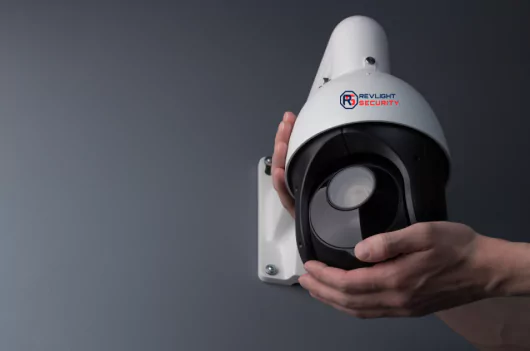
Pan-tilt-zoom cameras are valuable where operators need to inspect large tank farms, marine terminals, rail loading areas, or extensive perimeters from a control room. Their ability to move and zoom gives security teams greater coverage from fewer installation points.
The trade-off is simple: a PTZ can only look in one direction at a time. It should support fixed cameras, not replace them at critical process points. Specify preset positions and guard tours around known operational priorities, then ensure manual control is available during alarms and emergency response.
Thermal Cameras for Perimeter and Heat Monitoring
Thermal imaging detects heat contrast rather than relying on visible light. This makes it especially effective for perimeter intrusion detection at night, monitoring restricted areas with limited illumination, and identifying unusual heat signatures around equipment.
Thermal cameras can add real operational value around furnaces, hot process equipment, electrical assets, and storage areas. However, they are not a universal fire detection replacement. Their effectiveness depends on viewing angle, target size, ambient conditions, and alarm configuration. For facilities monitoring a specific heat-related hazard, an engineered thermal solution with defined alarm thresholds is a better investment than a general-purpose thermal unit.
Optical Gas Imaging Cameras for Leak Detection
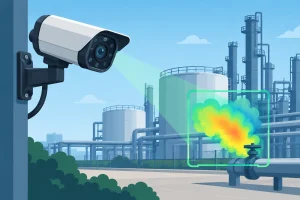
For facilities handling hydrocarbon gases, volatile organic compounds, or methane, optical gas imaging can provide a major upgrade over video-only surveillance. These systems are designed to visualize certain gas emissions that are invisible to the human eye, helping teams investigate suspected leaks, monitor fugitive emissions, and improve inspection efficiency.
The gas type matters. Optical gas imaging performance depends on the compound being monitored, concentration, temperature contrast, wind, humidity, standoff distance, and background conditions. A buyer should never assume that one gas detection camera identifies every gas or performs equally across every process unit. Confirm the target gases, detection objectives, and environmental limitations before selecting the system.
How to Specify the Best Cameras for Chemical Plants
Start with a site survey that separates the facility into operational zones. Identify classified areas, process-critical assets, high-value inventory, perimeter boundaries, loading and unloading points, emergency routes, and locations where operators have limited direct visibility. This prevents the common mistake of purchasing cameras first and deciding their purpose afterward.
Then define the required outcome for each view. A perimeter camera may need reliable human detection at distance. A camera facing a railcar manifold may need enough detail to confirm hose connections and worker procedures. A camera at a gate may need identification-grade coverage. These are different design requirements, and they should not be treated as one generic “coverage” requirement.
Network architecture deserves the same attention as the camera itself. Chemical plants often need fiber backbones, industrial PoE switching, managed network segmentation, redundant recording, and secure remote access. Wireless links can be useful for difficult routes, but they require an interference assessment, clear line-of-sight planning, cybersecurity controls, and a defined maintenance strategy. A weak connection can turn a high-specification camera into a blind spot.
Recording retention should be tied to operational and compliance needs. A facility investigating a process upset may need several weeks of high-resolution footage, while a remote perimeter site may require longer retention at lower bandwidth. Calculate storage using camera resolution, frames per second, compression method, recording schedule, and retention period. Guessing at storage capacity usually creates expensive upgrades later.
Installation Details That Protect the Investment
The best equipment can still fail if installation quality is poor. Hazardous-area cable glands, conduit entries, grounding, power isolation, mounting hardware, and junction boxes must be selected for the environment and installed according to the approved design. Improvised field modifications can compromise the protection method and create serious compliance exposure.
Lens positioning also affects performance. Avoid aiming directly into sunrise, process lighting, reflective stainless steel, or high-contrast sky backgrounds when possible. Mount cameras where they can be safely serviced without disrupting production. In corrosive areas, add routine inspection and cleaning requirements to the maintenance plan, because residue on a camera window can gradually destroy image quality.
Cybersecurity cannot be separated from physical surveillance. Change default credentials, use role-based access, keep firmware current, isolate surveillance networks where appropriate, and record access activity. Remote viewing is valuable for managers and incident response teams, but only when it is controlled and auditable.
Cost Versus Lifecycle Value
Low purchase price is rarely the lowest-cost option in a chemical environment. A poorly matched device can create repeat maintenance visits, unreliable evidence, unplanned replacement work, and downtime in locations where access requires permits or shutdown coordination. The correct hazardous-area certification, material specification, and network design can cost more up front, but they protect the investment over a much longer service life.
Revlight Security helps industrial buyers match surveillance and detection equipment to real operating conditions, from hazardous-area visual coverage to thermal and gas detection applications. The objective is not simply more cameras. It is clear, dependable visibility where a facility has the most to lose.
Before issuing a purchase order, ask one final question of every proposed camera location: what decision must this view support when conditions are at their worst? If the system can answer that question clearly, safely, and consistently, it is built for the plant rather than merely installed in it.
🛡️ Secure Your Home or Business Today
Protect your home, office, shop, or business with reliable CCTV security cameras. Explore our range of CCTV cameras and find the right security solution for your needs.
Explore CCTV Cameras ✉️ Email Us

 Singapore :
+65-6708-9302