
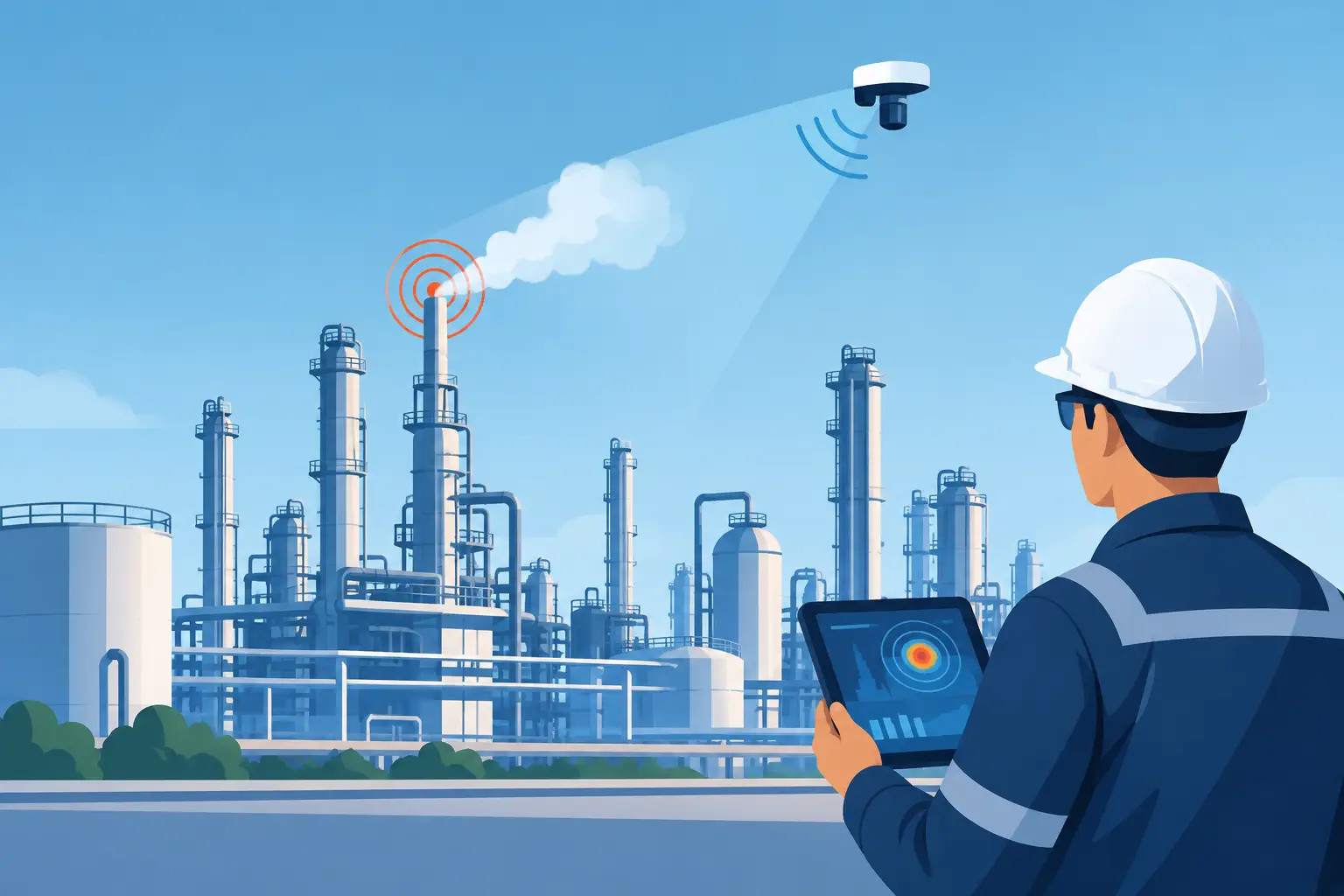
A refinery methane incident is not simply a gas alarm. It is a time-critical operational event that can force teams to make decisions before they have complete visibility of the source, size, direction, or escalation risk. Fixed sensors provide essential concentration data, but facility leaders also need clear visual confirmation that helps control rooms, field supervisors, and emergency teams act with confidence.
For refinery operators, the commercial and safety stakes are substantial. An unverified alarm can interrupt production, send personnel into high-risk areas, and consume valuable response resources. A confirmed methane release can require isolation, ignition-source control, area monitoring, evacuation decisions, and detailed incident documentation. The difference is visibility – fast, reliable, site-ready visibility.
Why a Refinery Methane Incident Needs More Than an Alarm
Methane is highly flammable, frequently odorless in industrial environments, and difficult to assess by sight alone. A conventional fixed detector is designed to alert personnel when gas concentration reaches a defined threshold. That alert is indispensable, but it does not always answer the questions operations teams need answered immediately: Where is the leak? Is the release continuous or intermittent? Is the gas plume moving toward an ignition source, a process unit, or an occupied work area? Has the condition changed since the first alarm?
This is where optical gas imaging and integrated surveillance systems add operational value. Specialized methane detection cameras can make an otherwise invisible plume visible under suitable conditions, allowing teams to assess release behavior without immediately placing personnel close to the suspected source. When paired with fixed gas detection, process data, and control-room monitoring, imaging provides context rather than another isolated alarm point.
That distinction matters during high-consequence events. A sensor can indicate that methane is present. A properly positioned detection camera can support an informed decision about whether a team should investigate, isolate equipment, hold work permits, restrict access, or escalate the response.
Build Detection Coverage Around Real Release Scenarios
Effective methane monitoring starts with a site-specific hazard review, not a generic camera count. Refineries contain compressors, valves, flanges, pressure-relief systems, tank areas, loading racks, furnaces, and process piping with very different leak profiles. Wind patterns, congestion, elevation changes, heat sources, and access constraints all influence where equipment should be placed and what it can reliably observe.
A strong design identifies likely release points and then evaluates whether each area needs point detection, optical coverage, conventional surveillance, or a combination. Point sensors are valuable for measuring concentration near anticipated leak locations. Optical systems are particularly useful for surveying broader equipment zones, checking elevated or difficult-to-reach assets, and directing response teams toward visible evidence.
Camera placement should also account for practical operating conditions. A line of sight that looks ideal on a drawing may be obstructed by pipe racks, steam, vehicles, or seasonal vegetation. High ambient heat, rain, fog, vibration, and glare can affect performance. In hazardous areas, equipment selection must match the required certification and installation requirements. The right system is not the one with the longest specification sheet. It is the one that provides dependable coverage in the actual refinery environment.
Detection is not the same as measurement
Procurement teams should avoid treating all gas-monitoring equipment as interchangeable. A fixed gas detector, an optical gas imaging system, and a standard security camera have different jobs. Fixed sensors measure or alarm at a defined location. Optical imaging can help reveal gas movement and identify likely release areas. Conventional surveillance documents personnel activity, vehicle movement, access points, and conditions around the event.
The most capable installations bring these functions together. A gas alarm can automatically call up the relevant live camera view in the control room. Operators can review recorded footage from the minutes before the alert, assess whether contractors were working nearby, and preserve evidence for maintenance and incident review. This reduces the time spent searching through separate systems when every minute matters.
What Control Rooms Need During a Methane Event
A refinery methane incident creates a familiar operational problem: too much data, not enough usable context. Alarm panels may report several devices at once. Radio traffic intensifies. Field teams need direction. Control room personnel must maintain safe process control while determining whether the condition is local, spreading, or tied to a larger equipment issue.
The surveillance platform should simplify that pressure, not add to it. At minimum, operators need fast access to live views, recorded playback, alarm-triggered camera association, and clear device status. Remote access can be valuable for authorized decision-makers, particularly when technical specialists or senior operations staff are off site. However, remote viewing must be governed by the facility’s cybersecurity, network segmentation, and access-control standards.
Recording quality also matters. Footage that is too compressed, poorly timed, or unavailable after an alarm has limited investigation value. Specify retention periods, time synchronization, storage resilience, and export procedures before an event occurs. These are not administrative details. They determine whether the facility can reconstruct what happened, demonstrate response actions, and identify contributing factors.
A well-designed control-room workflow generally follows four connected actions:
- Receive the gas alarm and identify the affected zone.
- Open the associated optical and surveillance views to verify conditions.
- Direct field response using current visual evidence and site emergency procedures.
- Preserve video, alarm, and process records for maintenance and incident analysis.
The exact sequence depends on refinery emergency plans and the nature of the release, but the principle remains consistent: detection technology should shorten the distance between alarm and informed action.
Specify Equipment for the Environment, Not the Brochure
Industrial buyers should demand clear answers on environmental suitability, hazardous-area requirements, operating temperature range, enclosure rating, mounting options, lens selection, network compatibility, and power requirements. A methane detection system installed near process units must withstand the conditions it will face over years of continuous service, not merely perform during a controlled demonstration.
Network design deserves equal attention. High-quality imaging can require meaningful bandwidth and storage capacity, especially where multiple streams are recorded continuously. A site may need fiber backhaul, managed switching, network redundancy, segregated security networks, or wireless links engineered for industrial interference. The right architecture depends on distance, asset criticality, existing infrastructure, and the need for uninterrupted recording.
There are trade-offs. Wider camera coverage can reduce blind spots but may provide less detail at distant targets. Higher resolution and frame rates improve evidential value but increase storage and bandwidth demand. Thermal imaging may add useful situational awareness in low-light conditions, yet it does not replace methane-specific detection capability. The best service provider will explain these limits directly and design around them rather than promise universal coverage.
Maintenance Turns Detection Into a Dependable Capability
A detection system is only as reliable as its inspection, testing, and maintenance program. Lenses become contaminated, housings can be damaged, alignment can shift, and network faults can quietly remove a critical camera from service. Fixed sensors also require calibration and functional testing according to manufacturer guidance and site procedures.
Operations managers should establish ownership for system health. That includes routine visual checks, alarm verification, recorded playback tests, cleaning schedules, firmware management, and documented corrective actions. If cameras are integrated with gas alarms or emergency notifications, test the full sequence – not just individual devices. An alarm-to-video workflow that has never been validated should not be trusted during a real release.
Training is equally practical. Control-room teams need to recognize what the system can show, what can obscure a plume, and when visual confirmation is inconclusive. Field personnel need to understand that video evidence supports response decisions but never overrides established gas-testing, permit, isolation, or emergency procedures.
Selecting a Methane Detection Partner
The strongest suppliers do more than ship equipment. They help buyers match methane detection cameras, conventional surveillance, recording infrastructure, and network design to the operating risk. Look for a provider that can discuss hazardous-area deployment, coverage planning, integration requirements, storage sizing, remote viewing, and long-term support in direct commercial terms.
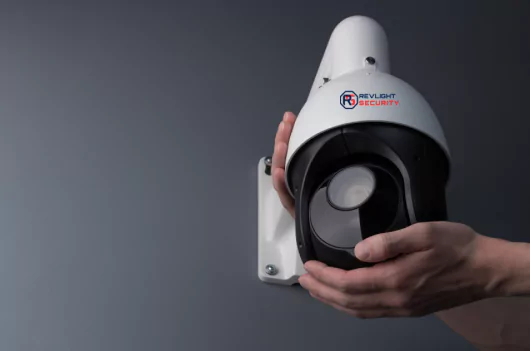
Revlight Security supplies specialized surveillance and detection equipment for demanding oil, gas, marine, and energy environments, with system options built around real operational visibility rather than generic security coverage. For refinery teams, that means specifying equipment that supports faster verification, stronger incident records, and more controlled response decisions.
When the next alarm sounds, the most valuable system will not be the one that creates the most notifications. It will be the one that gives your people credible visual evidence quickly enough to protect personnel, secure the process area, and make the next decision count.
🛡️ Secure Your Home or Business Today
Protect your home, office, shop, or business with reliable CCTV security cameras. Explore our range of CCTV cameras and find the right security solution for your needs.
Explore CCTV Cameras ✉️ Email Us



 Singapore :
+65-6708-9302
Singapore :
+65-6708-9302