
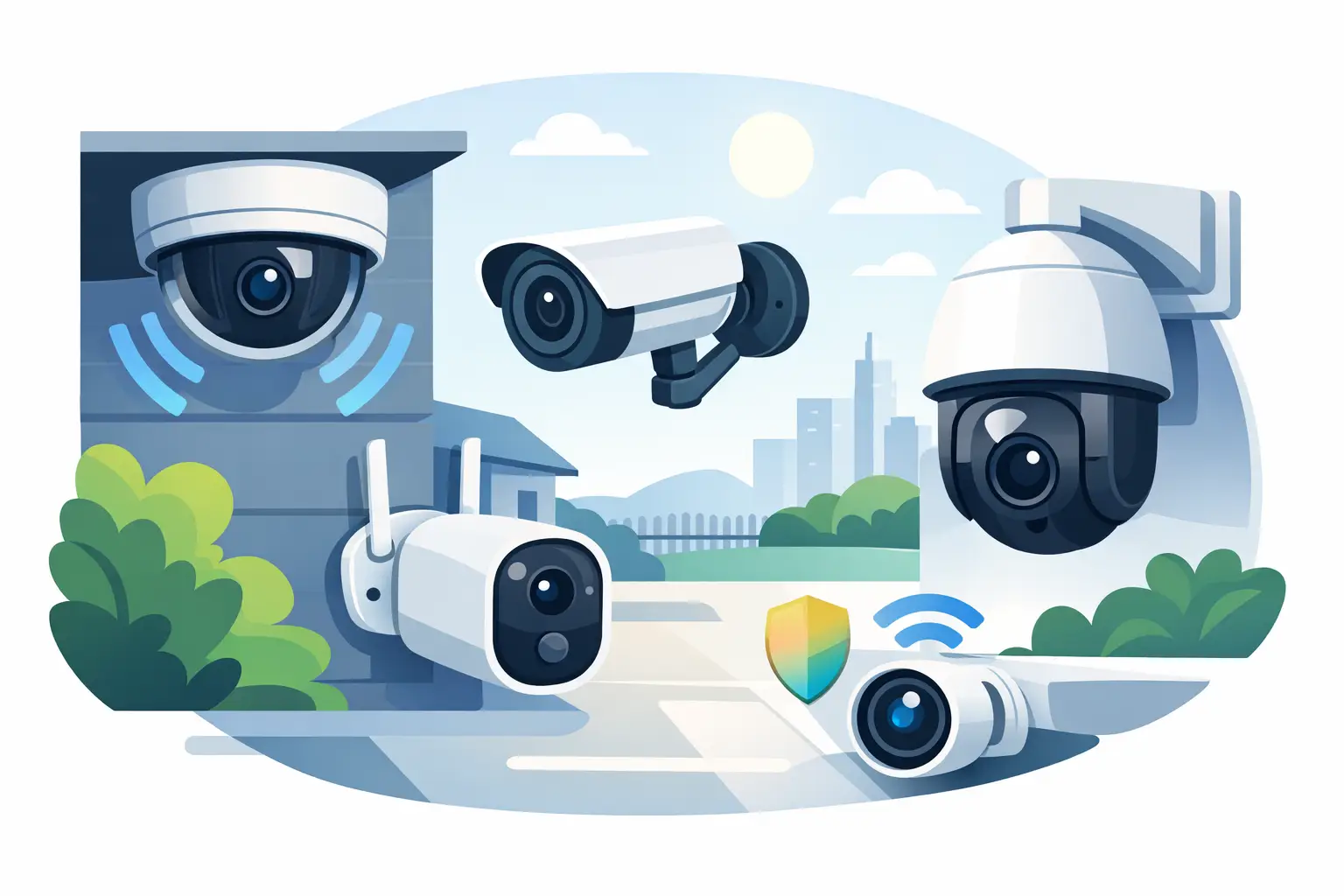
A perimeter breach at a tank farm or an unlit section of dock is not the moment to learn your camera choice was wrong. The right outdoor CCTV camera types can reduce blind spots, improve incident response, and hold up under salt spray, vibration, heat, and corrosive atmospheres. For industrial operators, the real question is not which camera looks best on paper. It is which type delivers usable footage, reliable uptime, and lower risk in the field.
Why outdoor CCTV camera types matter on industrial sites
In commercial and industrial security, camera form factor affects more than image quality. It changes mounting options, weather resistance, maintenance access, deterrence value, and how easily the system integrates with recording, analytics, and remote monitoring.
A warehouse yard, offshore platform, refinery perimeter, or marine terminal does not present the same challenges as a small retail parking lot. Lighting is inconsistent, distances are longer, and environmental stress is harsher. That is why choosing between outdoor CCTV camera types should start with site conditions, threat profile, and operational priorities rather than price alone.
The main outdoor CCTV camera types
Bullet cameras
Bullet cameras are one of the most common outdoor choices because they are simple, visible, and effective. Their elongated housing makes them easy to point at gates, fence lines, loading bays, and access roads. They are often selected when a strong visual deterrent matters, since they clearly signal that an area is under surveillance.
For industrial buyers, bullet cameras work well where you need medium-to-long-range viewing and straightforward installation. Many models support infrared night vision, varifocal lenses, and weatherproof housings. The trade-off is exposure. Because the body is more accessible, bullet cameras can be easier to tamper with if mounted too low or in vulnerable positions.
Dome cameras
Dome cameras are compact and less directional in appearance, which makes it harder for an intruder to know exactly where the lens is aimed. They are often installed on building exteriors, entrances, stairwells, and under eaves where a lower-profile unit is preferred.
For operations managers, domes can be a strong choice in areas with frequent public or contractor traffic. Their housing can offer some protection against vandalism and accidental impact. However, dome covers need to stay clean. In dusty, salty, or oily environments, neglecting maintenance can reduce image clarity faster than many buyers expect.
PTZ cameras
PTZ stands for pan, tilt, and zoom. These cameras are built for active monitoring over large outdoor areas, including port facilities, tank farms, substations, and marine berths. They allow operators to move the camera remotely and zoom in on vehicles, vessels, personnel activity, or perimeter events.
This is where performance can justify a higher budget. A PTZ camera can cover broad zones that would otherwise require multiple fixed cameras, especially when paired with a trained control room team or intelligent analytics. Still, PTZ units are not a complete replacement for fixed coverage. If the camera is looking left, it is not watching right. On critical infrastructure sites, PTZ is strongest when used alongside fixed cameras rather than instead of them.
Turret cameras
Turret cameras sit between bullet and dome designs in practical terms. They are compact like domes but avoid some of the glare and reflection issues that can affect enclosed dome covers, especially at night with infrared enabled.
For buyers who want solid outdoor imaging without the bulk of a bullet housing, turret cameras can be a smart fit. They are widely used for building perimeters, service yards, and mid-range surveillance. Their limitation is the same as most fixed cameras – they are excellent at watching a defined area, but less flexible when site layouts change.
Thermal cameras
Thermal cameras detect heat signatures rather than relying on visible light. On industrial sites with low light, smoke, fog, glare, or long perimeter distances, this can be a major advantage. Thermal imaging is commonly used for early intrusion detection, asset protection, and monitoring in difficult visual conditions.
This type is particularly relevant for oil and gas, energy, and marine operators because environmental conditions often make standard imaging less dependable. Thermal cameras are usually more expensive than conventional units, and they do not always provide the kind of visual detail needed for facial or plate identification. Their value is in detection performance, not just recognition.
Explosion-proof and hazardous-area cameras
Some outdoor environments do not allow standard camera hardware at all. Refineries, chemical plants, offshore platforms, and gas processing facilities may require explosion-proof or hazardous-area-certified cameras designed for classified zones.
These units use specialized housings and construction to operate safely where flammable gases, vapors, or dust may be present. They are not optional where compliance and personnel safety are at stake. The key point for procurement is that hazardous-area suitability should be defined early. Retrofitting the wrong camera specification into a classified site is expensive and avoidable.
How to choose among outdoor CCTV camera types
The best selection process starts with coverage objective. If you need constant observation of a gate, fixed bullet or turret cameras are usually more cost-effective than PTZ. If you need to track moving activity across a berth or large yard, PTZ may be worth the investment.
Next comes environment. Marine and coastal installations need strong corrosion resistance. Heavy industry may need housings that tolerate dust, washdown, vibration, or temperature extremes. Hazardous zones need certified equipment, not adapted commercial units. This is where technical specification stops being paperwork and starts protecting uptime.
Image requirements matter just as much. If the goal is broad detection, thermal or wide-area fixed cameras may be the right answer. If the goal is identification at checkpoints, you will need suitable resolution, lens selection, and controlled angles. A camera that captures movement is not automatically a camera that delivers evidence.
Networking and recording should also shape the decision. Outdoor cameras now sit inside larger surveillance systems that include NVRs, remote access, playback, analytics, alarms, and integration with site operations. A strong camera type can still underperform if bandwidth is weak, storage is undersized, or remote viewing is unreliable. Serious buyers assess the whole system, not only the camera head.
Outdoor CCTV camera types by deployment scenario
For perimeter fencing and remote boundaries, fixed bullet cameras are often the first line of coverage, with thermal cameras added where night detection or long-range performance is critical. For yards and loading zones, turret or bullet cameras typically provide dependable fixed views, while PTZ units support active oversight during high-traffic operations.
On marine assets, docks, and vessels, corrosion resistance becomes a purchasing priority. Salt exposure can shorten equipment life quickly, so housing quality and sealing standards deserve close scrutiny. In offshore and hazardous environments, explosion-proof options are often essential rather than premium add-ons.
For entrances, pedestrian access points, and external building corners, dome or turret cameras can provide efficient coverage with a less aggressive footprint. The right type depends on the mounting surface, tamper risk, and cleaning access.
Common buying mistakes
One common mistake is choosing cameras by resolution alone. Higher megapixels sound good in a quote, but lens quality, mounting height, lighting, and compression settings affect real-world performance just as much.
Another mistake is underestimating maintenance. Outdoor cameras need cleaning, inspection, and occasional realignment. Domes can haze. Bullet housings collect debris. Marine installations face corrosion. If access is difficult, maintenance planning should influence camera selection from the start.
A third mistake is trying to make one camera type do every job. The strongest surveillance systems use a mix of outdoor CCTV camera types based on threat, distance, and operating conditions. That approach usually delivers better coverage and better value over time.
What serious buyers should expect from a supplier
Industrial surveillance procurement is rarely about buying a box off a shelf. Buyers should expect guidance on camera placement, environmental suitability, network compatibility, recording capacity, and long-term serviceability. They should also expect a clear explanation of trade-offs. A lower upfront cost can mean shorter lifespan, weaker night performance, or higher maintenance overhead later.
That is why many operators work with specialist suppliers rather than general consumer vendors. A provider with experience across energy, marine, and industrial security can align camera type with compliance demands, infrastructure constraints, and operational risk. For clients that need top-of-the-line offers in challenging environments, that expertise has direct commercial value.
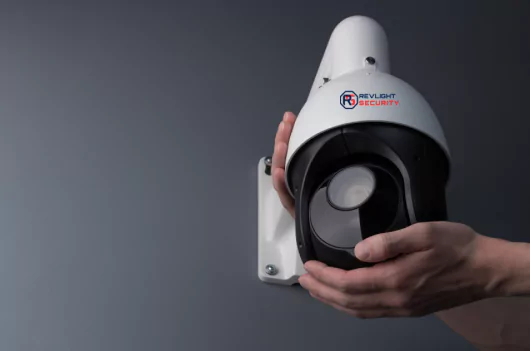
Revlight Security serves buyers who need dependable surveillance infrastructure, not guesswork. When camera choice affects safety, loss prevention, and operational continuity, technical fit matters more than generic specs.
The strongest outdoor system is usually not the one with the most cameras. It is the one built around the right camera types for the conditions you actually run every day.
🛡️ Secure Your Home or Business Today
Protect your home, office, shop, or business with reliable CCTV security cameras. Explore our range of CCTV cameras and find the right security solution for your needs.
Explore CCTV Cameras ✉️ Email Us


 Singapore :
+65-6708-9302
Singapore :
+65-6708-9302