
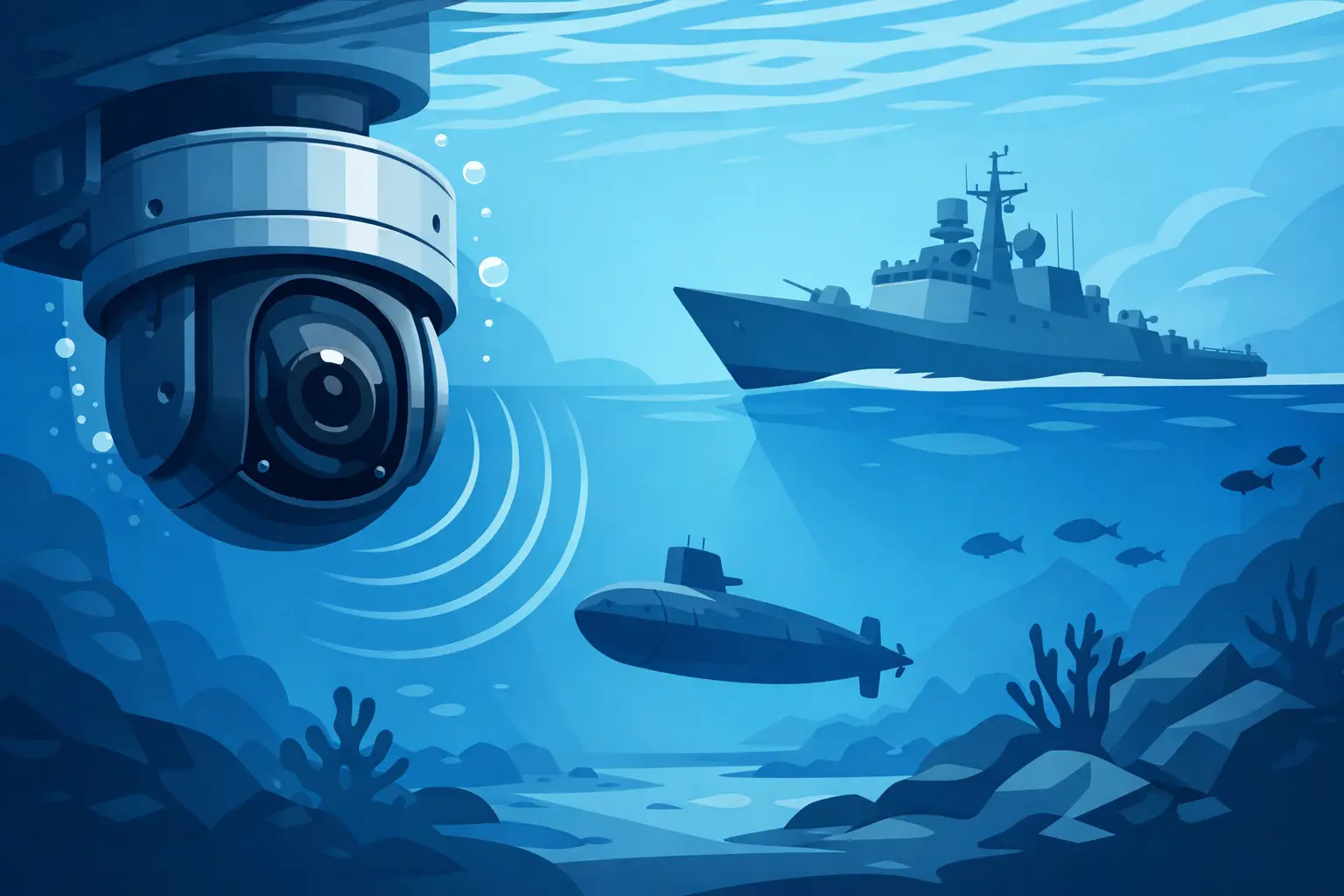
Hull checks do not always happen in calm water, daylight, or controlled harbor conditions. When a vessel needs continuous visibility below the waterline, an underwater PTZ camera for navy vessels becomes a working security asset, not a nice-to-have feature. For procurement teams and marine operators, the real question is not whether underwater imaging is useful. It is whether the system will keep performing under pressure, salt exposure, vibration, and mission-critical operating demands.
Why an underwater PTZ camera for navy vessels matters
Navy and defense-support vessels operate in environments where underwater visibility directly affects safety, readiness, and asset protection. A fixed underwater camera can cover a limited zone, but it cannot track movement, inspect changing angles, or adjust quickly to an emerging concern along the hull, rudder, propeller, or intake areas. PTZ capability changes that.
A properly specified underwater PTZ camera gives operators live pan, tilt, and zoom control so they can inspect key underwater structures without sending divers for every routine check. That saves time, reduces operational interruption, and lowers exposure to unnecessary personnel risk. In port, that means better awareness around potential tampering, unauthorized diver activity, mooring areas, and submerged infrastructure near the vessel. During maintenance windows, it supports quicker visual confirmation before escalating to physical intervention.
This is where buying decisions become practical. The value is not just image capture. The value is fewer blind spots, faster inspection cycles, and stronger incident response.
What buyers should expect from an underwater PTZ camera for navy vessels
Not every marine camera is built for naval or defense-adjacent use. Buyers should expect a system engineered for long-term submersion, corrosion resistance, stable movement, and clear imaging in low-visibility water. If any of those areas are weak, the camera may work on paper and underperform in service.
Pressure-rated housing is the starting point. A camera for underwater deployment on a vessel must be sealed against water ingress at the intended depth range and designed to tolerate prolonged exposure. Material choice matters just as much. Marine-grade stainless steel, titanium, or other corrosion-resistant construction helps extend service life in saltwater environments where cheaper housings degrade quickly.
Optical performance is another major factor. Water conditions vary by harbor, current, sediment load, and light level. The right system needs strong low-light performance, reliable focus control, and useful zoom capability without making the image unusable. In some applications, integrated lighting is essential. In others, external lighting may be better because it allows more flexible placement and reduced backscatter in turbid water. It depends on the vessel profile and operating environment.
PTZ mechanics should also be treated as a serious buying criterion, not a line-item feature. Smooth pan and tilt response, accurate preset positioning, and dependable motor performance are critical when operators need to move quickly between inspection points. If the camera drifts, stalls, or struggles in cold water or rough operating conditions, the operational benefit drops fast.
Imaging quality is more than resolution
Buyers often ask for the highest resolution available, but underwater performance is not a simple megapixel contest. Clarity depends on lens quality, sensor sensitivity, lighting balance, water conditions, and image processing. A lower-spec camera with better low-light handling and cleaner optical design can outperform a higher-resolution unit in actual port or patrol conditions.
For navy vessels, image usability matters more than headline numbers. Can the operator identify marine growth buildup around a critical area? Can the crew assess whether a line, obstruction, or suspicious object is attached to the hull? Can security staff monitor diver movement around vulnerable zones? Those are the questions that should shape the purchase.
Control and integration are where value compounds
An underwater PTZ camera should not sit outside the vessel’s wider surveillance architecture. The strongest systems integrate with onboard monitoring stations, recording platforms, and remote viewing environments. That allows live control, playback review, event documentation, and coordinated oversight across surface and underwater camera views.
For procurement teams, this is where commercial value becomes clear. A camera that fits into existing network infrastructure and recording workflows reduces deployment friction and avoids unnecessary system duplication. Ethernet-based architecture, compatible video output options, and support for remote operator access all help turn the camera from a standalone device into part of a complete protection strategy.
Where these systems deliver the strongest return
On navy vessels and support fleets, underwater PTZ deployment makes the most sense when underwater awareness has a direct impact on security, maintenance, or uptime. That includes hull inspection support, propeller and rudder observation, berth-side monitoring, diver detection support, and validation of underwater conditions before and after docking operations.
For ships operating in sensitive zones, underwater visibility can also improve force protection posture. Suspicious movement below the waterline is difficult to address without dependable imaging. A PTZ system gives operators the ability to verify activity before escalating to sonar, patrol response, or direct intervention.
Maintenance teams also benefit. Routine visual checks can be performed faster, and recurring issues can be recorded for review and comparison over time. That supports better maintenance planning and helps crews identify whether a minor issue is stable, worsening, or urgent. The savings come from better decisions, not just fewer dives.
Key trade-offs before you buy
There is no single best configuration for every vessel. A compact unit may suit smaller patrol or support craft where mounting space is tight and depth requirements are modest. A heavier-duty system may be necessary for larger vessels, harsher operating environments, or applications where continuous duty and deeper deployment are expected.
Lighting is one trade-off. Integrated lights simplify installation, but they are not always ideal in highly particulate water because reflection can reduce usable visibility. Separate lighting can improve results, but it adds complexity to the installation. Zoom range is another. More zoom sounds attractive, but excessive zoom can be less useful underwater if the image degrades in low light or murky conditions.
Mounting location matters too. A camera mounted for broad situational awareness may not give the best angle for detailed inspection of a specific hull component. In some cases, buyers are better served by combining one PTZ unit for flexible viewing with additional fixed underwater cameras at critical points. That decision depends on the vessel layout, threat profile, and inspection routine.
What procurement teams should ask suppliers
A serious supplier should be ready to discuss depth rating, housing material, operational temperature range, pan and tilt performance, optical specifications, integration options, and maintenance requirements in plain terms. If the conversation stays vague, that is a warning sign.
Ask how the system handles continuous operation, cable management, onboard power requirements, and data transmission over marine network infrastructure. Ask about service intervals, spare parts availability, and long-term reliability in saltwater deployment. Ask whether the camera is better suited for inspection-led use, security-led use, or both. Those distinctions matter because not every underwater PTZ system is optimized the same way.
Commercial buyers should also ask how quickly the system can be delivered, configured, and supported after installation. The best service provider is not simply the one with a broad catalog. It is the one that can match technical performance to vessel realities and support the asset after purchase.
Choosing a supplier, not just a camera
For navy vessels, surveillance hardware is part of operational infrastructure. That means supplier capability matters as much as product specification. Engineering-backed advice, marine deployment experience, and integration knowledge all reduce project risk. A top-of-the-line offer is only valuable if it arrives with the right technical fit and dependable after-sales support.
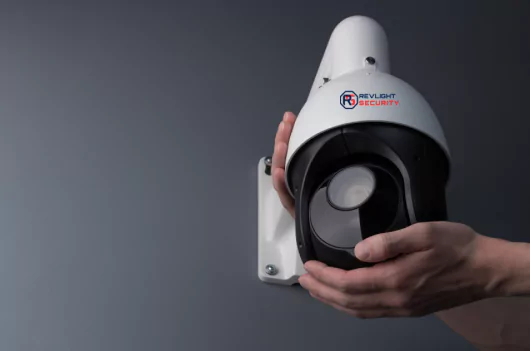
At Revlight Security, the buying conversation is centered on practical performance: image quality in real marine conditions, durable underwater construction, reliable control, and compatibility with broader surveillance and network environments. That is what professional buyers need when evaluating security systems that must perform every day, not just during acceptance testing.
The right underwater PTZ camera is not a generic marine accessory. It is a purpose-built surveillance tool that helps protect vessels, shorten inspection cycles, and improve response when underwater visibility matters most. If your team is comparing options, focus on operational outcomes first. The strongest system is the one that keeps delivering clear, controllable, and dependable coverage long after installation day.
🛡️ Secure Your Home or Business Today
Protect your home, office, shop, or business with reliable CCTV security cameras. Explore our range of CCTV cameras and find the right security solution for your needs.
Explore CCTV Cameras ✉️ Email Us


 Singapore :
+65-6708-9302
Singapore :
+65-6708-9302